
Published on: 2026-06-30 | Written by: Dr. Mahmoud Abdel Rahman, Specialist in Chest Allergy
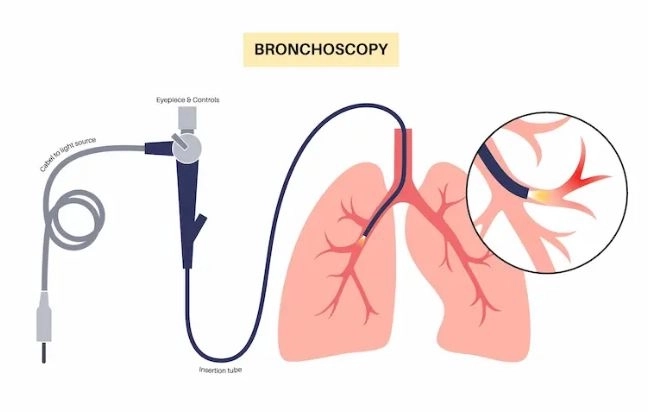
Bronchoscopy is one of the most advanced and valuable procedures used in the diagnosis and treatment of a wide range of respiratory diseases. It enables physicians to directly visualize the airways and lungs with exceptional accuracy, allowing early detection of many pulmonary conditions and helping develop the most appropriate treatment plan for each patient. Thanks to significant advances in bronchoscopic technology, the procedure has become safer, more precise, and associated with faster recovery and fewer complications.
Dr. Mahmoud Abdel Rahman emphasizes that bronchoscopy has become an essential diagnostic tool in modern pulmonary medicine, especially when conventional examinations are insufficient to establish an accurate diagnosis.
What Is Bronchoscopy?
Bronchoscopy is a minimally invasive medical procedure performed using a thin, flexible tube equipped with a high-definition camera and a light source. The bronchoscope is inserted through the nose or mouth and advanced into the trachea and bronchial airways, allowing the physician to examine the respiratory passages directly.
In addition to visual examination, bronchoscopy allows physicians to obtain tissue biopsies, fluid samples, or bronchial washings, and to perform several therapeutic interventions without the need for open surgery.
Indications for Bronchoscopy
A physician may recommend bronchoscopy in various clinical situations, including:
Persistent chronic cough with no clear cause
Coughing up blood (hemoptysis)
Recurrent lung infections
Suspicious lung masses or tumors
Airway obstruction
Unexplained persistent shortness of breath
Evaluation of chronic lung diseases
Further investigation of abnormal chest X-rays or CT scan findings
Dr. Mahmoud Abdel Rahman explains that the decision to perform bronchoscopy depends on the patient's symptoms, clinical evaluation, and imaging results.
How Is Bronchoscopy Performed?
The procedure is typically carried out in a hospital or specialized medical center following several carefully planned steps.
Pre-Procedure Preparation
Patients are usually instructed to fast for several hours before the procedure, and their medications—particularly blood thinners—are reviewed.
Anesthesia and Sedation
Most patients receive local anesthesia to numb the throat along with intravenous sedation to ensure comfort throughout the examination.
Insertion of the Bronchoscope
The bronchoscope is gently advanced through the nose or mouth into the airways, allowing the physician to carefully inspect the respiratory tract.
Collection of Diagnostic Samples
When necessary, biopsies, bronchial washings, or mucus samples are collected for laboratory analysis to assist in diagnosis.
Dr. Mahmoud Abdel Rahman emphasizes that bronchoscopy is generally a short procedure with a high level of safety when performed by an experienced pulmonary specialist.
Therapeutic Uses of Bronchoscopy
In addition to diagnosis, bronchoscopy offers several important therapeutic applications, including:
Removal of foreign bodies from the airways
Suctioning retained respiratory secretions
Controlling certain types of airway bleeding
Treating airway narrowing through bronchial dilation
Placement of airway stents in selected cases
Assisting in the treatment of certain airway tumors
These minimally invasive procedures often eliminate the need for more extensive surgical interventions.
Advantages of Bronchoscopy
Bronchoscopy offers numerous benefits, including:
Accurate diagnosis of lung and airway diseases
Ability to obtain tissue samples without open surgery
Early detection of lung tumors
Diagnosis and treatment during the same procedure
Short recovery time compared with traditional surgery
Excellent safety profile when performed according to medical guidelines
Is Bronchoscopy Safe?
Bronchoscopy is considered a very safe procedure for most patients. Mild sore throat, hoarseness, or coughing may occur temporarily after the examination and usually resolve within a short period.
Although uncommon, potential complications may include minor bleeding, infection, or temporary reductions in oxygen levels. Therefore, patients are monitored carefully after the procedure until they are fully stable.
Dr. Mahmoud Abdel Rahman emphasizes that following all pre- and post-procedure instructions significantly reduces the risk of complications and supports a smooth recovery.
Preparing for Bronchoscopy
To ensure the best possible outcome, patients are advised to:
Fast as instructed before the procedure
Inform the physician about all medications being taken
Report any known medication allergies
Avoid smoking before the examination
Follow all medical instructions carefully
Care After Bronchoscopy
Following the procedure, patients should:
Avoid eating or drinking until the throat numbness has completely worn off
Rest for the remainder of the day
Avoid driving if sedative medications were administered
Contact their physician immediately if they experience significant bleeding, breathing difficulty, or fever
Attend follow-up appointments to discuss biopsy or laboratory results if samples were collected
When Is Bronchoscopy Recommended?
A physician may recommend bronchoscopy when respiratory symptoms persist despite treatment, when imaging studies reveal abnormal findings, or when lung tumors, chronic infections, airway diseases, or unexplained respiratory conditions are suspected. The procedure provides valuable diagnostic information that guides the most appropriate treatment strategy.
Dr. Mahmoud Abdel Rahman explains that bronchoscopy often provides answers that cannot be obtained through routine imaging or laboratory testing alone.
Bronchoscopy is one of the most effective modern procedures for diagnosing and treating respiratory diseases. Its ability to directly visualize the airways, obtain tissue samples, and perform therapeutic interventions without open surgery has transformed pulmonary medicine. Advances in bronchoscopic technology have greatly improved diagnostic accuracy, treatment success, and patient safety.
Dr. Mahmoud Abdel Rahman emphasizes that early evaluation using bronchoscopy, when medically indicated, allows respiratory diseases to be diagnosed at an earlier stage, improving treatment outcomes and helping patients achieve better long-term respiratory health and quality of life.