
Published on: 2026-06-25 | Written by: Dr Abdul Hamid Khalif in Ophthalmology
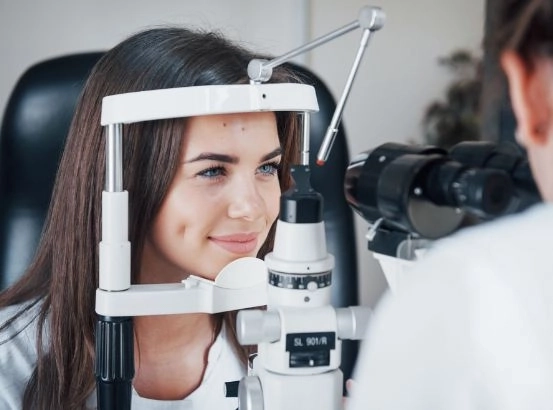
LASIK and Femto-LASIK Vision Correction Surgery: Can You Safely Eliminate the Need for Glasses?
If you suffer from nearsightedness, farsightedness, or astigmatism, vision correction procedures such as LASIK and Femto-LASIK are among the most advanced and effective solutions available today. Modern medical studies emphasize that these techniques have significantly improved vision for millions of people worldwide. Dr. Abdelhamid Khalif stresses that choosing the most suitable procedure depends on a comprehensive eye examination and a detailed evaluation of the cornea before surgery.
What Are Vision Correction Surgeries?
Vision correction surgeries are a group of medical procedures designed to correct refractive errors and reduce or eliminate dependence on glasses and contact lenses. These procedures are intended to improve the eye’s ability to focus light accurately on the retina, resulting in clearer and sharper vision.
Dr. Abdelhamid Khalif emphasizes that the success of vision correction surgery depends greatly on accurate diagnosis and specialized preoperative examinations. He also warns that vision stability should be confirmed for an appropriate period before undergoing surgery.
What Is LASIK?
LASIK is one of the most widely performed vision correction procedures. It uses laser technology to precisely reshape the cornea, helping to correct nearsightedness, farsightedness, and astigmatism effectively.
Medical outcomes consistently confirm that most patients experience significant visual improvement within a short time after surgery. Experts also stress the importance of following postoperative instructions carefully to achieve the best possible results.
What Is Femto-LASIK?
Femto-LASIK is considered one of the most advanced vision correction technologies available today. It utilizes highly precise femtosecond laser technology to create the corneal flap without the use of traditional surgical blades, offering enhanced precision and safety in many cases.
Dr. Abdelhamid Khalif confirms that Femto-LASIK provides greater control and accuracy during the procedure. He also points out that determining whether a patient is a suitable candidate requires a thorough examination of the eyes and cornea.
The Difference Between LASIK and Femto-LASIK
Medical evaluations clarify that both procedures share the same goal: improving vision and correcting refractive errors. However, Femto-LASIK often provides a higher level of precision in selected cases. Current technology confirms that the most appropriate procedure depends on corneal thickness, the type of refractive error, and the overall health of the eye.
Experts emphasize that choosing between the two techniques should not be based solely on technology but on a personalized assessment of each patient's condition to achieve the best outcome.
Who Is a Candidate for Vision Correction Surgery?
Medical guidelines emphasize that ideal candidates for LASIK or Femto-LASIK should generally be over 18 years of age, have stable vision, and not suffer from certain corneal diseases or conditions that may affect surgical outcomes.
Dr. Abdelhamid Khalif explains that comprehensive preoperative testing helps determine whether LASIK or Femto-LASIK is the most suitable option. He also notes that some patients may benefit more from alternative vision correction techniques.
Advantages of LASIK and Femto-LASIK
These procedures offer numerous benefits, including:
Significant improvement in visual clarity.
Reduced dependence on glasses and contact lenses.
Faster return to normal daily activities.
High success rates in suitable candidates.
Procedures completed within minutes.
Exceptional precision and safety.
Medical recommendations also emphasize that outcomes may vary from one patient to another depending on eye characteristics and adherence to postoperative care instructions.
Postoperative Care After Vision Correction Surgery
The recovery period is crucial for maintaining optimal results. Specialists strongly advise using prescribed eye drops regularly, avoiding rubbing the eyes, and minimizing exposure to dust and smoke during the initial healing phase.
Dr. Abdelhamid Khalif emphasizes that regular follow-up visits are an essential part of successful treatment. He also confirms that following medical instructions carefully contributes to faster recovery and optimal visual outcomes.
When Should You Consult an Eye Surgeon?
If you experience poor vision or wish to reduce your dependence on glasses or contact lenses, consulting a specialist in vision correction surgery can help determine the most appropriate treatment option. Advanced diagnostic examinations also confirm the importance of evaluating both the cornea and retina before making a surgical decision.
In conclusion, Dr. Abdelhamid Khalif emphasizes that LASIK and Femto-LASIK procedures represent major advancements in ophthalmology. He confirms that selecting an experienced surgeon and undergoing comprehensive preoperative evaluations are essential steps toward achieving the safest and most successful results.