

Published on: 2026-06-02 | Written by: Dr. Mohamed Hamdy El-Azizi, Lecturer of Vascular
Treatment of Aortic Aneurysms: Early Intervention Protects Against Serious Complications
Recent medical studies emphasize that aortic aneurysms are among the most serious vascular conditions and require accurate diagnosis and continuous follow-up, as delaying treatment may lead to life-threatening complications.
What Are Aortic Aneurysms?
Dr. Mohamed Hamdy El-Azizy stresses that an aortic aneurysm occurs when the wall of the body's main artery becomes weakened, causing an abnormal enlargement of the vessel over time.
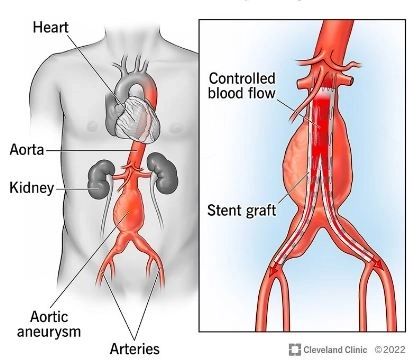
Doctors explain that the aorta is the largest artery in the body and is responsible for carrying blood from the heart to all organs. Therefore, any aneurysm affecting it can pose significant health risks if not managed properly.
Causes of Aortic Aneurysms
Doctors warn that several factors can increase the risk of developing an aortic aneurysm, including:
Chronic high blood pressure.
Atherosclerosis (hardening of the arteries).
Long-term smoking.
Genetic factors and family history.
Advanced age.
Certain hereditary disorders affecting blood vessels.
Symptoms of Aortic Aneurysms
Dr. Mohamed Hamdy El-Azizy explains that many patients may not experience noticeable symptoms during the early stages, which is why the condition is often discovered incidentally during routine medical examinations.
He confirms that symptoms may appear as the aneurysm enlarges and can include:
Persistent or recurring chest pain.
Back or abdominal pain.
A noticeable pulsating sensation in the abdomen.
Shortness of breath in some cases.
Hoarseness or difficulty swallowing if the aneurysm presses on nearby structures.
Doctors also emphasize the importance of seeking immediate emergency care if sudden and severe pain occurs, as this may indicate an aortic rupture.
How Is an Aortic Aneurysm Diagnosed?
Doctors stress the importance of early diagnosis to prevent serious complications.
Dr. Mohamed Hamdy El-Azizy explains that modern diagnostic techniques help determine the size and extent of the aneurysm with high accuracy, including:
Ultrasound imaging.
Contrast-enhanced CT scans.
Magnetic Resonance Angiography (MRA).
Echocardiography in selected cases.
Treatment of Aortic Aneurysms
Dr. Mohamed Hamdy El-Azizy stresses that the treatment approach depends on the size of the aneurysm, its growth rate, and the patient's overall health condition.
Medical Management and Regular Follow-Up
Doctors explain that small aneurysms may not require immediate surgical intervention but do require regular monitoring and periodic imaging studies.
Endovascular Repair and Stent Graft Placement
Doctors emphasize that endovascular aneurysm repair (EVAR) has become one of the most advanced techniques for treating many cases of aortic aneurysms.