
Published on: 2026-05-14 | Written by: High Tone Physiotherapy Center Dr. Khaled Turki
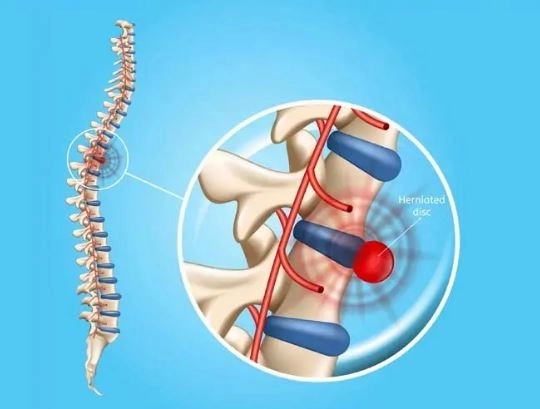
A herniated disc is one of the most common spinal conditions. It occurs when part of the disc between the vertebrae slips out of its normal position, causing pressure on nearby nerves. This leads to pain that may extend to the back, legs, or arms depending on the location of the injury. Dr. Khaled Turk emphasizes that early diagnosis and proper treatment play a crucial role in preventing complications and achieving rapid improvement.
A herniated disc occurs when the cushioning disc between spinal vertebrae becomes damaged or torn, leading to pressure on nearby nerves. Dr. Khaled Turk explains that this condition can affect either the neck or lower back, and symptoms vary depending on the location and severity of the injury.
Several factors can lead to a herniated disc, including:
Dr. Khaled Turk confirms that an unhealthy lifestyle is one of the main contributors to this condition.
Symptoms vary depending on the affected area, but commonly include:
Dr. Khaled Turk notes that the severity of symptoms does not always reflect the severity of the condition, so medical examination and imaging are essential.
Diagnosis is based on:
Dr. Khaled Turk emphasizes that MRI is the most accurate method for identifying the location and extent of the herniated disc.
In most cases, conservative treatment is preferred, including:
Dr. Khaled Turk confirms that most herniated disc cases improve without surgery when patients adhere to treatment.
Physical therapy plays a key role in treatment and aims to:
Dr. Khaled Turk explains that therapeutic exercises must be performed under professional supervision to avoid complications.
Surgery is considered only in severe cases, such as:
Dr. Khaled Turk stresses that surgery is not the first option and is only used when necessary.
Treatment duration varies depending on severity but usually ranges from weeks to several months. Dr. Khaled Turk emphasizes that adherence to treatment and medical instructions significantly speeds up recovery.
Dr. Khaled Turk strongly stresses that prevention is always easier than treatment.