
Published on: 2026-05-04 | Written by: DrReda ElKady Consultant in Pediatric Neonatal
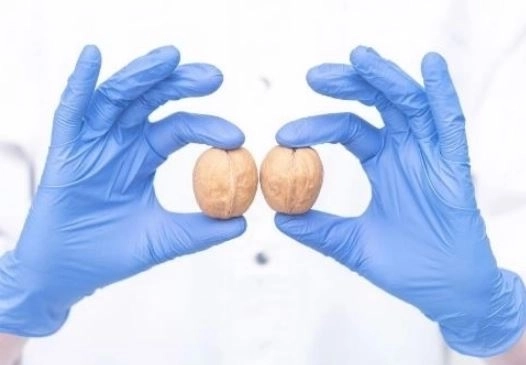
Undescended testicle in children is a relatively common condition, and it must be emphasized that it requires early diagnosis and careful follow-up to avoid future complications. Doctors stress that understanding the symptoms and signs plays a major role in ensuring timely and appropriate treatment.
An undescended testicle is a medical condition in which one or both testicles fail to move down into the scrotum, and it should be clarified that this natural descent usually occurs before birth. Doctors confirm that the presence of the testicle in the abdomen or inguinal canal requires accurate medical evaluation.
It must be emphasized that the visible appearance of an undescended testicle is typically an empty or underdeveloped scrotum on one side, and doctors strongly highlight that this is the most noticeable sign. Specialists point out that medical images clearly show the difference between a normal and affected scrotum, where the absence of the testicle is evident.
Diagnostic images must be clarified as including clinical examination and imaging scans, which help identify the location of the testicle whether in the abdomen or inguinal canal. Doctors confirm that these images play a crucial role in determining the condition and the appropriate treatment plan.
It must be emphasized that there is a condition known as a retractile testicle, and doctors stress that it is different from an undescended testicle. Specialists point out that the testicle may appear and disappear due to a natural muscle reflex, and they confirm that this condition usually does not require surgery but needs close monitoring.
It should be clarified that a high-riding testicle may indicate an issue with its normal descent, and doctors stress the importance of distinguishing between temporary elevation and a pathological condition. Specialists confirm that regular check-ups are essential to detect any changes.
Studies strongly emphasize that the causes may be multiple, and it is important to highlight the following:
It must be emphasized that neglecting treatment may lead to serious complications, and doctors stress the most important ones:
It must be emphasized that the primary treatment is surgical intervention, and doctors stress that the operation aims to fix the testicle in its natural position inside the scrotum. Specialists confirm that the best time for surgery is before the age of 1 to 1.5 years.
Dr. Reda El-Kady confirms that early diagnosis is the most important factor for treatment success, and he strongly emphasizes the need to monitor the child from the first months.
Dr. Reda El-Kady also explains that surgery has become highly safe, and he confirms that modern techniques have significantly reduced complications.
Dr. Reda El-Kady stresses that delaying treatment may affect future fertility, and he warns about the importance of proper surgical timing.
Dr. Reda El-Kady confirms that most cases achieve excellent results after surgery, and he strongly emphasizes the importance of post-operative follow-up to ensure stability.
Dr. Reda El-Kady also warns that the family plays a very important role, and he emphasizes the need to observe any changes and consult a doctor immediately.
It must be emphasized that parents’ experiences vary from case to case, and doctors stress that most experiences are positive with early intervention. Specialists point out that anxiety is natural, but they confirm that success rates are very high.