

Published on: 2026-05-03 | Written by: DrReda ElKady Consultant in Pediatric Neonatal
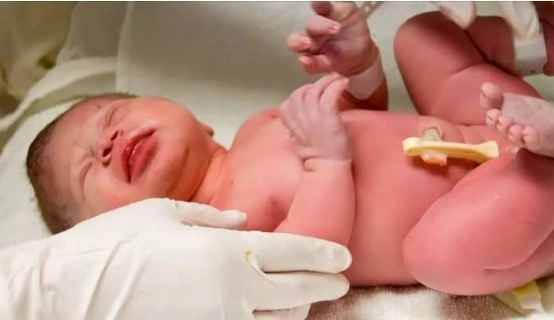
Learn about hypospadias in children, including its causes, degrees, treatment, and surgical repair with Dr. Reda El-Kady, Pediatric Surgery Specialist.
Hypospadias in children is a congenital condition affecting males, characterized by the displacement of the urethral opening from its natural location at the tip of the penis to its underside. The condition varies in severity; the opening may be near the tip in mild cases, or extend toward the middle, base, or scrotum in more severe cases. This anomaly is often accompanied by penile curvature (chordee) and an incomplete foreskin. It is one of the most common congenital anomalies, affecting approximately one in every 200 male newborns.
The good news is that this condition is fully treatable. With early diagnosis and timely surgical intervention by a specialized pediatric surgeon, the child regains a penis that is completely normal in both appearance and function in most cases, living a healthy, normal life without any long-term consequences. In this article, we will explain what hypospadias is, its symptoms, causes, degrees, and treatment options.
Hypospadias in children is a congenital condition affecting about 1 in every 200 male infants. It involves the displacement of the urethral opening (through which urine and semen pass) from its normal position at the tip of the penis to its underside.
Although very mild cases of hypospadias may not affect urinary or reproductive functions, most affected children require surgical correction. When treated by a specialized pediatric surgeon, treatment outcomes are highly satisfying; children achieve full recovery and regain normal appearance and function within approximately six months post-surgery.
Signs of hypospadias may be apparent from birth and are often detected during the newborn's initial physical examination. If you notice any of the following signs, consult your physician immediately.
The main symptom of hypospadias is the absence of the urethral opening from its normal location at the tip of the penis, alongside other revealing signs:
Difficulty Urinating: Urine does not stream straight; it may deflect sideways or downward, causing irritation to surrounding tissues and discomfort to the child.
Incomplete Foreskin Development: The foreskin covers part of the penis without fully encircling it, forming a hood-like appearance.
Important Warning: Circumcision is strictly not recommended in this condition, as the surgeon may need to use foreskin tissue during the repair procedure.
Penile Curvature (Chordee): The penis noticeably bends downward.
Undescended Testicles: One or both testicles may fail to descend into the scrotum, a condition requiring medical follow-up alongside hypospadias treatment.
Hypospadias does not manifest identically in all children; its severity varies based on the position of the urethral opening. It is categorized into three main degrees:
First-Degree Hypospadias (Mild): The opening is located near the tip of the penis. This is the most common form, accounting for about 50% of cases, and the easiest to treat surgically.
Second-Degree Hypospadias (Moderate): The opening shifts toward the middle of the penile shaft, accounting for about 30% of cases. It is frequently accompanied by penile curvature that requires surgical repair.
Third-Degree Hypospadias (Severe): The opening is located at the base of the penis, the scrotum, or the perineum. This is the most complex and severe form, accounting for about 20% of cases, requiring delicate surgery by a highly experienced specialist.
The exact cause of hypospadias remains unknown to date; however, medical research points to a combination of genetic and environmental factors.
Genetics may play a role, as the likelihood of occurrence increases when a relative has the same condition. Exposure to certain chemicals during fetal development is also suspected to increase risk. Penile development begins around the 8th week of pregnancy, and hypospadias typically occurs between the 9th and 12th weeks. It may occur as an isolated condition or, in some cases, alongside other congenital anomalies.
Certain factors may elevate the probability of a child developing hypospadias:
Maternal obesity (Body Mass Index over 30).
Advanced maternal age (over 35 years).
Fertility treatments, particularly those utilizing progesterone to support early pregnancy.
Hormone usage prior to or during pregnancy.
Exposure to chemicals and pesticides during pregnancy.
Maternal smoking during pregnancy.
Untreated hypospadias can significantly affect marital life and reproductive capacity if left uncorrected:
Urethral Opening Location: In severe, untreated cases, semen may not reach the vagina during intercourse, hindering conception.
Penile Curvature: Severe curvature causes difficulty and pain during intercourse, reducing pregnancy chances.
Urethral Meatal Stenosis: If the opening is excessively narrow, it can obstruct semen flow and disrupt ejaculation.
Psychological Factors: Concerns regarding cosmetic appearance or sexual ability can indirectly impact self-confidence and marital intimacy.
Diagnosing hypospadias is generally straightforward, as the characteristic physical appearance reveals itself at birth.
The missing urethral opening at the tip of the penis is the primary indicator. The foreskin is often incomplete, appearing as a hood over the top/back of the penis. In some cases, the penis appears curved downward, and in severe cases, it may look small, with a bifid (split) scrotum.
A physician usually detects the condition right after delivery during the routine newborn physical examination. In some instances, it is discovered when preparing for circumcision; if hypospadias is confirmed, circumcision is halted immediately so the surgeon can utilize foreskin tissue during repair.
Surgical intervention is the definitive treatment for hypospadias to ensure a healthy future for your child. Physicians prefer performing the procedure at an early age—before 18 months—when tissues are more pliable and heal rapidly.
The surgery aims to achieve three primary goals:
Reposition the urethral opening to its natural location at the tip of the penis.
Correct any associated penile curvature (chordee).
Restore a completely natural cosmetic appearance.
The operation is performed under general anesthesia and takes between 1 to 2 hours depending on complexity. Recovery is short, and the child typically returns to normal activity within a few weeks. When performed by an experienced pediatric surgeon, success rates are excellent.
The recommended age for hypospadias repair is between 6 and 18 months. This timing is chosen for key medical and psychological reasons:
At this age, the child is too young to recall or store memories of the procedure, avoiding psychological trauma.
Tissues possess exceptional healing capacity, minimizing post-operative complications.
The child's young age and physical calmness allow the surgeon precise control during surgery, while pain perception is less acute compared to older children.
When it comes to your child's health, expertise is non-negotiable. If your child has hypospadias—especially moderate or severe forms—you need a surgeon combining academic excellence, skill, and extensive hands-on experience.
Dr. Reda El-Kady is one of the leading pediatric surgeons in Egypt specializing in congenital anomaly correction. Holding a PhD in Pediatric Surgery from Cairo University and serving as a faculty member in the Department of Pediatric and General Surgery at Al-Azhar University, he integrates rigorous academic knowledge with surgical precision. Dr. El-Kady has enriched the medical field through research presented at national and international pediatric surgery conferences.
Early diagnosis is the first step toward successful treatment. Book your consultation today and ensure a normal, healthy future for your child.
Does hypospadias affect future fertility? It depends on the severity and whether it was treated timely. If corrective surgery is performed early, most children enjoy normal fertility in adulthood. Left untreated, severe cases can impair ejaculation and cause fertility difficulties.
How can I tell if my child has hypospadias? You will notice that the urethral opening is not at the tip of the penis but on its underside. You may also notice abnormal urine stream deflection or an incomplete foreskin. It is typically identified right after birth during routine neonatal exams.
Is hypospadias dangerous? It can cause long-term functional and psychological complications if left untreated. However, with proper early surgical repair, the condition is completely resolved without lasting impacts on the child's quality of life.
Dokki
Fifth Settlement
Nasr City
Alexandria
Kafr El-Sheikh
Beheira
For contact via Phone or WhatsApp:
01144821789
01004438929