
Published on: 2026-03-11 | Written by: International Cataract Institute Hospital
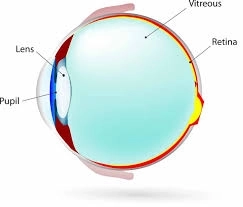
The eye is one of the most complex and delicate organs in the human body. It consists of several parts that work together to provide clear vision. Among the most important of these parts are the retina and the vitreous body, which play a crucial role in the process of vision. Cataract Institute Hospital confirms that maintaining the health of these two parts of the eye is essential to prevent many vision problems that may affect quality of life.
The retina is a thin, light-sensitive layer located at the back of the eye. It contains millions of nerve cells responsible for receiving light and converting it into nerve signals that are transmitted through the optic nerve to the brain, where they are interpreted as images.
Cataract Institute Hospital explains that the retina is one of the most vital parts of the eye because any damage to it may lead to severe vision impairment or even vision loss if it is not treated in time.
The vitreous body is a clear gel-like substance that fills the inside of the eye between the lens and the retina. This gel helps maintain the eye’s shape and allows light to pass through easily to reach the retina.
It also helps keep the retina in place. Cataract Institute Hospital emphasizes that any changes in the vitreous body can directly affect the retina and therefore influence the clarity of vision.
The retina and vitreous body are closely connected. The vitreous body attaches to the retina at several points inside the eye. As people age, the vitreous body may undergo structural changes that can cause it to partially separate from the retina.
In some cases, this separation may create traction on the retina or cause retinal tears, which require prompt medical attention. Cataract Institute Hospital notes that early diagnosis of these conditions plays a major role in preventing serious complications such as retinal detachment.
Several conditions can affect the retina and the vitreous body, including:
Retinal detachment
Diabetic retinopathy
Retinal tears
Vitreous hemorrhage
Posterior vitreous detachment
Age-related macular degeneration
Cataract Institute Hospital stresses that early detection and regular eye examinations help identify these diseases in their early stages, increasing the chances of successful treatment.
Some warning signs may indicate a problem with the retina or vitreous body, including:
Seeing black spots or floaters in vision
Sudden flashes of light
Blurred or sudden loss of vision
A shadow or curtain appearing in part of the visual field
If any of these symptoms appear, a doctor should be consulted immediately. Cataract Institute Hospital states that rapid diagnosis can be the most important factor in preserving vision.
Doctors rely on several advanced examinations to diagnose these conditions, including:
Fundus examination
Optical Coherence Tomography (OCT)
Retinal angiography
Eye ultrasound imaging
Cataract Institute Hospital explains that modern medical technologies allow specialists to detect even the smallest changes in the retina and vitreous body with high accuracy.
Treatment methods for retinal and vitreous diseases have advanced significantly in recent years and include:
Laser treatment to repair retinal tears
Injections inside the eye for certain retinal diseases
Vitrectomy surgery
Surgical procedures to treat retinal detachment
Cataract Institute Hospital confirms that advancements in eye surgery techniques have significantly improved the success rates of these treatments.
To protect eye and retinal health, doctors recommend:
Regular eye examinations, especially after the age of forty
Controlling blood sugar levels
Protecting the eyes from injury
Eating a healthy diet rich in vitamins beneficial for eye health
Visiting a doctor immediately if any unusual symptoms appear
In conclusion, Cataract Institute Hospital emphasizes that taking care of eye health and early detection of retinal and vitreous diseases play a major role in preserving vision and preventing serious complications that could affect quality of life.