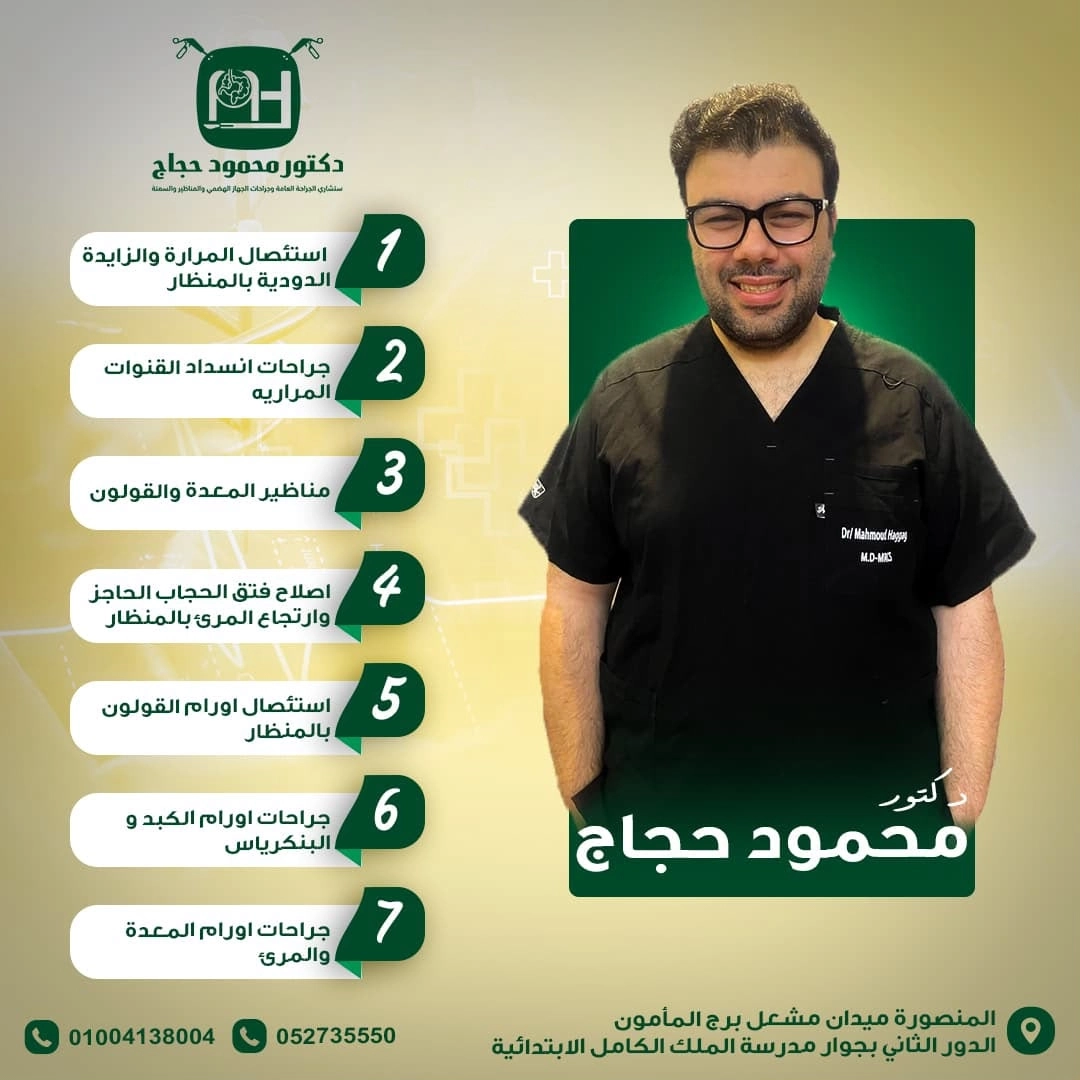

Published on: 2026-02-26 | Written by: Dr. Mahmoud Talaat El Emam, Consultant General
Treatment of Gastrointestinal and Liver Tumors: Latest Therapies and Improved Recovery Outcomes
Gastrointestinal and liver tumors are among the most serious conditions requiring precise diagnosis and a comprehensive treatment plan. It must be emphasized that early detection and correct medical intervention play a crucial role in increasing recovery rates and reducing complications.
What Are Gastrointestinal and Liver Tumors?
Dr. Mahmoud Talaat El Imam confirms that gastrointestinal tumors include cancers of the stomach, colon, rectum, pancreas, and liver. He warns that these tumors may be benign or malignant and vary in severity depending on their location and stage. He emphasizes that early diagnosis is the most important factor in determining treatment options and survival chances.
Causes of Tumor Development
Dr. Mahmoud Talaat El Imam confirms that the causes of gastrointestinal and liver tumors are diverse. He highlights that genetic factors, smoking, obesity, and unhealthy lifestyle habits significantly increase the risk. He also explains that chronic liver diseases, such as cirrhosis and viral hepatitis, represent major risk factors for liver cancer.
Symptoms of Gastrointestinal and Liver Tumors
Dr. Mahmoud Talaat El Imam confirms that symptoms may be silent in early stages, so attention must be paid to warning signs such as unexplained weight loss, persistent abdominal pain, or changes in bowel habits. He stresses that jaundice or frequent vomiting can indicate advanced disease.
Importance of Early Diagnosis
Dr. Mahmoud Talaat El Imam confirms that early diagnosis is the cornerstone of effective tumor treatment. He warns that regular screenings, including endoscopy, imaging, and lab tests, help detect tumors at their earliest stages. He emphasizes that early detection dramatically increases the chances of recovery and reduces the need for complex interventions.
Treatment Approaches for Gastrointestinal and Liver Tumors
Dr. Mahmoud Talaat El Imam confirms that tumor treatment depends on the type and stage of the tumor as well as the patient’s overall health. He stresses that treatment plans are often multidisciplinary. Treatment may include surgery, chemotherapy, radiotherapy, or modern targeted therapies.
Surgical Treatment of Tumors
Dr. Mahmoud Talaat El Imam confirms that surgery remains one of the most important methods for treating gastrointestinal and liver tumors. He warns that complete tumor removal significantly increases the chances of recovery. He also emphasizes that modern surgical techniques allow for precision operations that minimize complications and preserve healthy tissues.
Laparoscopic Surgeries for Tumor Treatment
Dr. Mahmoud Talaat El Imam confirms that laparoscopic surgeries have become an advanced option in tumor management. He explains that these procedures use small incisions instead of large traditional cuts. He warns that this technique reduces postoperative pain and accelerates recovery.
Modern Therapies for Tumors
Dr. Mahmoud Talaat El Imam confirms that modern medicine has greatly advanced tumor treatment. He warns that targeted therapies and immunotherapies have improved survival rates. He stresses that these therapies precisely target cancer cells while minimizing damage to healthy tissues.
Recovery Rates and Success Probabilities
Dr. Mahmoud Talaat El Imam confirms that recovery rates depend heavily on tumor stage at diagnosis. He stresses that early detection gives patients better treatment options. He warns that following the prescribed treatment plan and regular monitoring significantly increases success rates.
Post-Treatment Follow-Up
Dr. Mahmoud Talaat El Imam confirms that post-treatment care is as important as the treatment itself. He warns that adhering to regular check-ups and maintaining a healthy lifestyle is essential. He stresses that consistent follow-up helps detect any recurrence early and improves the patient’s quality of life.
Prevention of Gastrointestinal and Liver Tumors
Dr. Mahmoud Talaat El Imam confirms that prevention is the first line of defense against tumors. He warns about the importance of a balanced diet, avoiding smoking, and maintaining a healthy weight. He stresses the need for early treatment of chronic conditions and regular screenings, especially for those with a family history of cancer.