
Published on: 2025-12-28 | Written by: Dr. Mohamed Abdel Hamid PhD in Speech Therapy
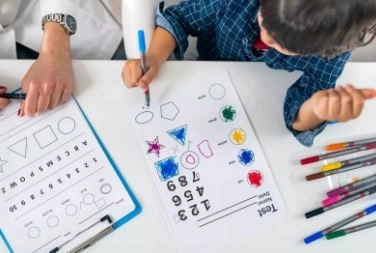
Intelligence testing is a fundamental tool in educational and psychological sciences for assessing the cognitive and mental abilities of individuals, whether children, adolescents, or adults. Evaluating intelligence helps identify strengths and weaknesses, guide individuals toward suitable educational and professional activities, and support the development of personal and social skills.
Dr. Mohamed Abdel Hamid emphasizes that early intelligence assessment is an essential step to fully understand an individual's abilities and to develop educational and personal strategies that achieve the best outcomes.
The main objectives of intelligence testing include:
Determining cognitive and mental abilities: Understanding levels of thinking, analysis, and reasoning
Identifying strengths and weaknesses: To provide appropriate support in educational areas
Guiding education and learning: Selecting curricula and activities suitable for the individual's abilities
Detecting early learning or psychological difficulties: Such as learning disabilities or developmental delays
Developing social and emotional skills: By understanding the individual's personality and thought processes
Dr. Mohamed Abdel Hamid points out that identifying mental abilities helps improve long-term academic and professional performance.
There are various intelligence tests that help assess cognitive abilities, including:
General intelligence tests: Such as the Wechsler Adult Intelligence Scale (WAIS) and the Stanford-Binet Test
Specialized intelligence tests: Assess verbal, mathematical, spatial, and social abilities
Tests for children and adolescents: Designed to measure cognitive abilities according to age and developmental stage
Emotional and social intelligence tests: Assess the ability to understand emotions and interact with others
Dr. Mohamed Abdel Hamid explains that selecting the appropriate test depends on the purpose of the assessment and the individual's age.
After conducting intelligence tests, results are analyzed to identify strengths and weaknesses and to develop an appropriate plan to enhance abilities. Uses of this analysis include:
Developing individualized educational plans for children and students
Guiding young people in choosing academic and professional paths
Designing training programs to improve cognitive and mental skills
Helping parents and teachers support the individual's mental and social development
Dr. Mohamed Abdel Hamid emphasizes that accurately analyzing intelligence test results contributes to scientifically guiding individuals toward success and excellence.
Engage in brain games such as puzzles and logic activities
Read books and expand general knowledge
Participate in interactive and educational activities
Maintain a healthy lifestyle including proper sleep and nutrition
Practice problem-solving and decision-making skills regularly
Dr. Mohamed Abdel Hamid stresses that combining scientific intelligence assessment with daily mental exercises enhances cognitive growth and develops long-term skills.
Dr. Mohamed Abdel Hamid confirms that using intelligence tests scientifically and thoughtfully allows individuals to be guided toward the best educational and professional choices while developing their mental and social skills.