

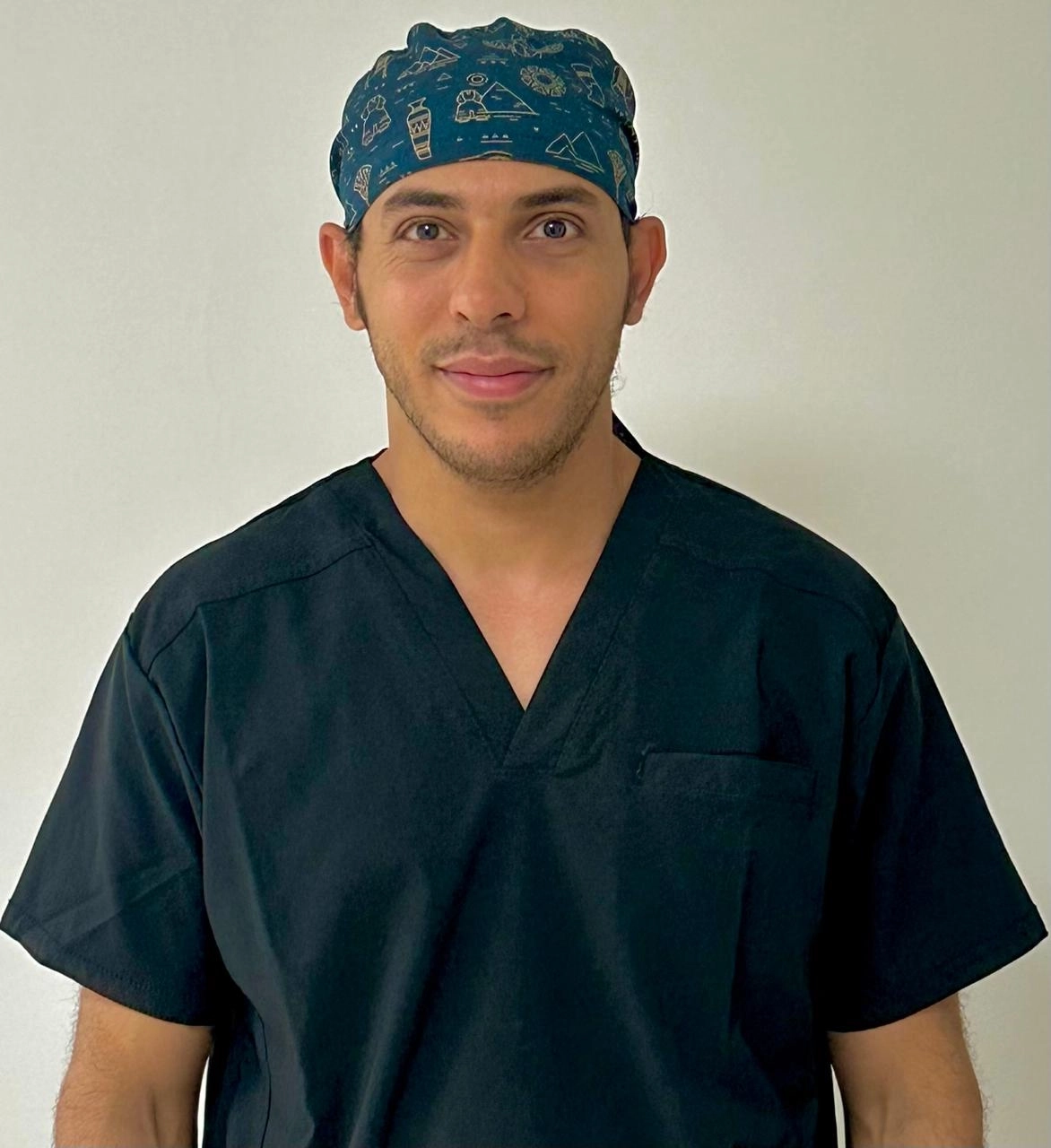
Dr. Ahmed Shaarawy, Urology and Andrology
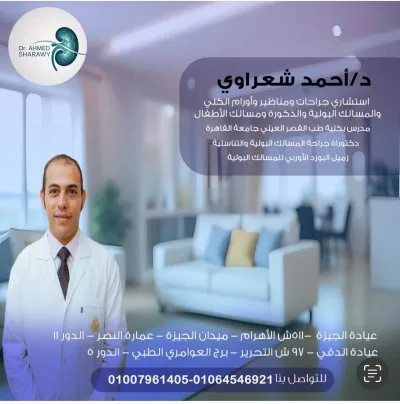
Dr. Ahmed Shaarawy is a Consultant in Kidney Cancer Surgery and Urology, Andrology, and Pediatric Urology, specializing in the treatment of urinary tract stones, prostate enlargement, andrology conditions, and minimally invasive procedures using endoscopy and laser techniques. His clinic is located in 511 Al-Ahram Street, Al-Nasr Building, Giza Square, 11th Floor, with another clinic in Dokki at 97 Al-Tahrir Street, Al-Omary Medical Tower. Dr. Ahmed Shaarawy is a Lecturer at Kasr Al-Ainy

Views: 46
Phone: 01007961405 - 01064546921
Address: 97 Al Tahrir Street, Al Awamry Medical Tower - 5th Floor, above Gad Restaurant
Working Hours: Saturday and Tuesday from 7 to 9 pm
Address: 511 Al-Ahram Street, Al-Nasr Building, Giza Square, 11th Floor
Working Hours: Monday and Thursday from 7 to 9 pm
Working Hours: الدقى: السبت والثلاثاء من 7 الى 9 م - الجيزة: الإثنين والخميس من 7 الي ٩ م
Doctors
Urologists, Andrology and infertility
cairo , Dokki
Comments Save Contact Follow

FAQ:
Dr. Ahmed Shaarawy is a consultant in kidney, urinary tract, andrology, and pediatric urology surgeries and endoscopies, and a lecturer at the Faculty of Medicine, Kasr El Aini - Cairo University. He holds a doctorate in urological and reproductive surgery and is a fellow of the European Board of Urology.
Dr. Ahmed Shaarawy specializes in surgeries and endoscopies of kidney and urinary tract tumors, male diseases, and pediatric urology, in addition to treating urinary tract stones and prostate enlargement using endoscopy, laser and plasma.
About me
Dr. Ahmed Shaarawy is a Consultant in Kidney Cancer Surgery and Urology, Andrology, and Pediatric Urology, specializing in the treatment of urinary tract stones, prostate enlargement, andrology conditions, and minimally invasive procedures using endoscopy and laser techniques. His clinic is located in 511 Al-Ahram Street, Al-Nasr Building, Giza Square, 11th Floor, with another clinic in Dokki at 97 Al-Tahrir Street, Al-Omary Medical Tower. Dr. Ahmed Shaarawy is a Lecturer at Kasr Al-Ainy Faculty of Medicine, Cairo University, holds a PhD in Urological and Genital Surgery, is a Fellow of the European Board of Urology, and is a member of the Egyptian, European, and American Urological Associations.
Clinic Services
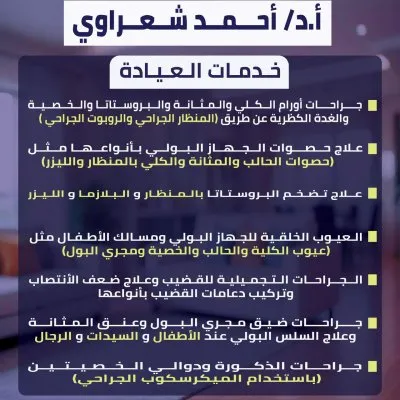
- Prostate cancer, kidney cancer, bladder cancer, testicular cancer, and adrenal gland tumors, treated through laparoscopic surgery and robotic surgery.
- Treatment of urinary tract stones of various types, including ureter, bladder, and kidney stones using endoscopy and laser techniques.
- Treatment of congenital urinary tract abnormalities and pediatric urological conditions, including kidney, ureter, testicular, and urethral abnormalities.
- Treatment of enlarged prostate using endoscopy, plasma, and laser techniques.
- Penile cosmetic surgery, treatment of erectile dysfunction, and penile implant procedures of different types.
- Surgery for urethral and bladder neck strictures, as well as treatment of urinary incontinence in children, women, and men.
- Andrological surgeries and varicocele treatment using a surgical microscope.
Clinic Addresses and Appointments
Giza: 511 Al-Ahram Street, Al-Nasr Building, Giza Square, 11th Floor.
- Appointments: Monday and Thursday from 7:00 PM to 9:00 PM.
Dokki: 97 Al-Tahrir Street, Al-Omary Medical Tower, 5th Floor, above Gad Restaurant.
- Appointments: Saturday and Tuesday from 7:00 PM to 9:00 PM.
Dr. Ahmed Shaarawy – Urology and Andrology
- Consultant of Kidney Cancer Surgery and Endoscopic Procedures, Urology, Andrology, and Pediatric Urology.
- Lecturer at Kasr Al-Ainy Faculty of Medicine, Cairo University.
- PhD in Urological and Genital Surgery.
- Fellow of the European Board of Urology.
- Member of the Egyptian, European, and American Urological Associations.
Services:
Pediatric Urology Adult Urology Hydrocephalus Treatment Lithotripsy Nephrectomy Open Prostatectomy Laser Prostatectomy Transurethral Prostatectomy Urinary Incontinence Surgery Varicocele Surgery Vasectomy Dialysis Andrology and Infertility Laser Kidney Stone Crushing Laparoscopic Laparoscopic Laparoscopic Resection of Kidney and Bladder Tumors Urethral Surgery Laser Ureteral Stone Crushing Laparoscopic Laparoscopic Laparoscopic Laparoscopic Treatment of Involuntary Urination Erectile Dysfunction Surgeries Neurogenic Bladder Treatment Urinary Incontinence in Men and Women Urinary Obstruction Treatment of Genital Deformities in Children Laser Bladder Stone Crushing Laparoscopic Bladder Stone Crushing Pediatric Urology Impotence Treatment Sexual urinary dynamics female urinary tract kidney surgery kidney cancer prostate cancer bladder cancer premature ejaculation treatmentArticles

Treatment of urinary incontinence in men women with Dr. Ahmed Shaarawy
Urinary incontinence is a condition that can affect men, women, and children, and its causes vary from one person to another. Therefore, treatment depends on identifying the underlying cause and type of incontinence after an appropriate medical evaluation. Treatment options may...
more
