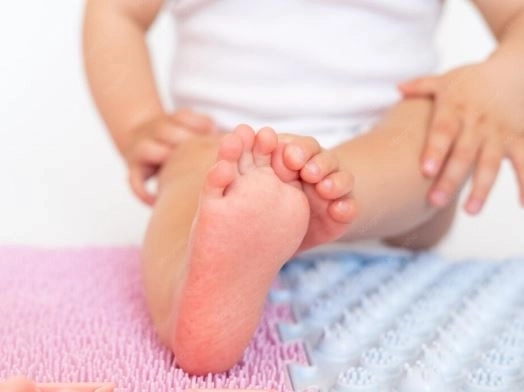
Clubfoot is considered one of the most common congenital deformities affecting newborn babies. It affects the normal shape and position of the foot, causing it to turn inward and downward. Although this condition may seem alarming when first detected, significant advances in modern treatment methods have greatly improved the chances of recovery, especially with early diagnosis and timely intervention.The importance of studying clubfoot lies in understanding its causes, symptoms, and diagnostic methods, as well as learning about the latest treatment options, whether conservative or surgical. This aims to help the child grow normally and achieve proper walking and movement without limitations. This research also seeks to raise awareness among parents about the importance of early medical follow-up and its crucial role in achieving the best possible outcomes.
Clubfoot (Congenital Talipes Equinovarus)
Clubfoot is defined as a congenital deformity present at birth in which the baby’s foot is twisted inward and downward in an abnormal position. Early intervention is very important to prevent future disability. In most cases, clubfoot can be successfully treated with a success rate exceeding 90% using the Ponseti method, which is based on serial casting and corrective manipulation. Treatment is ideally started within the first two weeks after birth.
❓ Is clubfoot a hereditary condition?
Genetic factors may play a role in the development of clubfoot, especially if there is a family history of the condition. However, not all cases are hereditary, as it can also occur in children with no family history.
❓ Can clubfoot be detected before birth?
Yes, some cases can be detected during pregnancy through ultrasound imaging, which helps in early preparation for treatment after delivery.
❓ Does clubfoot cause pain in newborns?
Clubfoot is usually not painful at birth. However, if left untreated, it may lead to difficulties in walking and may become painful later in life.
❓ Does clubfoot affect a child’s ability to walk?
If treated early and properly, most children can walk normally and participate in daily activities and sports without significant limitations.
❓ What is the best age to start treatment?
The best time to start treatment is within the first days or weeks after birth, when outcomes are most effective.
❓ Do all cases require surgery?
No, not all cases require surgery. Most cases can be successfully treated using the Ponseti method. Some cases may require a minor procedure such as Achilles tendon lengthening, while surgery is reserved for severe or resistant cases.
❓ How long does treatment take?
Treatment duration varies depending on severity, but it usually involves several weeks of serial casting followed by long-term use of a brace or corrective shoes to maintain correction and prevent relapse.
❓ Can clubfoot come back after treatment?
Yes, recurrence can occur if the brace or corrective footwear is not used as instructed. Therefore, adherence to the treatment plan is essential for success.
❓ Can a child with clubfoot play sports in the future?
Yes, in most properly treated cases, children can participate in sports and normal physical activities without major limitations.
❓ Does clubfoot affect one foot or both feet?
Clubfoot may affect one foot or both feet. Bilateral involvement (both feet) is relatively common.
❓ Is there a difference between clubfoot and simple foot deformity?
Yes, clubfoot is a true structural congenital deformity involving bones, joints, and tendons, while some mild positional foot deformities in newborns are flexible and often resolve spontaneously without intensive treatment.
❓ Can regular shoes treat clubfoot?
No, regular shoes cannot treat clubfoot. Specialized treatment is required, such as serial casting, bracing, or surgery depending on the case, as determined by an orthopedic specialist.
❓ Does clubfoot affect a child’s growth?
In most cases, clubfoot does not affect a child’s overall physical growth if it is treated early and properly. After correction, the child is expected to grow and develop normally.
❓ When should a doctor be consulted immediately?
A doctor should be consulted immediately in the following situations:
- When inward or downward turning of the foot is noticed right after birth.
- If signs of deformity recurrence appear after treatment.
- If there is difficulty wearing the brace or if redness or skin ulcers develop.
Congenital Talipes Equinovarus (Clubfoot)
First: Types
Clubfoot is mainly classified into two types:
1. Idiopathic Clubfoot
- A simple deformity with no known cause.
- The most common type.
- Not associated with other health problems.
- Usually responds very well to treatment.
2. Syndromic (Complex) Clubfoot
- Associated with other medical conditions.
- Examples include joint deformities and Spina Bifida.
- More difficult to treat.
- May require early surgical intervention.
Second: Causes
The causes of clubfoot include:
- Genetic factors: A family history increases the risk.
- Abnormal fetal development: Improper development of bones, muscles, tendons, and ligaments during pregnancy.
- Neuromuscular disorders: Such as Spina Bifida and other neurological conditions.
- Environmental factors during pregnancy: Such as smoking or harmful exposures, though not a direct cause in most cases.
- Limited uterine space or low amniotic fluid: May increase the risk of deformity.
Third: Symptoms
Symptoms of clubfoot are usually present at birth and include:
✨ Main symptoms
- Inward and downward turning of the foot.
- Toes pointing inward.
- High arch of the foot.
- Smaller affected foot size.
- Weak or underdeveloped calf muscles.
- Limited movement of the foot and ankle.
If untreated
- Walking on the side or top of the foot instead of the sole.
- Difficulty walking and running.
- Formation of calluses or ulcers due to abnormal pressure.
Degrees of Clubfoot
Clubfoot severity is classified using clinical scoring systems such as the Pirani Score and Dimeglio Classification.
Simplified classification:
1. Mild
- Slight inward turning of the foot.
- Flexible foot.
- Easily corrected with stretching or casting.
2. Moderate
- Clear deformity with partial stiffness.
- Reduced flexibility.
- Requires early treatment with serial casting and bracing.
3. Severe
- Marked inward and downward deformity.
- Significant stiffness in joints and tendons.
- Difficult to correct manually.
- May require additional treatment and sometimes surgery
⚠️ Complications of Clubfoot (Congenital Talipes Equinovarus)
If clubfoot is not treated early and properly, it may lead to several complications, including:
1 Mobility problems
- Difficulty walking or abnormal gait
- Walking on the side or top of the foot instead of the sole
- Poor balance during movement
2. Pain and physical issues
- Chronic foot and ankle pain in later life
- Joint stiffness and reduced mobility
- Calf muscle wasting and smaller leg size on the affected side
3. Foot deformities
- Permanent deformity if left untreated
- Difficulty wearing normal shoes
- Development of calluses or skin ulcers due to abnormal pressure
4. Other effects
- Psychological and social impact due to appearance and walking difficulties
Diagnosis of Clubfoot
Clubfoot is usually diagnosed through clinical examination, and sometimes it can be detected before or after birth.
1. Prenatal diagnosis
- Detected using ultrasound (sonography)
- Usually seen in the second trimester of pregnancy
- Abnormal inward position of the foot inside the uterus
2. Postnatal diagnosis
The doctor evaluates:
- Inward and downward turning of the foot
- Toes pointing inward
- Smaller foot and calf compared to the normal side
- Limited foot and ankle movement
- Degree of stiffness or flexibility
3. Severity assessment
Doctors use scoring systems such as:
- Pirani Score
- Dimeglio Classification
4. Additional investigations
- X-rays are not always necessary in newborns
- May be used if other abnormalities are suspected
- Neurological or muscular tests may be required in conditions such as Spina Bifida
5. Nursing diagnosis aspects
May include:
- Impaired physical mobility due to foot deformity
- Risk of delayed motor development
- Parental anxiety
- Lack of parental knowledge about treatment and follow-up
Effects of clubfoot on the child
- Usually painless in early infancy
- Does not resolve spontaneously
- Affects walking if untreated
✳️ Possible effects:
- Reduced foot flexibility
- Mild shortening of the affected leg
- Difference in shoe size between feet
- Smaller calf muscles on the affected side
⚠️ If untreated
- Difficulty or inability to walk normally
- Walking on toes or the side of the foot
- Future arthritis
- Skin ulcers and deformities
- Muscle weakness and delayed motor development
- Psychological impact (low self-esteem in adolescence)
Duration of clubfoot brace use
- Phase 1: Nearly full-time wear (about 23 hours/day) for ~3 months
- Phase 2: Night and nap use until around 4 years of age
- Goal: Prevent relapse
Medical (drug) treatment
- No medication can correct the deformity itself
- Medications are only supportive:
- Anesthesia is used only during surgical procedures
Surgical treatment of clubfoot
Used when conservative treatment fails or in severe cases:
1. Achilles Tenotomy
Indications
- Persistent tightness of Achilles tendon after casting
- Inability to dorsiflex the foot
Procedure
- Small incision behind the ankle
- Partial or complete cutting of the Achilles tendon
- Casting for a few weeks to allow proper healing
⭐ Advantages
- Simple and quick
- Common part of the Ponseti method
2. Soft Tissue Release
Indications
- Severe or resistant cases
Procedure
- Surgical incision around the foot and ankle
- Lengthening of tight tendons
- Release of ligaments and joint capsule
- Repositioning and casting
Goal
- Improve flexibility and correct deformity
3. Posteromedial Release
Indications
- Severe and rigid deformities
Surgical Procedures for Clubfoot (Congenital Talipes Equinovarus)
3. Posteromedial Release
Procedure
- Release of tight tissues in the posterior and medial (back and inner) part of the foot
- Lengthening of tendons and ligaments
- Realignment of bones and joints to restore normal foot position
4. Tendon Transfer
Most common example
- Anterior Tibial Tendon Transfer
Indications
- Recurrence of deformity after treatment
- Muscle imbalance around the foot
Procedure
- Detaching the tendon from its original position
- Reattaching it in a new location to help maintain foot alignment
5. Corrective Osteotomy
Indications
- Older children
- Residual deformity after previous treatments
Procedure
- Cutting a part of the foot or ankle bones
- Reshaping bone alignment
- Fixation using screws, plates, or wires
6. Arthrodesis (Joint Fusion)
Indications
- Severe deformities
- Neglected cases in adolescents or adults
Procedure
- Removal of cartilage between joints
- Fusion of bones together until they heal as one unit
- Reduces movement to achieve stability and correction
7. External Fixation
Indications
- Complex or recurrent cases
- Difficult deformities to correct
Procedure
- Placement of an external frame around the foot and leg
- Gradual correction of foot position over weeks or months
Postoperative Care
- Application of a cast or brace to maintain correction
- Physical therapy to improve strength and mobility
- Regular follow-up with an orthopedic specialist
- Use of corrective shoes or braces if needed
⚠️ Possible Surgical Complications
- Infection
- Bleeding
- Joint stiffness
- Injury to nerves or blood vessels
- Recurrence of deformity
- Overcorrection or undercorrection
Prevention of Clubfoot
Since most cases of clubfoot are congenital and occur during fetal development, there is no guaranteed way to completely prevent it. However, several measures can reduce risk factors and improve early detection and outcomes.
First: Before and During Pregnancy
1. Pre-pregnancy counseling
- Medical consultation if there is a family history
- Assessment of genetic risk factors
- Genetic counseling when necessary
2. Healthy pregnancy care
- Regular prenatal check-ups
- Routine medical screening
- Balanced and healthy nutrition
3. Folic acid intake
- Taken before and during early pregnancy
- Helps reduce some congenital abnormalities, especially neural tube defects
4. Avoid smoking
- No smoking during pregnancy
- Avoid secondhand smoke exposure
5. Avoid alcohol and drugs
- These substances may affect fetal development and increase risk of birth defects
6. Avoid unsupervised medications
- Only take prescribed drugs
- Inform the doctor about all medications used during pregnancy
Second: Early detection
1. Ultrasound monitoring
- Regular ultrasound during pregnancy
- May detect the condition early, allowing postnatal planning
2. Postnatal examination
- Immediate examination of the newborn’s feet
- Early diagnosis allows treatment within days or weeks, which gives the best results
Third: Preventing complications and relapse
After diagnosis and treatment, prevention focuses on avoiding recurrence:
1. Treatment compliance
- Attend all follow-up visits
- Follow casting and bracing instructions carefully
2. Use of brace or corrective shoes
- Wear for the duration prescribed by the doctor
- Do not stop early even if the foot looks normal
3. Regular follow-up
- Monitor foot growth and function
- Detect early signs of relapse
4. Physical therapy
- Perform recommended exercises
- Maintain muscle and joint flexibility
5. Parental education
Parents should recognize early signs of relapse such as:
- Inward turning of the foot
- Reduced ankle movement
- Walking on the side of the foot