

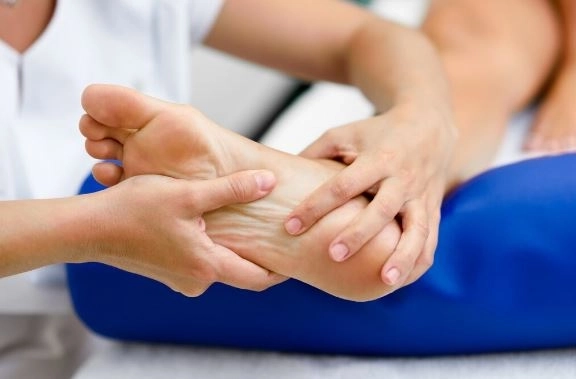
Curled toes are a common foot condition that many people may experience without noticing it in its early stages. The problem often begins with a slight change in the shape of one of the toes and gradually progresses, affecting comfort while walking and making it more difficult to choose suitable footwear.The causes of this condition vary and may include daily habits such as wearing tight shoes, as well as health-related factors such as excess weight and weakness of the foot muscles and tendons. In some cases, it may also appear in children due to genetic factors or congenital abnormalities.Although the condition may seem minor at first, neglecting it can lead to complications that negatively affect mobility and overall quality of life. Therefore, it is important to understand the causes of curled toes accurately, recognize the factors that increase the risk of developing the condition, and identify the groups most vulnerable to it. Early awareness, prevention, and treatment can help prevent the condition from worsening and reduce its impact on daily activities.
Toe curvature, also known as toe deformity, is a condition that affects the joints of the toes, causing them to bend abnormally either downward or upward. These deformities can appear in different forms, such as a bunion affecting the big toe, hammer toe, claw toe, and other conditions that alter the normal shape and function of the foot.
In most cases, toe curvature does not resolve on its own, especially when it is caused by tendon tightness or structural changes in the bones. However, the condition may stabilize or progress more slowly if it is detected early and managed with appropriate treatment.
Not necessarily. In the early stages, the condition may not cause any noticeable pain. Over time, however, or when wearing tight and poorly fitting shoes, pain, discomfort, or pressure may develop during walking or prolonged standing.
Yes. Tight shoes and high heels are among the most common contributing factors to toe deformities. Continuous pressure on the toes can gradually force them into abnormal positions, leading to permanent changes over time.
Yes. If left untreated or if lifestyle factors remain unchanged, the condition may gradually worsen, increasing the degree of toe bending and making walking and wearing shoes more difficult.
Yes, although it is less common in children than in adults. It may occur due to genetic factors or the use of inappropriate footwear during growth and development, which can affect toe alignment over time.
Yes. Excess body weight increases pressure on the feet, which may accelerate the development or progression of toe deformities, particularly in individuals who stand or walk for extended periods.
Toe deformities can take several forms, each with its own characteristics and causes.
Hammer toe is the most common type of toe deformity. In this condition, the toe bends at the middle joint, creating a hammer-like appearance.
Most commonly affects the second or third toe.
Often worsens with the use of tight footwear.
In claw toe, the toe bends downward at all of its joints, giving it a claw-like appearance.
More commonly seen in the smaller toes.
May cause pain and the development of corns or calluses.
Mallet toe occurs when only the last joint of the toe bends downward.
Most often affects the second toe.
Causes the tip of the toe to point downward.
Hallux valgus occurs when the big toe gradually shifts toward the other toes. It is often accompanied by a bony prominence on the side of the foot.
Frequently associated with genetic factors or tight footwear.
May cause pain in the joint of the big toe.
This condition occurs when one toe overlaps another or slips underneath it.
May be congenital or caused by prolonged pressure from footwear.
Commonly affects the little toe.
Toe curvature, including bending upward, downward, or sideways, can result from several mechanical and medical factors. In many cases, it develops gradually over time.
This is one of the most common causes. Constant pressure on the toes can force them into abnormal positions, eventually leading to permanent deformities.
Some individuals inherit a predisposition to foot deformities, such as bunions or toe misalignment, which may become more noticeable with age.
Conditions such as osteoarthritis and rheumatoid arthritis can weaken the supporting ligaments and contribute to progressive toe deformities.
Muscle weakness or tendon imbalance can create abnormal pulling forces on the toes, causing them to bend rather than remain straight.
Poorly healed injuries or old fractures may leave lasting structural changes that affect the normal position and alignment of the toes.
These conditions involve tendon and joint abnormalities that lead to visible bending and deformity of the toes.
As people age, the ligaments and muscles that support the toes naturally weaken, increasing the likelihood of developing toe curvature and other foot deformities.
The symptoms of toe curvature vary depending on the severity and underlying cause of the condition. However, several common signs are frequently observed among affected individuals:
One or more toes may become bent, twisted, or misaligned, either upward, downward, or toward neighboring toes.
Pain may occur while walking or wearing shoes, especially tight footwear or high heels.
Individuals may experience discomfort, pressure, or tightness around the toe area when wearing shoes.
Continuous friction and excessive pressure on certain areas of the foot can lead to thickened skin, corns, or calluses.
Mild inflammation, redness, or swelling may develop around the affected joints.
The affected toe may become difficult to move or straighten normally.
Improper weight distribution across the foot can lead to fatigue, discomfort, and pain during prolonged walking or standing.
Complications may develop if toe curvature is left untreated or continues to worsen over time. The severity of these complications depends on the type and extent of the deformity.
Pain may initially be mild but can gradually become more severe, particularly during walking or when wearing tight or poorly fitting shoes.
As the deformity progresses, abnormal pressure distribution on the foot can make walking more difficult and lead to increased fatigue and discomfort.
Constant friction between the toes or against footwear can result in painful areas of thickened skin.
Persistent pressure may cause inflammation of the affected toe joints, sometimes resulting in chronic swelling.
Over time, excessive stress on the joints may contribute to cartilage wear, leading to early osteoarthritis and chronic foot pain.
If treatment is delayed, the curvature may become fixed and permanent, making correction more difficult without medical or surgical intervention.
This is especially common in individuals who wear extremely tight shoes or have reduced sensation in their feet, increasing the risk of pressure-related skin injuries.
Toe curvature is diagnosed through a combination of clinical evaluation and diagnostic tests performed by an orthopedic surgeon or foot specialist to determine the underlying cause and severity of the condition.
The physician examines the foot and toes to assess:
The presence of toe bending or deformity
Pain during pressure or movement
Corns, calluses, or areas of thickened skin
The toe's range of motion and ability to straighten
The patient may also be asked to walk so the physician can observe gait patterns and weight distribution across the foot.
The physician will ask several important questions, including:
When did the problem begin?
Is the pain constant or does it occur only at certain times?
What type of footwear is used regularly?
Is there a history of previous injuries or medical conditions such as rheumatoid arthritis or diabetes?
X-rays are among the most important diagnostic tools because they:
Provide a clear view of the bone structure
Determine the degree of deviation or deformity
Help assess the progression and severity of the condition
In certain situations, additional investigations may be required, such as:
Magnetic Resonance Imaging (MRI) to evaluate tendons and ligaments
Blood tests to identify inflammatory joint diseases or autoimmune disorders
After completing the evaluation, the condition is generally classified as:
Can usually be managed with conservative, non-surgical treatment.
May require orthotic devices, splints, or physical therapy.
May require surgical intervention to correct the deformity.
Medication does not directly correct the shape of a curved or deformed toe. Instead, drug therapy primarily focuses on relieving pain, reducing inflammation, and improving mobility, particularly in mild cases or when the condition is associated with disorders such as arthritis.
The most commonly used medications include:
Pain relievers are used to manage mild to moderate pain.
Examples include:
Paracetamol (Acetaminophen)
Stronger analgesics when necessary, based on the severity of the condition and the physician’s assessment
These medications help reduce pain symptoms but do not address the underlying cause of the toe deformity.
NSAIDs are among the most important medications used in managing toe curvature.
Examples include:
Ibuprofen
Diclofenac
Naproxen
Reduce inflammation around the affected joints
Decrease swelling
Relieve pain during walking and movement
Note: These medications are often recommended to be taken after meals to reduce the risk of stomach irritation.
Topical medications can be applied directly to the painful area.
Provide localized pain relief
Suitable for mild cases or as a complementary treatment alongside oral medications
These medications may be prescribed when the deformity is associated with autoimmune diseases such as rheumatoid arthritis.
Examples include:
Disease-Modifying Antirheumatic Drugs (DMARDs)
Corticosteroids under careful medical supervision
These treatments target the underlying disease process rather than simply managing symptoms.
Corticosteroid injections may be considered in selected cases involving significant joint inflammation.
Provide rapid and powerful anti-inflammatory effects
Offer temporary pain relief
Note: Repeated injections should only be administered under medical supervision due to the risk of side effects.
Surgery is generally considered the final treatment option for severe toe deformities or cases that do not respond to conservative treatments such as orthopedic footwear, splints, orthotics, or physical therapy. The goal of surgery is to correct the toe's alignment, relieve pain, and improve foot function.
To correct the abnormal bending at the middle joint of the toe.
Performed under local or regional anesthesia
The surgeon may:
Release or lengthen tight tendons
Remove a small portion of bone from the affected joint
In some cases, a temporary metal pin (Kirschner wire) is inserted to maintain proper alignment during healing
Restore a more natural toe position and reduce pain.
To correct deformities involving multiple joints within the same toe.
Lengthening shortened tendons
Releasing tightened ligaments
Occasionally reshaping or removing a small portion of bone
Temporary internal fixation with pins may be used
Straighten the toe and prevent recurrence of the claw-like position.
To correct deformity affecting only the distal (last) joint of the toe.
Removal of a small section of bone near the tip of the toe
Adjustment of the tendon responsible for the deformity
Temporary fixation with a pin when necessary
Correct the downward bending of the toe tip and reduce shoe-related irritation.
To correct deviation of the big toe and the associated bony prominence.
Can be performed through traditional open surgery or minimally invasive techniques
The surgeon reshapes or cuts the prominent bone
The bones are realigned using:
Surgical screws
Small metal plates
Ligaments may be tightened to maintain proper alignment
Restore the normal position of the big toe and improve both foot appearance and function.
To redistribute tendon forces within the foot and improve muscular balance.
A tendon is transferred from a stronger area to a weaker one
Tendon tension is adjusted to restore balance among the toes
Bone cutting is not always required
Improve toe movement and reduce the risk of recurrent deformity.
To permanently stabilize a joint in a straight position.
Damaged joint surfaces are removed
Bones are fixed together using screws, plates, or other hardware
The bones eventually fuse into a single stable structure
Provide a permanent solution for severe, chronic deformities.
To correct the deformity through very small incisions.
Tiny surgical incisions, typically 2–3 mm in length
Specialized instruments are used to adjust bones and tendons
No large surgical incision is required
Reduce postoperative pain, minimize tissue damage, and accelerate recovery.
Proper postoperative care plays a crucial role in ensuring successful recovery after toe deformity surgery. Patients are generally advised to:
Wear a specialized postoperative medical shoe for a prescribed period.
Limit walking and physical activity during the first few days after surgery.
Use crutches when necessary to reduce pressure on the operated foot.
Attend physical therapy sessions to restore normal toe and foot movement.
Expect some degree of swelling, which may persist for several weeks as part of the normal healing process.
Exercise therapy is considered an effective treatment option for mild to moderate cases of toe curvature. It helps strengthen foot muscles, improve tendon flexibility, and reduce pain and stiffness. However, while exercises can enhance function and mobility, they may not completely restore normal toe alignment in advanced cases.
Sit comfortably with your foot resting on the floor.
Gently hold the affected toes with your hand.
Slowly stretch them forward or downward without causing pain.
Hold the position for 10–15 seconds.
10 times per foot.
Helps relax tight tendons that contribute to toe deformities.
Place a small towel on the floor.
Use your toes to pull the towel toward you.
Then spread it back out again.
2–3 times daily for approximately 5 minutes.
Strengthens toe muscles and improves control of toe movements.
Place several marbles or small objects on the floor.
Use your toes to pick them up and place them into a cup.
10–15 minutes daily.
Strengthens the small intrinsic foot muscles and improves toe flexibility.
Spread your toes apart as far as possible.
Slowly bring them back together.
15–20 repetitions per foot.
Improves joint flexibility and reduces crowding between the toes.
Walk on your tiptoes for 20–30 seconds.
Rest briefly and repeat.
5 times.
Strengthens the muscles of the foot and ankle while supporting proper toe alignment.
Gently pull the curved toe toward its natural position using your hand.
Hold for 15 seconds.
10 times daily.
Helps reduce stiffness and improve joint flexibility.
Place a small ball under your foot.
Slowly roll it forward and backward.
5–10 minutes daily.
Improves circulation and relaxes foot muscles.
Stop immediately if you experience severe pain.
Wear comfortable, wide-fitting shoes.
Perform the exercises consistently every day for the best results.
Improvement usually requires time and patience, often taking several weeks to months.
In addition to exercise, the following measures can help reduce symptom progression and improve comfort:
Select shoes with a wide toe box.
Avoid tight or pointed shoes.
Limit the use of high heels.
Choose shoes with flexible and comfortable soles.
Help keep the toes properly aligned.
Reduce friction between the toes.
May gradually improve toe positioning.
Can be worn inside shoes or during periods of rest.
Exercises such as toe stretching, object pick-up exercises, and ball rolling can:
Strengthen foot muscles.
Improve mobility and flexibility.
Provide better long-term results when performed consistently.
Take regular rest breaks.
Elevate your feet when experiencing fatigue or discomfort.
Apply for 10–15 minutes at a time.
Helps reduce pain and swelling after physical activity.
Keep the skin moisturized.
Treat corns and calluses early.
Maintain proper foot hygiene and keep the feet clean and dry.
Reduces pressure on the feet.
May help slow the progression of toe deformities.
Avoid standing on tiptoes for prolonged periods.
Avoid wearing uncomfortable or poorly fitting shoes.
Do not ignore persistent foot pain.
Schedule early evaluation with an orthopedic surgeon or foot specialist.
Obtain imaging studies when recommended.
Monitor the condition regularly if signs of progression appear.
Improve pressure distribution across the foot.
Reduce stress on the toes.
Can be particularly beneficial for individuals who experience pain while walking.