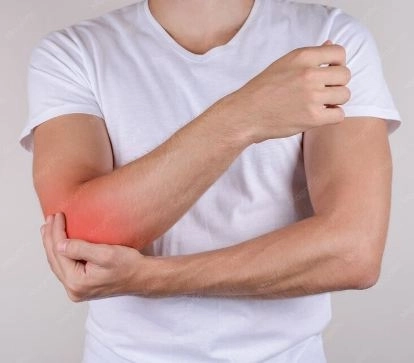
When the elbow joint is subjected to a strong injury, the problem may not be just a simple fracture or a temporary dislocation. In some cases, it develops into a complex condition known as the “terrible triad of the elbow.” This injury involves a joint dislocation combined with three bone and ligament injuries that severely limit arm movement and make even simple daily activities difficult.The danger of this condition lies in the fact that it does not affect the bones alone, but also damages the stability of the joint and the surrounding ligaments. This makes treatment more complicated and requires prompt and precise medical intervention. However, early diagnosis and a proper treatment plan can make a significant difference in recovery outcomes and help restore good elbow function.In this article from Dalili Medical, we explore everything you need to know about the terrible triad of the elbow, including its causes, symptoms, and treatment options, to help better understand this complex injury.
What is the Terrible Triad of the Elbow?
The “Terrible Triad of the Elbow” is a complex and serious injury of the elbow joint that consists of three simultaneous injuries: elbow joint dislocation, a fracture of the radial head, and a fracture of the coronoid process of the ulna. It is often associated with damage to the surrounding ligaments that help stabilize the joint. This injury usually occurs after a fall on an outstretched hand and typically requires urgent surgical intervention to restore joint stability and prevent complications such as stiffness or long-term loss of movement.
Is the Terrible Triad dangerous?
Yes, this injury is considered serious because it directly affects the stability and function of the elbow joint. If not properly treated, it may lead to severe difficulty in movement, joint stiffness, or long-term osteoarthritis.
Can the Terrible Triad of the Elbow occur in children?
Yes, it can occur in children, but it is less common than in adults due to the greater flexibility of children’s bones. However, it may still happen in cases of severe falls or strong trauma, and it requires careful evaluation and treatment similar to adult cases.
Can the Terrible Triad occur without an obvious dislocation?
Yes, in some cases the dislocation may not be clearly visible during examination, as it may be mild or may have spontaneously reduced. However, the bone fractures and ligament injuries are still present, making accurate diagnosis more difficult without imaging studies such as X-rays or CT scans.
Can the arm be used if the pain is tolerable?
No, it is strongly not recommended to use the injured arm even if the pain seems mild at first. Continued use may worsen the injury, increase the dislocation, or cause further damage to the surrounding bones and ligaments, making treatment more complicated.
Is prolonged immobilization beneficial?
No, prolonged immobilization may temporarily reduce pain, but it increases the risk of severe elbow stiffness and loss of normal movement. Therefore, doctors usually aim to minimize immobilization time and start early physical therapy according to the patient’s condition.
Causes of the Terrible Triad of the Elbow
The Terrible Triad of the Elbow is a severe injury consisting of three simultaneous damages: elbow dislocation, radial head fracture, and coronoid process fracture of the ulna. It significantly affects joint stability and function.
Main causes:
- Falling on an outstretched hand
The most common cause, where a person falls forward and instinctively extends the hand to protect themselves, transferring the full force of impact to the elbow joint.
- Road traffic accidents
Car and motorcycle accidents can cause sudden and strong forces on the arm, leading to severe elbow injuries.
- Sports injuries
It may occur in contact sports or activities involving falls or direct impact, such as football or martial arts.
- Falls from height
Falling from stairs or elevated places increases the force of impact, raising the risk of complex elbow injuries.
- Weak or brittle bones
In older adults or patients with osteoporosis, the injury may occur with less force due to reduced bone strength.
Symptoms of the Terrible Triad of the Elbow
The Terrible Triad of the Elbow is a severe and complex injury, and its symptoms are usually sudden and obvious immediately after trauma.
Main symptoms:
- Severe elbow pain
Sudden and intense pain appears immediately after injury and worsens with any movement.
- Rapid swelling
Noticeable swelling develops quickly due to internal bleeding and fluid accumulation.
- Visible deformity of the elbow
The elbow may appear misshapen or dislocated, indicating joint instability with fractures.
- Limited or complete loss of movement
The patient may be unable to bend or straighten the elbow.
- Weakness in arm and hand function
Reduced ability to grip or use the hand properly due to joint damage.
6. Bruising around the elbow
Discoloration of the skin and bruising may appear due to internal injury to the soft tissues and blood vessels.
7. Numbness or tingling sensation
In some cases, nearby nerves may be affected, leading to numbness in the forearm or fingers, or a tingling sensation.
Diagnosis of the Terrible Triad of the Elbow
Diagnosing the Terrible Triad of the Elbow is a crucial step because the injury is complex and cannot rely on physical examination alone. A set of detailed investigations is required to accurately assess the extent of the damage and determine the appropriate treatment plan.
1. Clinical (physical) examination
The doctor begins with a clinical assessment, which includes:
- Taking the injury history, usually a fall on an outstretched hand or a strong trauma
- Examining the shape of the elbow and checking for any visible deformity or dislocation
- Assessing the severity of pain and degree of swelling
- Testing joint movement, which is usually very limited or impossible
- Checking sensation and movement in the hand and fingers to ensure nerve function is intact
2. X-ray
X-rays are the first and most important diagnostic step, as they can show:
- Elbow joint dislocation
- Fracture of the radial head
- Fracture of the coronoid process of the ulna
Multiple views of the elbow are usually taken for a more accurate evaluation.
3. CT scan
A CT scan is used in more complex cases to:
- Precisely identify the degree of bone fragmentation
- Provide detailed visualization of fracture patterns
- Assist in pre-surgical planning
It is especially important in severe or unclear cases on regular X-rays.
4. Evaluation of ligaments and soft tissues
In some cases, the doctor may request an MRI scan to assess:
- The condition of the ligaments around the joint
- Possible tears or damage to soft tissues
- The degree of joint instability
5. Nerve and blood vessel assessment
This is a very important part of the diagnosis and includes:
- Ensuring nearby nerves are not damaged
- Checking the pulse and blood circulation in the hand
- Identifying any numbness, weakness, or sensory loss
Complications of the Terrible Triad of the Elbow
The Terrible Triad of the Elbow is a complex and serious injury that may lead to several complications, especially if the injury is severe, treatment is delayed, or rehabilitation after surgery is not properly followed.
1. Elbow stiffness
This is one of the most common complications and usually occurs due to:
- Prolonged immobilization of the elbow after injury or surgery
- Delayed start of physical therapy
It results in difficulty bending or straightening the elbow, affecting daily activities.
2. Joint instability
In some cases, the joint may not regain full stability after treatment, leading to:
- A feeling of insecurity when moving the arm
- Possible recurrent partial dislocations during daily activities
3. Elbow osteoarthritis
Over time, the condition may progress to joint degeneration due to:
- Wear of the joint surfaces
- Severe or comminuted injuries
Symptoms include:
- Chronic pain
- Gradual stiffness
- Reduced range of motion
4. Limited range of motion
Even after surgical treatment and rehabilitation, some patients may experience:
- Reduced ability to fully bend or straighten the elbow
- Difficulty performing fine motor or daily activities
5. Nerve injury
In some cases, nearby nerves may be affected, leading to:
- Numbness in the hand or fingers
- Weak grip strength
- Tingling or a pins-and-needles sensation
6. Problems with bone healing
These may include:
- Delayed bone healing
- Improper (malunion) healing
- Failure of fixation in severe cases
7. Chronic pain
Some patients may continue to experience long-term pain, such as:
- Persistent elbow pain
- Pain that worsens with activity or weather changes
Drug treatment of the Terrible Triad of the Elbow
The Terrible Triad of the Elbow is a complex injury that cannot be treated with medication alone, because the main problem involves joint dislocation, fractures, and ligament tears. Therefore, medications play only a supportive role within a comprehensive treatment plan that mainly depends on surgery and rehabilitation.
First: Pain relievers
Used to reduce severe pain after injury or surgery, including:
- Paracetamol
- Non-steroidal anti-inflammatory drugs (NSAIDs) such as:
- Ibuprofen
- Diclofenac
- Ketorolac
Purpose:
- Reduce pain intensity
- Decrease inflammation around the joint
- Help the patient start early movement when possible
Second: Anti-inflammatory drugs
Used to reduce swelling and inflammation, such as:
Important notes:
- Used for a short period only
- Must be used cautiously to avoid stomach and kidney side effects
Third: Anti-swelling medications
In some cases, the doctor may prescribe medications to reduce swelling, such as:
- Drugs that improve microcirculation
- Medications that reduce fluid accumulation around the joint depending on the case
Fourth: Antibiotics
Used only in specific cases, such as:
- After surgery
- In open fractures
Purpose:
- Prevent infection
- Reduce post-surgical complications
Fifth: Gastric protection drugs
Since some painkillers and NSAIDs may irritate the stomach, doctors may prescribe:
Sixth: Blood thinners (in some cases)
When the patient is immobile for a period after injury or surgery:
- Preventive anticoagulants such as heparin may be used
Purpose:
- Reduce the risk of blood clots
Seventh: Bone-support supplements
Doctors may recommend supplements such as:
However, these are only supportive treatments, not direct treatment for the injury.
Surgical treatment of the Terrible Triad of the Elbow (types and procedures)
The Terrible Triad of the Elbow is a complex injury that in most cases cannot be effectively treated without surgical intervention, because it includes:
- Elbow dislocation
- Radial head fracture
- Coronoid process fracture of the ulna
- Often ligament tears around the joint
The goal of surgery is to restore joint stability and regain as much normal movement as possible.
First: Basic principles of surgical treatment
The main goals of surgery are:
- Reduction of elbow dislocation
- Accurate fixation of fractures
- Repair of torn ligaments
- Restoration of joint stability during movement
- Prevention of long-term stiffness or instability
Second: Types of surgery in the Terrible Triad of the Elbow
1. Open reduction
In this step:
- The elbow joint is surgically opened
- The joint is restored to its normal position
- Internal damage is directly assessed
It is often combined with fixation and repair procedures.
2. Treatment of radial head fracture
a) Open reduction and internal fixation (ORIF)
Used when the fracture is:
It is performed using:
- Small screws
- Miniature metal plates
b) Radial head replacement (Radial Head Arthroplasty)
It is used in severe cases such as:
- Severe bone fragmentation
- Inability to reconstruct the bone
In this procedure, the radial head is replaced with an artificial joint, and it is a common option in this type of injury.
3. Coronoid fracture fixation
Treatment depends on the size of the fracture:
- Small screws: for simple fractures
- Mini plates: for larger fractures
- Suture fixation: for very small fractures
- Bone graft reconstruction: in complex cases
4. Elbow ligament repair
This is a key step for joint stability and includes:
- Repair of the lateral collateral ligament (LCL)
- Sometimes the medial collateral ligament (MCL)
Repair methods include:
- Direct suturing
- Anchors fixation
- Graft reconstruction in severe cases
5. Temporary external fixation
It is used when the joint remains unstable after repair or in cases of severe fragmentation.
Common type: Hinged external fixator
Benefits:
- Maintains joint stability
- Allows early movement to reduce stiffness
6. Arthroscopic assistance
In some modern cases, arthroscopy is used to:
- Evaluate the joint precisely
- Assist in repairing small structures
- Reduce surgical invasiveness and improve accuracy
7. Debridement (surgical cleaning)
Performed during surgery to:
- Remove accumulated blood
- Clear bone fragments
- Remove damaged tissues inside the joint
Typical surgical steps
Surgery is usually performed in a structured sequence:
- Opening the elbow joint
- Reducing the dislocation
- Fixing or replacing the radial head
- Fixing the coronoid fracture
- Repairing ligaments
- Testing joint stability
- Applying external fixator if needed
- Closing the wound and applying a temporary splint
Immediately after surgery
After the operation:
- Strong painkillers are given
- Antibiotics are used to prevent infection
- Temporary immobilization of the elbow is applied
- Early gradual movement is started according to the doctor’s instructions
Treatment of the Terrible Triad of the Elbow with exercises
The Terrible Triad of the Elbow is a complex injury, and exercises are not a substitute for surgery. Instead, they are a crucial part of rehabilitation after surgical fixation. Physical therapy aims to restore range of motion, prevent stiffness, and gradually improve muscle strength safely.
First: When do exercises start?
Exercises usually begin within a few days after surgery, depending on:
- Joint stability
- Type of surgical fixation
- Doctor’s or physiotherapist’s assessment
Early movement is very important to reduce the risk of stiffness.
Second: Rehabilitation phases
1. Early phase (first days – 2 weeks)
Goal: Reduce swelling and prevent stiffness
Exercises include:
- Frequent finger and wrist movement
- Opening and closing the hand to improve circulation
- Elevating the arm to reduce swelling
- Shoulder movement to avoid stiffness
No direct or forceful elbow movement in this phase.
2. Early motion phase (2–6 weeks)
Goal: Gradual restoration of movement
Exercises:
- Passive or assisted range of motion (ROM): gently bending and straightening the elbow with assistance
- Table exercise: sliding the arm on a table to assist movement
- Towel exercise: gently pulling the arm to improve flexibility
3. Active motion phase (6–12 weeks)
Goal: Independent elbow movement
Exercises:
- Gradual full bending and straightening
- Forearm rotation (palm up and down)
- Light anti-gravity exercises
4. Strengthening phase (after 12 weeks)
Goal: Restore muscle strength
Exercises:
- Light weights (e.g., small water bottle)
- Resistance bands
- Arm and shoulder strengthening
- Grip strengthening exercises
5. Return to full activity phase
Goal: Return to normal life
Exercises:
- Gradual increase in intensity and weight
- Light pushing and pulling exercises
- Full functional recovery of the elbow
Third: Key rules for successful rehabilitation
- Follow the physiotherapy program daily
- Continue exercises even after pain improves
- Avoid severe pain during exercises
- Maintain regular follow-up with the specialist
- Do not rush back to heavy activities
Fourth: Common mistakes to avoid
- Prolonged immobilization → causes severe stiffness
- Starting aggressive exercises too early → may damage fixation
- Skipping physiotherapy sessions
- Stopping exercises once mild improvement appears
Tips for managing the Terrible Triad of the Elbow
Proper management from the first moment is essential to ensure successful recovery and reduce complications.
First: Immediate first aid after injury
- Immobilize the arm immediately
- Keep the arm in a comfortable position using a sling or cloth
- Do NOT attempt to reduce the dislocation at home
- Apply cold compresses without direct pressure
- Go to the emergency department immediately
Second: During diagnosis and treatment
- Perform necessary imaging (X-ray or CT scan if needed)
- Do not delay surgery if recommended
- Report numbness or weakness immediately
- Do not rely only on painkillers and ignore definitive treatment
Third: Immediately after surgery
- Elevate the arm to reduce swelling
- Follow prescribed medications (painkillers and antibiotics)
- Keep the wound clean and dry
- Do not remove splints or braces without medical advice
Fourth: During rehabilitation
- Start physiotherapy at the time prescribed by the doctor
- Perform daily exercises even if improvement is slow
- Continue exercises consistently
- Avoid heavy lifting or early strenuous activity
Fifth: Preventing complications
- Avoid prolonged immobilization without movement
- Attend regular follow-ups
- Report immediately if you notice:
- Sudden severe pain
- Increasing swelling
- Numbness or weakness in the hand
- Fully comply with the physiotherapy program
Sixth: Lifestyle during recovery
- Eat a diet rich in calcium and vitamin D to support bone health
- Drink enough water daily
- Sleep in a comfortable position with arm support
- Be patient, as recovery may take several months