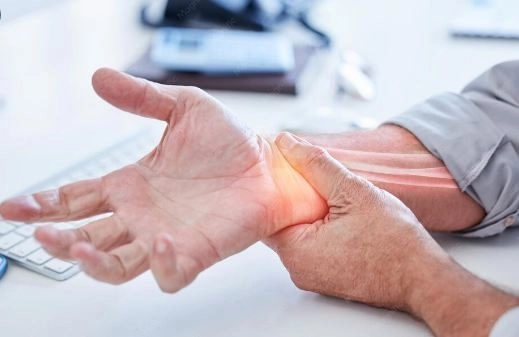
If you’re experiencing persistent wrist joint pain that affects even simple daily activities like holding your phone or lifting a cup of water, the condition may have progressed to an advanced stage of joint wear or damage. In such cases, a medical procedure called wrist arthrodesis (wrist joint fusion) may be recommended, which is considered a definitive solution when conservative treatments fail to control the pain.This procedure is not aimed at improving joint movement; instead, it focuses on something far more important—relieving chronic pain and restoring the ability to use the hand more comfortably in daily life. Although it is a surgical intervention, and despite its significant benefits in reducing pain, it also carries potential risks that should be fully understood. The recovery stage remains the key factor in the success of the surgery and the patient’s return to normal life.In this article from Dili Medical, we will discuss everything you need to know about wrist arthrodesis: how it is performed, when it is needed, its main benefits, possible risks, and a step-by-step guide to the recovery process.
What is Wrist Arthrodesis?
Wrist arthrodesis is a surgical procedure that aims to fuse the bones of the wrist together or connect them with the forearm bones to form a single, solid bone. This fusion completely eliminates movement in the wrist joint, with the main goal of reducing severe and chronic pain caused by conditions such as advanced arthritis, complex fractures, or functional instability of the wrist joint.
Is Wrist Arthrodesis Painful?
After the operation, the patient may feel pain, but in most cases it is well controlled because:
- Strong painkillers prescribed by the doctor are used
- Pain gradually decreases over days to weeks
- As the bones heal, pain usually disappears completely or becomes very mild compared to before surgery
Can You Move Your Hand After the Surgery?
- ❌ The wrist joint itself cannot move anymore, as it is permanently fused
- ✔️ Fingers, elbow, and shoulder movement usually remain normal
Over time, the body adapts and other joints compensate for the loss of wrist movement.
When Can You Use the Hand Normally Again?
Recovery time varies, but generally:
- Light use of the hand: after 6–8 weeks
- Gradual stronger use: after 3–6 months
- Full recovery and functional adaptation: within 6–12 months
Is Wrist Arthrodesis Always Successful?
Success rates are generally high, but it is not guaranteed 100%. Success depends on:
- Patient’s compliance with post-operative instructions
- Overall health condition before surgery
- Chronic diseases such as uncontrolled diabetes
- Smoking, which can negatively affect bone healing
Is Wrist Fusion Better Than a Wrist Implant?
The choice depends on the condition of the patient:
- Wrist arthrodesis (fusion): ✔️ Preferred in cases of severe pain and complete joint damage, aiming for permanent pain relief
- Wrist replacement (prosthesis): ✔️ Preferred when preserving joint movement is important and replacement is suitable
The orthopedic surgeon determines the best option based on evaluation.
Can I Return to Work After the Surgery?
Yes, but depending on the type of work:
- Office work ✔️ can usually resume after a proper recovery period
- Heavy manual work ❌ may be difficult or require job modifications
Possible Complications of the Procedure
Like any surgery, complications may include:
- Delayed bone healing
- Stiffness in the fingers
- Pain in nearby joints
- Hardware-related issues (rare)
However, most patients recover without serious complications.
Does the Surgery Affect Hand Appearance?
There may be minor changes, such as:
- Slight change in wrist shape
- A surgical scar at the operation site
But overall hand appearance usually remains functional and acceptable.
Can Wrist Arthrodesis Be Reversed?
❌ No, it is a permanent procedure.
The bones fuse together over time to form a single solid structure, making reversal impossible.
Is Physical Therapy Important After Surgery?
Yes, it is essential because it:
- Prevents stiffness in the fingers
- Strengthens hand and forearm muscles
- Helps the patient adapt to the new fixed wrist position
Can You Return to Sports?
- ✔️ Light sports can be resumed gradually with medical approval
- ❌ Sports requiring strong wrist movement may be difficult due to permanent loss of motion
Does Smoking Affect the Outcome?
Yes, smoking negatively impacts healing because it:
- Reduces bone healing ability
- Increases risk of non-union (failed fusion)
- Prolongs recovery time
Is There a Specific Age for the Surgery?
There is no fixed age, but it is commonly performed in cases such as:
- Advanced osteoarthritis
- Rheumatoid arthritis
- Severe wrist injuries or fractures
The decision depends on the condition, not age.
Main Benefits of Wrist Arthrodesis
1. Relief from Chronic Pain
The main goal is eliminating pain caused by:
- Advanced arthritis
- Chronic inflammation
- Severe wrist injuries
2. Improved Grip Strength
Even without wrist movement:
- Grip strength often improves
- Hand becomes more stable during use
3. Better Daily Function
Helps the patient perform activities such as:
- Holding objects
- Using a phone
- Writing
- Carrying light items
4. Increased Joint Stability
The procedure:
- Permanently stabilizes the wrist
- Eliminates abnormal or painful movement
5. Reduced Need for Painkillers
After recovery:
- Dependence on pain medications decreases
- Long-term side effects of drugs are avoided
6. Long-Term Solution
It is considered a definitive solution when:
- Conservative treatments fail
- The joint is severely damaged
How Is Wrist Arthrodesis Performed?
1. Preoperative Preparation
Includes:
- X-rays to assess joint damage
- MRI scans if needed
- Blood tests
- Medical evaluation of the patient’s condition
- Explanation of surgery details and outcomes
2. Anesthesia
Either:
- General anesthesia
- Or regional (arm) anesthesia
3. Surgical Incision
The surgeon:
- Makes an incision at the back or side of the wrist
- Exposes the damaged joint and bones
4. Removal of Damaged Tissue
This step includes:
- Removing damaged cartilage
- Cleaning bone surfaces
- Removing inflamed or unhealthy tissue
6. Presence of Plates or Screws Inside the Hand
The procedure involves using fixation devices such as:
- Metal plates
- Surgical screws
In some cases, they may cause:
- Mild irritation in the surrounding tissues
- A feeling of discomfort in cold weather
- Rarely, prominence under the skin depending on body type
However, these materials are usually designed to remain safely inside the body, and they do not need removal unless a complication occurs.
Final Note on Wrist Arthrodesis (Summary of Disadvantages)
Although wrist arthrodesis is highly effective in relieving severe pain, its main limitation is that it permanently changes the function of the wrist. This means:
- The wrist loses all movement permanently
- Some daily activities may require adaptation
- Nearby joints may take on extra workload over time
- Recovery requires patience and strict adherence to medical instructions
- In rare cases, bone fusion may not complete successfully
Despite these drawbacks, many patients still consider it a successful procedure because it significantly improves pain control and quality of life in severe cases.
7. Psychological Impact on the Patient
The psychological aspect is just as important as the physical one:
- Permanent loss of wrist movement may be emotionally difficult at first
- Some patients feel that the appearance of the hand has changed
- It takes time to adapt to the new function of the hand
However, most patients gradually adapt over time, especially if they had severe pain before surgery, which significantly improves their quality of life.
8. Difficulty Performing Certain Jobs or Activities
Wrist arthrodesis may affect tasks that require:
- Fine wrist movements
- High flexibility of the hand
Such as:
- Certain precision-based manual work
- Professional sports activities
- Playing some musical instruments
9. Not Suitable for All Patients
Wrist fusion is not appropriate for everyone because:
- It is not usually recommended for young patients who require full wrist mobility
- It is not always the first treatment option
- Alternatives such as wrist joint replacement may be considered in some cases
10. Permanent Change in Hand Function
After surgery:
- The patient learns to use the hand in a different way
- More reliance is placed on the fingers and forearm instead of the wrist
- A period of rehabilitation and physical therapy is needed to adapt
Recovery Phase After Wrist Arthrodesis
Recovery after wrist arthrodesis is one of the most important stages, as it determines bone healing success and the patient’s ability to return to daily activities gradually.
Recovery does not happen quickly; it occurs in clearly defined stages.
First: First 48 Hours After Surgery (Immediate Post-Operative Phase)
After surgery, the patient is moved to recovery and observation.
What happens:
- Moderate to severe pain controlled with medication
- Swelling in the wrist and hand
- The hand is immobilized in a cast or splint
- The hand is elevated to reduce swelling
Instructions:
- Do not move the hand at all
- Take prescribed painkillers regularly
- Monitor the wound and pain level
- Watch for any unusual swelling or bleeding
Main goal: Stabilization and prevention of early complications.
Second: 2 to 6 Weeks (Immobilization & Early Healing Phase)
This is the initial bone healing stage.
Condition:
- Cast or splint remains in place
- Gradual reduction in pain
- Noticeable decrease in swelling
- Gentle finger movement may be allowed
Inside the bones:
- New bone tissue starts forming
- Plates and screws stabilize the fusion site
Instructions:
- Keep the cast clean and dry
- Elevate the hand when resting
- Move fingers gently to prevent stiffness
- Avoid any strain or lifting
⚠️ Excess movement may affect healing negatively.
Third: 6 to 12 Weeks (Bone Fusion Phase)
This is when real bone healing progress becomes visible.
What happens:
- Stronger bone fusion begins
- Significant pain reduction
- Follow-up X-rays are performed
Treatment adjustments:
- Cast may be replaced with a lighter brace
- Gentle finger movements are encouraged
- Light physical therapy may begin
Goals:
- Ensure complete bone fusion
- Strengthen surrounding muscles
- Prevent stiffness in fingers
Fourth: 3 to 6 Months (Functional Rehabilitation Phase)
The patient starts returning gradually to normal life.
Condition:
- Most pain is gone or significantly reduced
- The wrist is fully stable
- Hand strength improves gradually
Physical therapy includes:
- Strengthening exercises for hand and forearm
- Training for daily activities
- Improving movement of fingers, elbow, and shoulder
Allowed activities:
- Writing
- Using a mobile phone
- Carrying light objects
Goal: Adaptation to the new fixed wrist function.
Fifth: 6 to 12 Months (Full Recovery & Stabilization Phase)
This is the final recovery stage.
What happens:
- Complete bone fusion is achieved
- Permanent wrist stability
- Full adaptation to new hand function
Expected outcomes:
- Significant or complete pain relief
- Functional stability of the hand
- Good ability to perform daily activities
Note:
- Fine movements may take longer to adapt
- Other joints compensate for wrist movement
Factors Affecting Recovery Speed
1. Smoking
- Reduces blood flow to bones
- Delays healing significantly
2. Chronic Diseases
Such as:
3. Following Instructions
- Early unwanted movement
- Improper cast care
4. Nutrition
- Calcium and vitamin D deficiency slows healing
Role of Physical Therapy
Physical therapy is essential for successful recovery:
- Prevents finger stiffness
- Strengthens muscles
- Improves hand function
- Speeds up return to daily activities
Key exercises:
- Finger movements
- Hand grip exercises
- Forearm strengthening
- Shoulder and elbow mobility exercises
Signs of Successful Recovery
- Gradual reduction in pain
- Significant decrease in swelling
- X-rays show bone fusion
- Daily improvement in hand function
Warning Signs That Require Medical Attention
- Severe or unusual pain
- Persistent or increasing swelling
- Redness or heat at the surgical site
- Lack of improvement during recovery