
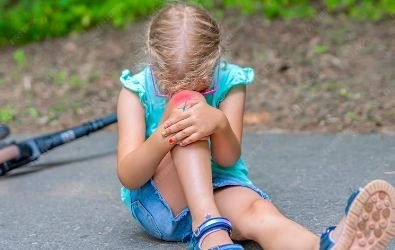
Knee pain in children and adolescents is a common concern for both parents and the child, especially if it appears suddenly after sports activities, jumping, or running. One of the most frequent causes of this pain is Osgood-Schlatter disease, which affects a small area just below the knee and can cause pain and sometimes swelling.This condition is usually linked to rapid growth periods in children and is more common among those who are active in sports or activities involving repetitive running and jumping. Despite the discomfort, the reassuring news is that Osgood-Schlatter disease is generally benign, and in most cases, it improves with proper rest and exercises, rarely requiring surgical intervention.
In this Delyly Medical article, we will cover:
The causes and symptoms of Osgood-Schlatter disease
Its impact on children and adolescents
Treatment and prevention strategies
Whether it is serious or just temporary pain
What is Osgood-Schlatter Disease and How Does It Resolve?
Osgood-Schlatter disease is an inflammation that occurs at the attachment point of the quadriceps tendon to the tibial tuberosity (the bony prominence just below the knee). It most commonly appears in children and adolescents during growth spurts, especially in those who participate in sports involving running or repeated jumping. Over time, with proper rest and exercises, the pain usually decreases gradually and resolves after the growth period ends.
Who is Most at Risk?
Boys: ages 10–15 years
Girls: ages 8–13 years
Children who play sports with running, jumping, kicking, or sudden changes in direction, such as soccer, basketball, volleyball, or gymnastics
Is the Condition Serious?
No, Osgood-Schlatter disease is generally benign. The pain is usually temporary and improves with rest and therapeutic exercises.
Can the Child Continue Sports?
Yes, but with some precautions:
Temporarily modify sports activities to reduce stress on the knee
Avoid intense running or jumping during painful episodes
Follow recommended exercises and adequate rest
Does Osgood-Schlatter Leave Lasting Effects?
Usually not. Sometimes a small bony prominence remains under the knee, but it is typically painless and does not affect sports participation.
Can the Condition Affect Both Knees?
Yes, approximately 30% of patients may develop symptoms in both knees.
Why Does Swelling Occur?
Swelling is caused by inflammation and bony prominence at the tibial tuberosity, the same area where pain occurs. In some cases, swelling may persist.
Can X-rays Show Osgood-Schlatter?
Yes, X-rays can reveal bone growth, ossification, or slight fragmentation at the tibial tuberosity. However, diagnosis is usually clinical.
Is MRI Needed?
Usually not, unless the case is unclear or surgical planning is required.
Recommended Exercises for Osgood-Schlatter Disease
Quadriceps Stretch: the most important exercise
Increasing quadriceps flexibility reduces stress on the knee tendon
Exercises should be performed regularly and under supervision or guidance
Can It Cause Future Problems?
Most children recover completely without any long-term effects. Occasionally, a small bony prominence remains after puberty, which may cause minor discomfort in positions that put direct pressure on the knee.
Do Braces or Straps Help?
Yes, specially designed Osgood-Schlatter straps reduce pressure on the knee and alleviate pain.
Is PRP Therapy Used?
In resistant cases, especially for professional athletes, PRP therapy may be considered, but it is not suitable for all patients.
Is Surgery Needed?
Rarely. Most cases resolve after growth is complete. Surgery to remove the bony prominence may be considered if pain persists after growth.
Is Osgood-Schlatter Surgery Risky?
The risks are relatively low. However, like any surgery, infections or complications may occur during recovery. Careful surgical planning and follow-up are essential.
Can Osgood-Schlatter Recur?
Symptoms may flare from time to time before growth plates close, especially with intense physical activity. After growth is complete, recurrence is uncommon.
Athletes Most at Risk for Osgood-Schlatter:
Soccer Players: continuous running, frequent kicking, sudden changes in direction
Basketball Players: repeated jumping, hard landings, sudden acceleration/deceleration
Volleyball Players: frequent high jumps, direct stress on the knee tendon
Runners: continuous load on the knees, especially in long-distance or intensive training
Martial Artists (Karate, Taekwondo): repeated kicking, rapid knee flexion and extension
Gymnasts: repeated jumps and landings, high pressure on the joints
Why These Sports?
All these sports involve running, jumping, kicking, and sudden stops—all of which increase stress on the tendon and its attachment to the tibial tuberosity.
Most Common Ages:
Boys: 10–15 years
Girls: 8–13 years
(The rapid growth period is when symptoms are most likely to appear.)
Causes of Osgood-Schlatter Disease:
Rapid Growth: Bones grow faster than muscles and tendons during puberty, increasing tension on the quadriceps tendon at the tibial attachment.
High-Impact Sports: Activities with running, jumping, kicking, or sudden directional changes increase repetitive stress on the tendon.
Repeated Tendon Strain: Constant strain on the quadriceps tendon causes inflammation, pain, and swelling at the tibial tuberosity.
Weak or Tight Thigh Muscles: Limited flexibility in the quadriceps or hamstrings increases tension on the knee.
Imbalanced Loads: Overtraining, poor warm-up/stretching, or improper footwear can worsen the condition.
Age and Gender: Boys 10–15 years, girls 8–13 years
Symptoms of Osgood-Schlatter Disease:
Gradual onset, often in one knee (sometimes both)
Pain below the knee: worsens with running, jumping, stairs, kneeling, or squatting
Swelling or bony prominence: characteristic feature
Tenderness to touch: painful when pressed
Pain increases with activity: decreases with rest
Thigh muscle tightness: stiffness in quadriceps or hamstrings
Mild limping: some children may walk with a slight limp
Persistent symptoms: pain may last weeks to months, appearing and disappearing with activity
Grades of Osgood-Schlatter Disease:
Grade 1 (Mild): slight pain under knee with activity, no swelling or prominence, child can mostly continue activities; improves with rest and reduced activity
Grade 2 (Moderate): more noticeable pain, mild swelling or prominence, difficulty jumping or stairs, worsens after exercise; requires longer rest and physiotherapy
Grade 3 (Severe): strong, persistent pain even while walking, obvious bony prominence, limping, difficulty bending knee, nearly impossible to play sports; requires regular medical follow-up
Acute vs Chronic:
Acute: short-term symptoms
Chronic: recurring pain over several months
Diagnosis:
Osgood-Schlatter is usually easy to diagnose based on medical history and clinical examination, often without complex tests.
Diagnosis of Osgood-Schlatter Disease
Diagnosing Osgood-Schlatter disease is usually straightforward and relies on medical history and clinical examination, often without the need for complex tests.
The doctor will ask about:
Child’s age: usually 8–15 years
Participation in high-impact sports
Onset of pain: does it worsen with running or jumping?
Relief with rest: does the pain improve when the child rests?
These answers help guide a quick and accurate diagnosis.
Pain directly under the kneecap (patella)
Swelling or bony prominence at the tibial tuberosity
Tenderness when pressing the area
Pain worsens when extending the knee or contracting the thigh muscles
In most cases, clinical examination alone is sufficient for diagnosis.
X-ray (Radiograph):
Not always required
Used if:
Pain is severe
There is suspicion of another injury
Can show minor bony prominence or fragmentation at the tibial tuberosity
MRI (Magnetic Resonance Imaging):
Rarely needed
Used if the diagnosis is unclear
Can show inflammation in the tendon and surrounding tissues
Other knee joint inflammations
Stress fractures
Patellar tendonitis
Patella-related problems
Persistent pain after growth:
Most children recover after growth plates close
Some may have mild chronic pain under the knee during running or jumping
Permanent bony prominence:
The tibial bump may remain visible after puberty
Usually painless, may cause cosmetic concern
Secondary knee problems:
Continuing sports despite pain may lead to:
Tendon strain or inflammation
Temporary pain during activity
Rare partial tendon tear
Impact on athletic performance:
Children may need to avoid certain high-impact sports during treatment
Chronic tendon or joint changes (very rare):
Slight knee stiffness after puberty
Pain with excessive pressure on the knee
Rare surgical risks:
Swelling or infection after surgery
Temporary pain during recovery
Serious complications are rare with proper surgical technique
Ossicle Excision (Removal of Excess Bone)
Most common surgery
Removes small painful bony fragments
Can be done arthroscopically or open
✅ High success rate
⏳ Recovery: 4–8 weeks
Tibial Tuberosity Reshaping
Adjusts bony prominence under the knee
Reduces tendon friction and strain
Patellar Tendon Repair or Release
For tendon tightness or fibrosis
Reduces pressure on the knee
Sometimes combined with ossicle excision
Arthroscopic Surgery
Minimal incisions, less pain, faster recovery
Suitable for mild to moderate cases after growth
Removal of Calcifications or Chronic Inflammation
For very chronic cases
Removes inflamed or calcified tissue around the tendon
Medications relieve pain and inflammation but do not treat the underlying cause. Usually combined with rest and exercises for faster recovery.
Commonly Used Medications:
Simple Pain Relievers
Paracetamol (Acetaminophen)
✅ Safe for children
Used as needed for pain
NSAIDs (Non-Steroidal Anti-Inflammatory Drugs)
Ibuprofen, Diclofenac, Naproxen
✔️ Reduce pain and inflammation
⚠️ Short-term use only
⚠️ Take after meals
⚠️ Use under doctor supervision, especially in children
Topical Anti-Inflammatory Gels
Diclofenac gel or other pain-relieving creams
✔️ Relatively safe
✔️ Reduce localized pain
✔️ Effective with rest and exercises
❌ Medications Not Recommended:
Corticosteroid injections (risk of tendon damage or rupture)
Strong painkillers or long-term NSAID use
Goal: Reduce pain, increase muscle flexibility, strengthen knee to decrease tendon load
a) Quadriceps Stretch
Stand, bend knee backward, hold foot with hand
Keep back straight
Hold 30 sec × 2–3 times per leg
b) Hamstring Stretch
Sit on the floor, one leg extended
Lean forward slowly over the leg
Hold 20–30 sec × 2–3 times
c) Calf Stretch
Stand facing wall, one foot forward, one back
Heel of back foot on floor
Hold 20–30 sec × 2 times
d) IT Band Stretch
Stand next to wall, affected leg behind
Lean torso away from wall
Hold 20–30 sec × 2 times
Goal: Reduce strain on knee and tendon from all directions
a) Straight Leg Raise
Lie on back, one leg straight, the other bent
Lift straight leg 10–15 sec
10 reps × 2 sets
b) Wall Sit (Partial)
Back against wall, knees bent comfortably
Hold 10–20 sec × 3 times
c) Hamstring Curl
Lie on stomach, bend knee slowly
10 reps × 2 sets
Goal: Strengthen muscles around the knee to reduce tendon load
a) Single-leg Stand
Hold 30 sec per leg × 2–3 times
b) Balance Pad or Soft Surface
Stand on one or both feet
1–2 min × 2 times
Goal: Reduce knee stress during daily activities or sports
Hip Flexor Stretch, Dynamic Knee Stretch, Adductor Stretch
Straight Leg Raise with Light Weight
Bridging Exercise
Wall Ball Squeeze, Partial Squat, Step-Up, Side-Lying Leg Lift
Goal: Improve flexibility, strength, stability, and knee support
Slow running in a straight line 1–2 min × 2 times
Light single-leg hops 5–10 × 2 sets
Goal: Gradually condition the knee to tolerate sports movements without stressing the tendon
Mild Cases:
Slight pain during activity, no significant swelling
Recovery: 3–6 weeks with rest, stretching, and strengthening
Moderate Cases:
Persistent pain after activity, mild swelling or bony prominence
Recovery: 6–12 weeks with rest, ice, stretching, and strengthening
Severe or Chronic Cases:
Severe or constant pain, obvious bony prominence, difficulty walking or playing sports
Recovery: 3–6 months, sometimes longer if the child continues high-impact activities
Adherence to rest and activity modification
Daily exercises: stretching + strengthening + balance
Use of ice packs or anti-inflammatories when needed
Muscle flexibility and growth rate
Size of bony prominence or minor fractures in the tibia