
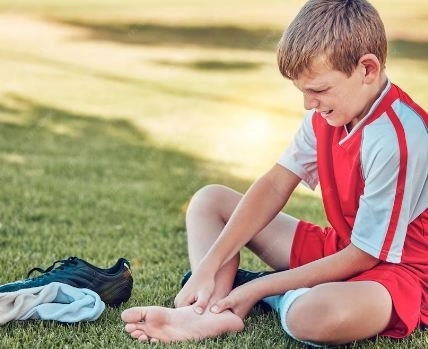
Have you ever noticed your child complaining of heel pain after playing or running? This could be Sever’s Disease, also known as heel inflammation in children.This condition is very common in children aged 8 to 14 years, especially those who are active in sports or going through a rapid growth phase. The important thing to know is that, although the pain may make your child walk on tiptoes or limp temporarily, Sever’s Disease is not dangerous and usually goes away over time with proper care.
In this Dalili Medical article, we will cover everything you need to know about Sever’s Disease:
Its true causes
The symptoms you should watch for
Effective non-surgical treatments
Tips before and after treatment to ensure complete recovery
Sever’s Disease is inflammation of the growth plate in the heel in children.
Most common in children aged 8 to 14 years.
Main cause: pressure on the heel during growth or sports activity.
❌ No.
Sever’s Disease is not a fracture, it’s an inflammation of the growth plate.
However, the pain may cause the child to walk abnormally.
✅ Yes.
Sometimes it appears in one heel, sometimes in both, depending on activity level or pressure on the foot.
It usually improves gradually as the growth plate closes.
Rest and stretching exercises help reduce pain and speed up recovery.
Light activities are allowed after controlling pain.
Running or intense jumping should be avoided until pain disappears completely.
❌ No.
The cause is mechanical, due to pressure on the heel during growth, not genetic.
In cases of flat feet or high arches, a heel pad or supportive shoe may help.
Not necessary for every child, but it reduces pain and prevents worsening.
Pain is usually temporary, appearing with activity or afterward.
Rest and exercises reduce duration and intensity.
❌ Very rare.
Most cases occur between 8–14 years because the growth plate is more vulnerable.
Pain may affect walking, straining the knee or the other foot.
But the disease does not spread from one foot to another.
Yes, the risk can be significantly reduced by:
Supportive and cushioned shoes
Stretching exercises before and after activity
Reducing high-impact activity if pain occurs
Maintaining a healthy weight
❌ No.
It’s not serious and does not cause permanent complications.
Pain may worsen if the child continues intense activity.
Following proper rest and treatment ensures complete recovery.
❌ No, never.
Treatment is conservative only: rest, supportive shoes, exercises, and pain relief if needed.
Surgery is not required.
✅ Yes.
It usually disappears when the heel finishes growing.
Following rest and exercises prevents recurring pain.
❌ No.
It only affects children and adolescents during growth, because their growth plate is still open.
Choose padded and supportive shoes
Perform stretching exercises before and after activity
Reduce high-impact activities if the child feels pain
Maintain a healthy weight
Rapid growth
During growth spurts (8–14 years), the heel bone grows faster than muscles and tendons, causing tension and inflammation in the growth plate.
Excessive physical activity
Running, jumping, playing football, basketball, or other high-impact sports, especially daily.
Improper footwear
Flat or hard shoes without heel support increase pressure and inflammation.
Excess weight
Extra weight increases pressure on the heel and accelerates inflammation.
Tight calf muscles
Short or tight calves increase tension on the Achilles tendon, affecting the heel.
Standing or walking for long periods
Especially on hard surfaces without sufficient rest.
Flat feet or high arches
Abnormal foot shape changes weight distribution, putting more pressure on the heel.
Heel pain
Most common symptom, located at the back or bottom of the heel.
Worse during running, jumping, or playing sports.
Improves with rest.
Pain after activity
The child may play normally, but pain appears after exercise or at night.
Limping
Child may walk with a limp or favor one foot after a day of activity.
Walking on tiptoes
Some children walk on the forefoot to reduce heel pressure.
Tenderness to touch
Pressing on the heel causes localized pain.
Mild swelling or warmth
Sometimes slight redness or swelling without bruising.
Stiffness in the foot or leg
Especially after waking up or sitting for long periods.
One or both feet affected
May appear in one or both heels, which is normal in Sever’s Disease.
Seek medical attention if:
Pain is severe and unbearable
Pain persists despite rest
Significant swelling or heat in the heel
Child refuses to walk
Children in growth phase
Usually aged 8–14 years
Slightly more common in boys than girls
Cause: open growth plate in the heel
Active children / athletes
Especially those in sports involving:
Running
Jumping
Quick changes of direction (football, basketball, track & field)
During growth spurts:
Height increases rapidly
Muscles may not keep up with bone growth
This causes tension on the heel and temporary pain
Such as flat feet or high arches:
Weight distribution is uneven
More pressure is put on the heel than normal
Extra weight increases load on the heel
Pain may occur even if the child is not very active
Shoes that are:
Very flat
Hard without heel support
Old or worn out
All of these increase heel pressure and contribute to inflammation
Especially on hard surfaces
Examples: long trips, extended training sessions
This increases heel stress and pain
Cause: continuous running, jumping, ball games
Most common in active children/athletes
Pain increases during activity and decreases with rest
Appears during growth spurts
Bone grows faster than muscles
Causes strong tension on the Achilles tendon and heel
Usually occurs without intense activity
Caused by short or stiff calf muscles
Pain is noticeable at the back of the heel
Increases when walking on hard surfaces
Flat feet or high arches
Weight distribution is uneven → puts extra pressure on the heel
Extra weight increases load on the heel
Pain can occur even with minor effort
Light pain
Appears after activity only
Child can walk normally
More noticeable pain
Slight limp
Requires rest and physical therapy
Strong pain
Child refuses to walk
May require medical shoe, heel support, or medical follow-up
Increased pain severity if activity continues despite discomfort
Persistent inflammation → pain becomes stronger and longer
Limping or walking difficulties → may strain knee, hip, or lower back temporarily
Impact on sports activity → child may need to pause playing
Psychological impact if the child does not understand their condition
Pain recurrence if returning to activity too soon or wearing improper shoes
Misdiagnosis or delayed treatment → prolongs pain duration
Doctor asks about:
Child’s age (usually 8–14 years)
Participation in sports
Nature of the pain:
Increases with running/jumping?
Decreases with rest?
One heel or both?
Recent growth spurt?
If these match → high suspicion of Sever’s Disease
Heel squeeze test → pain indicates Sever’s Disease
Achilles tendon assessment → check for tightness or stiffness
Observation of walking → look for limping or tiptoe walking
X-ray rarely required
Helps rule out: fractures or other bone issues
Usually X-rays are normal in Sever’s Disease
Stress fracture of the heel
Achilles tendinitis
Plantar fasciitis
Joint inflammation
Severe swelling or heat
Persistent pain at rest
Difficulty walking
Age <6 or >15 → further tests needed
Stand facing a wall, hands on wall
One foot forward, one foot back (back foot straight, heel on ground)
Lean forward slowly
Hold: 20–30 sec × 3, twice daily
Same wall position, back knee slightly bent
Feel stretch under calf and behind heel
Hold: 20 sec × 3, twice daily
Sit on floor, legs straight
Place towel around foot, gently pull toward body
Hold: 20–30 sec × 3
Stand holding chair, rise on tiptoes, lower slowly
Reps: 10 × 2 sets, once daily
⚠️ Stop if pain occurs
Sit, place small ball or cold bottle under foot, roll gently
Duration: 5 min daily
Sit, extend leg, pull foot toward body gently
Hold: 20–30 sec × 3, twice daily
Sit or lie down, move foot up and down
Reps: 15–20 × 2
✔ Strengthens ankle without heel pressure
Wrap band around foot, pull up against resistance, release slowly
Reps: 10–15 × 1–2 sets
Pick up objects with toes (papers, pencils)
Duration: 3–5 min daily
✔ Strengthens foot muscles, reduces heel pressure
Stand on one leg, 10–15 sec, switch legs, 3x per leg
⚠️ Stop if pain occurs
Light walking on carpet or sand, no running
Duration: 3–5 min
Sit or stand, roll small ball under heel back and forth
Duration: 2–3 min daily
Walk on toes on soft surface for 2–3 meters, repeat twice daily
⚠️ Stop if pain increases
Walk on heels, toes raised, short distance
✔ Strengthens back calf muscles
Sit, lift one leg, rotate ankle clockwise and counterclockwise
Reps: 10–15 per foot
Band around heel, pull foot gently backward against resistance
Reps: 10–15 per foot
Step up slowly, support on wall or railing, no jumping
✔ Strengthens calf muscles without heel stress
Sit or stand, pick up small ball with toes
Duration: 3–5 min
✔ Strengthens small foot muscles, improves balance
Use only when needed
Examples: Paracetamol (children’s dose)
Safe, reduces pain without stomach issues
Dose: according to age/weight, under doctor supervision
For moderate to slightly severe pain
Examples: Ibuprofen, Diclofenac (children’s syrup)
✔ Reduce inflammation, swelling, and pain
⚠️ Important: take after food, short course (3–7 days), avoid if child has stomach issues or allergies
Anti-inflammatory gels or mild pain relief creams
Apply to heel twice daily
✔ Supportive only, not essential
Cortisone (oral or injection)
Local steroid injections
Strong rheumatism medications
⚠️ Dangerous for growth plate
Usually 3–7 days
Stop once pain improves, continue rest and exercises
Important: if child takes medication but keeps running → pain may persist longer
Rest and reduce pressure
Limit running, jumping, high-impact games
Light activities like walking or cycling on soft ground are better
Choose proper shoes
Cushioned, flexible, supportive
Avoid very flat or old shoes
Stretch before activity
Calf and Achilles stretches reduce heel tension
Warm-up packs
Light warm compress before activity reduces tension
Monitor weight and activity
Overweight increases heel stress
Regulate playtime to reduce pain
Apply ice packs after activity for 15–20 min
Follow daily stretching program
Use heel cups inside shoes to reduce pressure
Stop activity immediately if child reports severe pain
Continue light exercises
2–3 times per week to maintain calf and heel flexibility
Gradual return to sports
Start with light jogging → jumping → full activity
Avoid sudden heel pressure
Monitor shoes
Keep cushioned, supportive shoes
Replace if tight or worn
Follow-up
If pain returns → reduce activity and repeat exercises
Mild pain during growth is normal