

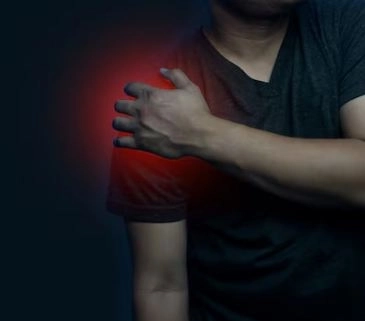
Clavicle fractures are common injuries, especially from falling on the shoulder or during sports accidents. Although they can be painful and concerning, most cases heal quickly with proper treatment, whether through medication, exercises, or sometimes surgery. But the key question is: does every clavicle fracture require surgical intervention, or can recovery often be achieved with physical therapy alone? we will explore the different types of clavicle fractures, their symptoms, various treatment options, and the recovery timeline. We will also provide essential medical exercises and tips that help speed up healing, so you can protect yourself and fully restore shoulder mobility.
A clavicle fracture is a common injury affecting the bone that connects the chest (sternum) to the shoulder blade (scapula). It usually occurs due to a fall on the shoulder or a direct blow.
Main Symptoms:
Pain in the shoulder
Swelling and bruising
Difficulty raising the arm
Treatment:
Most fractures are treated without surgery using a shoulder sling and pain-relieving medications. Severe or comminuted fractures may require surgical intervention. The bone typically heals within 3 to 12 weeks.
Can a clavicle fracture cause breathing problems?
This is rare, but fractures near the chest may affect the lungs or blood vessels. If you experience shortness of breath or severe chest pain, seek medical attention immediately.
Do I need to wear the sling all the time?
Not necessarily. It depends on your doctor’s advice. The sling provides support and rest, and gradual movement of the shoulder and arm is recommended to prevent joint stiffness.
Does the pain go away quickly after the fracture?
Pain usually decreases gradually over the first few weeks. Persistent or worsening pain requires medical evaluation to ensure proper bone healing.
Can the fracture fail to heal properly (Nonunion)?
Yes, especially in open fractures, multiple fractures, or when the bone is significantly displaced. Regular X-rays and sometimes additional surgical fixation may be required.
Will the shoulder look normal after the fracture?
Most cases restore the shoulder’s normal appearance with proper healing and physical therapy. Complex or comminuted fractures may leave slight misalignment, which usually does not affect arm or shoulder movement.
Do children and adults heal at the same rate?
Children usually heal faster due to rapid bone growth. Older adults or those with weak bones require a longer recovery period.
Can I work or drive after a clavicle fracture?
It depends on fracture severity and treatment method. Typically, return to work is possible after 6–8 weeks for simple fractures and 3–4 months for complex fractures or post-surgery, with your doctor’s approval.
Are there exercises to prevent shoulder stiffness after surgery?
Yes. Simple wrist and hand exercises help prevent stiffness. Pendulum exercises restore movement without putting stress on the fracture.
Is nutrition important during recovery?
Absolutely. Proper nutrition supports faster healing:
Calcium and Vitamin D for bone health
Protein for muscle repair
Fruits and vegetables to reduce inflammation and support recovery
Can the same clavicle fracture again?
Yes, especially if the bone did not heal completely or there is underlying bone weakness. To protect yourself: maintain a healthy weight, strengthen shoulder muscles, and avoid direct trauma.
Are medications necessary?
Yes, medications help reduce pain, inflammation, and prevent infection after a fracture or surgery. Common medications include:
Paracetamol (acetaminophen)
Nonsteroidal anti-inflammatory drugs (NSAIDs)
Sometimes antibiotics or bone-support supplements
What can I do to speed up recovery?
Follow rest and sling instructions carefully
Gradually perform physical therapy exercises to restore shoulder mobility and strengthen muscles
Eat a healthy diet rich in calcium and protein
Attend follow-up imaging to ensure proper bone healing
Clavicle fractures usually occur due to direct pressure or force on the bone. Common causes include:
1️⃣ Fall on the shoulder or arm
The most common cause. A direct fall on the shoulder or using the arm to break a fall can easily fracture the clavicle, especially in children and the elderly.
2️⃣ Direct trauma to the clavicle
A direct blow during a car accident or when a heavy object falls on the shoulder can cause an immediate fracture.
3️⃣ Sports injuries
Sports such as football, hockey, skiing, or horseback riding may lead to fractures from falls or collisions. Direct blows or falling on an outstretched arm are the main causes.
4️⃣ Road traffic accidents
Car or motorcycle accidents can exert severe pressure on the shoulder and arm, making clavicle fractures common in such incidents.
5️⃣ Workplace accidents
Falls from heights or direct shoulder impact in construction or industrial sites.
6️⃣ Rare causes
Osteoporosis: Weak bones increase fracture risk even with minor injuries
Other bone-weakening conditions, such as tumors or rare infections
The symptoms of a clavicle fracture are usually clear and include:
1️⃣ Severe shoulder or upper chest pain
Pain is immediate after injury and worsens with arm or shoulder movement.
2️⃣ Swelling and bruising
The shoulder may swell rapidly, with bluish or purplish bruising around the fracture site.
In some cases, you may feel or see the bone protruding under the skin.
Sometimes the affected shoulder may appear slightly tilted or lower than the other shoulder.
Raising the arm or moving the shoulder may be painful and limited.
You may also feel weakness or reduced strength in the arm.
Sometimes a snapping or cracking sound is heard during the fall or impact.
In severe fractures:
The bone may press on nearby nerves or blood vessels, causing numbness or tingling in the arm.
Severe pain or significant swelling may require urgent medical attention.
Clavicle fractures can occur in different parts of the bone, each with specific characteristics and symptoms:
Most common type (~80%).
Occurs in the middle part of the clavicle, usually from a fall on the shoulder or outstretched arm.
Causes severe pain, swelling, and slight shoulder deformity.
Occurs near the shoulder end of the clavicle.
Less common than midshaft fractures.
May affect the shoulder joint and requires careful follow-up.
Occurs near the chest end of the clavicle.
Rare, often caused by high-impact trauma like a car accident or fall from height.
Dangerous due to proximity to blood vessels and lungs, requiring urgent evaluation.
The bone pierces or is visible through the skin.
Rare but more serious due to infection risk. Requires urgent medical and surgical intervention.
The bone is broken into several small pieces.
Usually results from high-energy trauma.
Recovery takes longer and may require surgery to stabilize the bone.
Treatment depends on the fracture type, severity, and patient condition and can be non-surgical or surgical.
Non-surgical treatment:
Most midshaft fractures are stable.
Use a sling to support the arm and shoulder.
Immobilization typically lasts 4–6 weeks.
Light exercises for the hand and shoulder to prevent stiffness.
Surgical treatment (rare):
For displaced or comminuted fractures.
Bone is fixed with plates and screws.
Allows earlier arm movement and faster recovery.
Non-surgical:
If stable, use a sling and rest for several weeks.
X-ray follow-up to monitor healing.
Surgical:
For significant displacement or joint involvement.
Fixation with plates and screws.
Gradual physiotherapy to restore movement and strength.
Non-surgical:
Rare and requires careful monitoring due to proximity to vessels and lungs.
Stable fractures can be immobilized with a sling and closely monitored with X-rays.
Surgical:
Immediate surgery for displaced fractures or risk to vessels/lungs.
Usually stabilized with plates and screws.
Considered an emergency.
Treatment:
Thorough cleaning to prevent infection.
Fixation with plates or screws.
Antibiotics as needed.
Close monitoring until complete bone healing.
Usually requires surgery.
Stabilization with plates, screws, or sometimes an external fixator.
Gradual physiotherapy after stabilization to restore movement and strength.
Although most clavicle fractures heal well with proper treatment, severe or untreated fractures may cause complications:
1️⃣ Persistent or Chronic Pain
Pain may continue if the bone does not heal properly.
Pain increases with shoulder or arm movement.
2️⃣ Shoulder Deformity
Misaligned healing can cause protrusion or tilt.
May affect shoulder appearance and posture.
3️⃣ Reduced Shoulder or Arm Mobility
Stiffness or weakness if physiotherapy is delayed.
4️⃣ Nerve or Vascular Injury
Fractures near the chest or open fractures can compress nerves or arteries.
May lead to numbness, weakness, or circulation problems.
5️⃣ Delayed or Improper Healing (Nonunion or Malunion)
Some fractures may not heal properly or heal in the wrong position.
May require additional surgery.
6️⃣ Infection (especially in open fractures)
Open fractures or post-surgical wounds may develop infection.
Signs: swelling, redness, severe pain.
7️⃣ Impact on Daily Life and Sports
Pain or weakness may limit daily activities.
Athletes may have difficulty lifting weights or performing shoulder-intensive sports.
Surgery may be necessary for:
Severely displaced or comminuted fractures.
Open fractures.
Nerve or vascular compromise.
Fractures that fail to heal non-surgically.
Most common for midshaft and comminuted fractures.
Open incision over the fracture, plate secured with screws.
Strong stabilization, allows faster shoulder movement.
Followed by physiotherapy to restore strength and mobility.
Used for midshaft or lateral fractures.
Metal rod inserted inside the clavicle to stabilize.
Smaller incision, less post-op pain.
Sometimes requires removal after healing.
For open or very complex fractures.
Device attached externally with pins or wires.
Useful for severe injuries, allows fracture control during healing.
Less comfortable, requires careful monitoring to prevent pin infections.
For very complex or poorly healing fractures.
Bone graft may be used to accelerate healing or correct deformity.
Often used for multiple or delayed fractures.
Medications are not the main treatment but help reduce pain, inflammation, and prevent complications:
1️⃣ Pain Relievers
Paracetamol for mild to moderate pain.
Stronger painkillers with codeine may be used short-term under medical supervision.
2️⃣ Anti-inflammatory Drugs (NSAIDs)
Ibuprofen or Naproxen.
Reduce pain, swelling, and inflammation.
Use as prescribed to avoid stomach or liver issues.
3️⃣ Blood Thinners (if needed)
After surgery or limited mobility, to prevent blood clots.
4️⃣ Antibiotics
For open fractures or post-surgery to prevent infection.
5️⃣ Bone-supporting Supplements
Calcium, vitamin D, collagen, Omega-3.
Strengthen bones and accelerate healing, especially in elderly or weak-boned patients.
Exercises help restore shoulder movement, strengthen muscles, and prevent stiffness:
Goal: Maintain hand and shoulder mobility without stressing the fracture.
Hand and finger exercises: open/close fingers several times daily.
Wrist movements: gentle up/down and circular motions.
Pendulum shoulder exercises: lean forward, let arm dangle, move in small circles 10–15 times, several times per day.
Goal: Gradually restore range of motion and strengthen shoulder muscles.
Arm raises forward and sideways: 10–15 reps, 2–3 sets.
Resistance band exercises: gentle resistance during shoulder flexion/extension.
Shoulder rotations: internal/external rotation with elbow close to body.
Goal: Strengthen muscles and return to normal activity.
Light dumbbell exercises: front/side raises, push/pull with resistance bands.
Scapular stabilization exercises: wall presses, retracting shoulder blades.
Functional exercises: lifting light objects, stepping on stairs, daily activity simulation.
1️⃣ Strength Exercises
Front Dumbbell Raise: lift arm to shoulder level, 10–15 reps, 2–3 sets.
Lateral Dumbbell Raise: lift arm sideways to shoulder level, 10–15 reps, 2–3 sets.
Wall Push-Ups: half push-ups against wall, 10–15 reps, 2–3 sets.
2️⃣ Stretching Exercises
Cross-Body Shoulder Stretch: pull injured arm across chest, hold 20–30 seconds, repeat 3 times.
Chest Stretch: place arm on door frame, push gently forward, hold 20–30 seconds, repeat 3 times.
3️⃣ Shoulder Rotation Exercises
Internal Rotation: push arm toward body with resistance band, 10–15 reps, 2–3 sets.
External Rotation: pull arm away from body with resistance band, 10–15 reps, 2–3 sets.
4️⃣ Scapular Stabilization
Scapular Squeeze: retract shoulder blades, hold 5 seconds, 10–15 reps, 2–3 sets.
Stability Ball Shoulder Exercise: lift arm slowly while sitting on ball, 10–15 reps each direction.
5️⃣ Functional Exercises
Light object lifts (water bottle, book), 10–15 reps.
Simulate daily activities: stepping on stairs, opening doors, carrying light bags.
Follow your doctor’s instructions, do not move shoulder before full healing.
Start with gentle movements, gradually increase resistance as strength improves.
Stop immediately if severe pain or swelling occurs.
Continue hand and wrist exercises even after full recovery to prevent stiffness.
Recovery varies depending on fracture type, treatment, and patient age/health:
Sling for 4–6 weeks.
Begin physiotherapy after sling removal.
Return to normal activity: 8–12 weeks.
Post-surgery fixation with plates or screws.
Rest and sling: 2–4 weeks.
Light shoulder/hand exercises: 1–2 weeks.
Full strength and mobility exercises: 4–6 weeks.
Resume daily activities/sports: 3–4 months.
Careful follow-up due to shoulder joint involvement.
Immobilization: 4–6 weeks.
Gradual movement: 2–3 weeks post-fracture.
Return to normal motion and sports: 10–12 weeks.
Follow rest and sling instructions.
Perform physical therapy exercises regularly and progressively.
Attend X-ray follow-ups to ensure proper healing.
Maintain a healthy weight to reduce shoulder stress.
Eat a nutritious diet rich in calcium, vitamin D, and protein.