

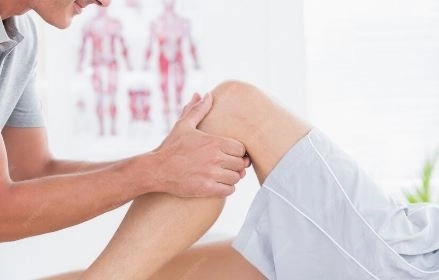
Anterior knee pain is a common problem that bothers many people, especially when going up and down stairs or during physical activity. In some cases, the cause is patellar malalignment or tightness of the lateral ligaments, which leads to friction and chronic pain.This is where lateral patellar release and decompression surgery comes into play. This procedure helps correct patellar tracking, reduce pain, and restore knee stability.In this Dalily Medical article, we will discuss the causes, symptoms, diagnostic methods, types of surgery, potential risks, and the recovery period in detail.
Frequently Asked Questions About Lateral Patellar Release Surgery
1. Is the surgery dangerous?
The surgery is generally very safe, especially when performed arthroscopically.
Like any surgical procedure, there are minor risks such as wound infection or knee stiffness, but these complications are rare.
2. Does the surgery require general anesthesia?
Most cases are performed under spinal or general anesthesia, depending on the patient’s condition.
The final decision is made by the anesthesiologist in coordination with the surgeon.
3. Does the surgery leave a large scar?
Arthroscopic surgery: Very small scars, usually 3–4 tiny incisions.
Open surgery: A slightly longer incision, but this approach is less common.
4. Can I walk after the surgery?
In most cases, walking is possible within the first few days after surgery, often with a light knee brace.
Physiotherapy starts early to prevent knee stiffness.
5. Does the surgery affect sports activity?
Light sports: Usually possible after about 6–8 weeks.
High-impact sports (football, running): Typically after 4–6 months, depending on the doctor’s evaluation.
6. Does the surgery permanently stabilize the knee?
The surgery usually improves knee stability and reduces the risk of patellar dislocation.
However, full success depends greatly on commitment to postoperative physiotherapy and exercises.
7. Can pain return after surgery?
This is uncommon, but it may occur due to:
Poor adherence to physiotherapy
Returning to intense activity too early
Existing cartilage damage or knee osteoarthritis
8. Is the surgery effective for chronic pain?
Yes ✅ Most patients experience significant improvement, especially when pain is caused by lateral tightness or patellar malalignment.
9. Can the patella return to its pre-surgery position?
This is very rare, especially when lateral release is combined with patellar stabilization.
If lateral release is performed alone, partial lateral tilt may occasionally occur.
10. Is the surgery suitable for all ages?
Young patients and athletes: Usually benefit the most.
Older patients: If severe osteoarthritis is present, improvement may be limited, but pain often decreases noticeably.
No ❌ Most cases improve with conservative treatment, such as:
Physiotherapy
Muscle-strengthening exercises
Painkillers or anti-inflammatory medications
Surgery is considered the last option after conservative treatments fail.
Chronic pain affecting daily life
Clear patellar malalignment
Recurrent partial dislocation or instability
Failure of physiotherapy after several months
During surgery: No, due to anesthesia
After surgery: Mild to moderate pain, usually well controlled with medication and physiotherapy
In most cases ✔
Small incisions
Faster recovery
Less pain
Open surgery is required only in rare situations.
Simple arthroscopic release: 6–8 weeks
With patellar stabilization or tendon transfer: 2–6 months
✔ Adherence to physiotherapy significantly shortens recovery time.
Rarely, but it may happen if:
The underlying cause of pain was not fully addressed
The patient resumes activity too early
Rehabilitation exercises are neglected
Most patients experience long-term and sustained improvement.
In properly selected cases, the surgery is highly effective in preventing recurrent patellar dislocation, especially when lateral release is combined with patellar stabilization.
However, lateral release alone without clear indication may sometimes lead to partial patellar tilt.
Light sports: After about 2–3 months
High-impact sports: After 4–6 months, depending on medical evaluation and physiotherapy progress
The procedure can be performed at any age, but:
Young patients and athletes usually see better results
Elderly patients with severe osteoarthritis may have limited improvement, though pain often decreases
Yes ✔
Before surgery: May eliminate the need for surgery in some cases
After surgery: Essential for success and restoring full knee function
No ❌
The surgery relieves pain caused by:
Patellar malalignment
Lateral pressure
But it does not restore damaged cartilage.
1. Anterior Knee Pain (Patellofemoral Pain Syndrome)
A very common type of knee pain, usually felt behind or around the patella.
Cause: Abnormal tracking of the patella over the femur.
If physiotherapy, muscle strengthening, and pain medications fail → surgery may be indicated.
2. Patellar Instability or Partial Dislocation
If the patella frequently moves outward or partially dislocates (subluxation), it causes severe pain and may damage cartilage.
Lateral patellar release helps restore normal alignment.
3. Tight Lateral Retinaculum
Excessive tightness of the lateral retinaculum pulls the patella outward.
Surgical release reduces tension and improves patellar movement.
4. Patellar or Femoral Alignment Abnormalities
Certain anatomical variations can disrupt normal patellar tracking.
Lateral pressure leads to chronic pain, which surgery can relieve.
5. Failure of Conservative Treatment
Before surgery, patients usually try:
Physiotherapy to strengthen thigh muscles, especially the quadriceps
Postural correction exercises
Anti-inflammatory medications
Knee braces or supports
If pain persists despite these measures → surgery becomes the best option.
1. Anterior Knee Pain
Usually felt around or behind the patella.
Pain worsens with:
Climbing or descending stairs
Long-distance walking
Prolonged sitting with the knee bent (“movie theater sign”)
2. Knee Instability
A feeling that the knee may “give way” or that the patella is sliding outward.
Partial dislocation may occur, especially during sudden movements or sports.
3. Clicking or Popping Sounds
A clicking or popping sound may be heard during knee flexion or extension.
Cause: Irregular patellar movement over the femur.
4. Mild Swelling or Inflammation
Mild swelling around the patella after activity or exercise.
Sometimes accompanied by warmth or a sensation of friction inside the knee.
5. Muscle Weakness
The front thigh muscles (quadriceps) may weaken due to pain-related reduced movement.
Goal:
To reduce tension in the tight lateral structures that pull the patella outward.
How it works:
The surgeon cuts or loosens the tight lateral retinaculum.
Advantages:
Reduces pain
Improves patellar tracking
Usually performed arthroscopically
✔ Best suited when lateral tightness is the main problem
❌ Not sufficient in cases of significant patellar instability
Goal:
To relieve excessive pressure on the patella and reduce friction with the femur.
Advantages:
Suitable for chronic pain without clear dislocation
Improves comfort during walking and daily movement
This procedure combines:
Lateral retinacular release
Tightening or reinforcing the medial stabilizing structures
Advantages:
Ideal for patellar instability
Significantly reduces the risk of recurrent dislocation
The surgeon repositions the attachment point of the patellar tendon to change the direction of patellar tracking.
Advantages:
Highly effective for severe cases or obvious anatomical deformities
❌ Requires a longer recovery period
Most of the above procedures can be performed arthroscopically:
Smaller incisions
Less postoperative pain
Faster recovery
How is it performed?
Usually done arthroscopically using 3–4 very small incisions
A camera and fine instruments are inserted into the knee
Tight lateral ligaments pulling the patella outward are released
The surgeon confirms smooth and proper patellar tracking
Advantages:
Short operative time
Minimally invasive
Faster recovery
How is it performed?
Typically arthroscopic
Aims to reduce lateral pressure on the patella and decrease friction with the femur
May involve removing tissue causing compression or improving joint space
Advantages:
Effective for chronic pain
Preserves knee stability
How is it performed?
Combines lateral release with tightening or reconstruction of medial stabilizers
Restores balanced patellar tracking and prevents displacement
Advantages:
Very effective for patellar instability
❌ Slightly more complex than isolated release
How is it performed?
Usually an open procedure or arthroscopy with a small incision
The patellar tendon attachment is repositioned and fixed with surgical screws
Alters the direction of patellar pull and improves alignment
Advantages:
Ideal for severe or complex cases
❌ Longer recovery period
| Technique | Advantages |
|---|---|
| Arthroscopy | Small scars, less pain, faster recovery |
| Open surgery | Used in complex cases, better surgical control, slightly longer recovery |
Wound infection
Postoperative swelling and pain (common initially)
Blood clots (rare, reduced with early mobilization)
Knee stiffness if physiotherapy is delayed
Incomplete pain relief: Especially if pain is not solely caused by lateral tightness
Increased patellar instability: Excessive release may cause the patella to shift medially
Quadriceps weakness: Usually temporary and improves with physiotherapy
Recurrence of pain: Often due to early return to activity or poor rehab compliance
Cartilage damage: If pre-existing cartilage wear is present, improvement may be limited
Walking: Within days, usually with a light brace
Daily activities: 2–4 weeks
Physiotherapy: Starts immediately
Near-complete recovery: 6–8 weeks
Walking: Within one week
Light activities: 3–4 weeks
Full recovery: About 6–8 weeks
Walking: After 1–2 weeks with a brace
Physiotherapy: Longer and more structured
Full recovery: 2–3 months
Walking: After 3–4 weeks
Knee brace: For a longer duration
Daily activities: 2–3 months
Sports: After 4–6 months
Reduce pain and swelling
Gentle range-of-motion exercises
Leg elevation and ice application
Gradual increase in knee range of motion
Progressive quadriceps strengthening
Gradual return to normal walking
Restore strength and flexibility
Gradual return to daily activities
Balance and stability exercises
Patient’s age
Compliance with physiotherapy
Type of surgery performed
Presence of cartilage damage or osteoarthritis
The main goal of exercises is to correct patellar tracking and strengthen knee-stabilizing muscles.
Quadriceps setting:
Lie on your back with the knee straight
Tighten the thigh muscle for 5–10 seconds
10 reps × 3 sets
Straight leg raises:
Lift the leg while keeping it straight
Hold for 5 seconds, then lower slowly
10 reps × 3 sets
Helps prevent lateral patellar drift.
Ball or pillow squeeze between knees:
Hold for 5 seconds, then relax
15 reps × 3 sets
✔ Excellent for patellar balance
Reduce lateral tightness.
Lateral thigh stretching:
Gentle stretch without pain
Hold 20–30 seconds × 3
Improve knee control during movement.
Single-leg standing:
Hold 20–30 seconds × 3
Use a chair for support if needed
Duration: 4–6 weeks
Frequency: 4–5 days per week
Pain-free execution only
❌ Avoid initially:
Deep squats
Running
Excessive stair climbing
✔ Focus on gradual progression and physiotherapy supervision
Weak hip muscles allow poor knee alignment.
Glute bridge:
Hold 5–10 seconds
10–15 reps × 3
Side-lying leg lifts:
12 reps × 3
✔ Essential for knee stability
Half squats:
Keep knees aligned
10 reps × 3
Wall sits:
Hold 10–20 seconds × 5
Step down slowly from a low step
Maintain knee alignment
8–10 reps × 3
Quadriceps stretch: 20–30 seconds × 3
Calf stretch: Reduces knee load during walking
Lateral knee stretch: 20–30 seconds × 3
Forward lunges (short step):
Knee aligned over toes
8–10 reps × 3
Side band walks:
10–15 steps × 3
✔ Strengthens hips and improves knee tracking
Count to 3 while stepping down
Focus on knee stability
8 reps × 3
✔ Greatly reduces stair-related pain
Wall ankle mobility drill:
10–15 reps
✔ Ankle flexibility significantly reduces knee stress
Stationary bike or elliptical:
10–15 minutes at low resistance
✔ Safe cardiovascular training without patellar overload
5 days per week
Session duration: 30–40 minutes
Each session includes:
2 strengthening exercises
1 balance exercise
1 stretching exercise
✔ Consistency and proper progression are key to successful recovery.