
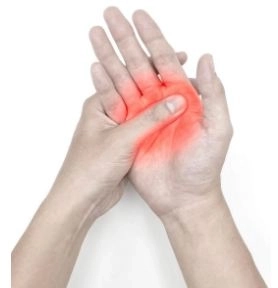
De Quervain’s Tendonitis is a common condition that affects the base of the thumb, causing pain and swelling, especially when moving the thumb or gripping objects. This condition can impact daily activities, from using a smartphone and computer to lifting heavy items.The good news is that most cases can improve with conservative treatment, such as exercises, medications, and using a thumb splint. In severe or chronic cases, effective surgical solutions are available to relieve pain and restore full thumb movement, we will discuss the causes of De Quervain’s tendonitis, its most common symptoms, diagnostic methods, and treatment options for every stage—whether with medications, exercises, or surgery—explained in a simple and easy way for anyone experiencing this condition.
De Quervain’s tendonitis is an inflammation of the tendon sheath at the base of the thumb. It causes pain and swelling, especially when moving the thumb or gripping objects.
Women more than men, particularly during pregnancy or postpartum due to hormonal changes.
People who repeatedly use their thumb and hand in precise daily movements.
Athletes relying on hand movements, such as in tennis, golf, or weightlifting.
Clinical examination: The doctor evaluates pain and thumb movement using tests like Finkelstein or FABER.
X-rays: To rule out fractures or bone problems.
Ultrasound or MRI: To assess tendons and surrounding tissues in severe or chronic cases.
Avoid overusing the thumb and hand in the same way for long periods.
Take breaks during office work or sports.
Perform regular stretching and strengthening exercises for the thumb and wrist.
Use comfortable and supportive tools for the thumb during work or daily activities.
Yes, especially if the person continues strenuous thumb movements or neglects exercises and splint use. However, adherence to exercises and splints greatly reduces the chance of recurrence.
1️⃣ Is the pain constant?
Pain usually occurs when moving the thumb or holding objects. It may ease with rest, but in chronic cases, it can sometimes persist.
2️⃣ Can it heal on its own?
Mild cases may improve with rest and modifying thumb use, but most cases require conservative treatment with medication and exercises.
3️⃣ Can pregnancy cause De Quervain’s?
Yes. Pregnancy hormones reduce tendon and tissue flexibility, and postpartum thumb use increases the risk.
4️⃣ Can computer or phone use cause it?
Yes, especially if the thumb moves repeatedly for typing or swiping, which puts pressure on the tendon and sheath.
5️⃣ Are there tools to reduce thumb stress?
Thumb splints or braces.
Ergonomic office tools, like supportive mice or keyboards.
Lifting lighter loads to reduce strain.
6️⃣ Are cortisone injections safe?
Yes, if administered by a specialist in the tendon sheath (not the tendon itself). Overuse can weaken the tendon.
7️⃣ How long does conservative treatment take?
Usually 6–12 weeks, including:
Anti-inflammatory medications
Stretching and strengthening exercises
Splint or brace use
8️⃣ Is surgery always successful?
Success rates are high, especially with adherence to post-operative physical therapy. Some cases may still require activity adjustments to prevent recurrence.
9️⃣ Can I exercise during conservative treatment?
Yes, light activities that do not stress the thumb are allowed. Avoid repetitive movements or heavy lifting until pain subsides.
???? Can De Quervain’s cause thumb weakness?
If untreated for a long period, it may reduce thumb strength and make gripping difficult. Early treatment prevents permanent weakness.
De Quervain’s occurs when the tendons on the side of the thumb and wrist (Abductor Pollicis Longus and Extensor Pollicis Brevis) become inflamed or trapped within their sheath. This makes thumb or wrist movement very painful.
1️⃣ Overuse of the hand or thumb
Repetitive activities involving gripping or moving the thumb up and down.
Long mobile or tablet use (swiping, pressing)
Frequent writing or drawing
Constantly lifting infants
Sports involving repetitive thumb movements (tennis, golf, baseball)
➡️ Continuous movement causes friction between the tendons and sheath → inflammation.
2️⃣ Injuries or direct trauma
Bruises or impact on the thumb side
Sprains or sudden movements causing partial tendon tears or inflammation
3️⃣ Structural or anatomical factors
Naturally narrow tendon sheaths → easier tendon compression
Variations in wrist shape or tendon length increase the risk of inflammation
4️⃣ Chronic or medical conditions
Rheumatoid arthritis
Thyroid problems
Diabetes
➡️ These conditions make tendons more prone to inflammation
5️⃣ Pregnancy and breastfeeding
Increased fluids during pregnancy or postpartum → swelling in tendons and sheath
Constant lifting of the baby increases thumb tendon pressure
6️⃣ Age and sex
More common in women aged 30–50 due to hormonal changes or repeated thumb activities
Can occur in anyone, but women and those performing repetitive thumb tasks are most at risk
Symptoms usually appear gradually on the side of the thumb and wrist:
1️⃣ Pain at the thumb and wrist side
Burning or sharp pain
Worse with thumb movement up and down
Gripping or rotating objects increases pain
2️⃣ Swelling or puffiness
Mild swelling or bump at the thumb base
May be accompanied by mild warmth or tightness
3️⃣ Difficulty or stiffness in thumb movement
Hard to open or close the thumb
Difficulty holding small items like a pen or button
Sometimes the thumb locks or feels restricted
4️⃣ Clicking or snapping sound
Clicking sound may occur when moving the thumb due to the tendon passing through the inflamed sheath
5️⃣ Radiating pain
Pain can extend to the forearm or entire wrist, sometimes reaching the hand base with daily activity
6️⃣ Increased pain with daily activities
Lifting children or heavy bags
Long periods of phone or computer use
Sports with repetitive thumb movements
1️⃣ Acute De Quervain’s
Appears suddenly after an injury or sudden thumb movement
Symptoms: sudden sharp pain, swelling, difficulty moving the thumb
Usually responds quickly to conservative treatment: rest, compresses, medications
Chronic De Quervain’s develops gradually due to overuse of the hand or constant pressure on the tendons.
Symptoms:
Persistent, gradually increasing pain on the thumb side
Stiffness and difficulty moving the thumb after rest
Sometimes mild swelling and occasional clicking sounds
May require longer treatment or surgical intervention if conservative therapy fails
More common in women after childbirth
Cause: fluid retention and constant pressure on the thumb when lifting the baby
Symptoms: pain and swelling at the base of the thumb, usually improving with rest and exercises; sometimes a splint is needed
Occurs due to underlying chronic conditions such as:
Rheumatoid arthritis
Diabetes
Thyroid disorders
Symptoms tend to be more severe due to the systemic effects on tendons
The main goal is to reduce pain and inflammation and improve thumb and wrist function.
1️⃣ Painkillers & Anti-Inflammatories (NSAIDs)
Examples: Ibuprofen, Naproxen, Diclofenac
Purpose: relieve pain, reduce inflammation and swelling
Usage: usually after meals, as prescribed by a doctor
Caution: avoid long-term use without medical advice; be careful with stomach, liver, or kidney issues
2️⃣ Topical Creams or Gels
Examples: Voltaren Gel, Reparil Gel
Purpose: directly relieve local pain at the tendons
Usage: apply to thumb/wrist with light massage 2–3 times daily
3️⃣ Corticosteroid Injections
Purpose: quickly reduce inflammation and relieve severe pain
Procedure: injected into the tendon sheath, not the tendon itself
Caution: excessive injections can weaken the tendon → risk of rupture; must be done by a specialist
4️⃣ Muscle Relaxants
Used for severe tightness in forearm or hand muscles to reduce thumb pressure
Examples: Baclofen, Tizanil (as prescribed)
5️⃣ Supportive Supplements
Help strengthen tendons and bones, reduce inflammation; not a direct treatment
Examples: Vitamin D, Calcium, Omega-3
Exercises are essential to:
Reduce tendon strain
Relieve pain and inflammation
Improve thumb and wrist flexibility
Strengthen surrounding muscles for tendon support
⚠️ Before starting:
Exercises should not cause severe pain
Stop immediately if pain or swelling worsens, and consult a doctor or physical therapist
1️⃣ Thumb Stretch
Place the affected hand on a table
Use the other hand to gently pull the thumb away from the palm
⏱️ 20–30 seconds × 3 reps, twice daily
2️⃣ Thumb Abduction
Place hand on a flat surface
Slowly move the thumb away from the fingers and return
10–15 reps × 2–3 sets
3️⃣ Thumb Squeeze on a Ball
Use a small rubber ball
Press the ball with the thumb outward for 5 seconds, then relax
10 reps × twice daily
4️⃣ Wrist Flexion & Extension
Place hand flat on a surface
Move the wrist up and down slowly while keeping the thumb stable
10–15 reps × 2–3 sets
5️⃣ Thumb Opposition
Touch each finger in turn with the thumb
Hold 3–5 seconds per finger
3–5 rounds per hand
6️⃣ Grip Strengthening
Use a towel or resistance band
Squeeze slowly with thumb, index, and middle fingers, then relax
10 reps × twice daily
Tips:
Perform exercises after warm compresses or warm baths to relax tendons
Avoid excessive pressure or repetitions without medical approval
Consistency for 4–6 weeks is important for results
Use a splint or brace at night if symptoms are severe
Surgery is usually the last resort when conservative treatment fails or inflammation severely limits thumb movement or daily activities.
Factors determining surgery type:
Severity of inflammation
Condition of tendon and surrounding sheath
Presence of calcification or partial tendon tear
Goal: remove inflammation and widen the tendon sheath to reduce friction
Procedure:
Local or regional anesthesia for hand/wrist
Small incision on the thumb side
Expose tendon sheath, remove inflamed tissue
Clean tendon, reduce friction
Close incision, apply thumb/wrist splint
When: chronic or severe cases not responding to conservative therapy
Recovery: 4–6 weeks for daily activities, 2–3 months for full activity
Goal: remove inflammation and widen sheath with minimal incision
Procedure:
Regional anesthesia
1–2 small incisions on thumb side
Insert endoscope and tools into sheath
Remove inflammation, widen sheath to reduce tendon pressure
Advantages: less pain, smaller scar, faster recovery (2–4 weeks)
Limitations: not suitable for very severe cases or large calcifications, requires surgical expertise
Goal: remove calcifications or damaged fibers to preserve healthy tendon
Procedure:
Local or regional anesthesia
Small incision on thumb side
Expose tendon, remove calcified/damaged tissue
When: chronic severe inflammation or calcifications limiting movement
Recovery: 4–6 weeks for daily activities, 2–3 months for full activity
Goal: repair tendon in case of partial tear or severe damage from chronic inflammation
Procedure:
Regional or general anesthesia
Incision on thumb side of wrist
Remove damaged tissue, suture or fix tendon
Close incision, apply splint or brace
When: very chronic cases or partial tendon tear
Recovery: 6–8 weeks for daily activities, 3–4 months for full activity
Immediately after surgery:
Elevate hand/wrist above heart level to reduce swelling (first 24–48 hrs)
Keep dressing or splint clean
Pain is normal; use prescribed painkillers
Ice packs 10–15 min every 2–3 hrs with cloth barrier
Days 1–7:
Complete rest, avoid heavy hand use
Follow wound care instructions, watch for redness or discharge
Take medications as prescribed
Weeks 2–3:
Remove stitches or surgical tape (10–14 days)
Start gentle thumb/wrist movement if allowed
Monitor swelling/bruising
Weeks 3–6:
Gradually start physical therapy
Gentle thumb/wrist exercises
Slowly increase daily activity, avoid lifting or thumb pressure
Gradually remove splint as advised
Weeks 6–12:
Advanced exercises for strength and flexibility
Return to full daily activity usually after 6–8 weeks
Monitor for pain or sudden swelling
| Surgery Type | Initial Rest | Light Activity | Full Activity |
|---|---|---|---|
| Open Decompression | 1–2 weeks | 2–3 weeks | 4–6 weeks |
| Endoscopic Surgery | 1–2 days | ~1 week | 2–4 weeks |
| Tendon Debridement / Repair | 2–3 weeks | 3–4 weeks | 4–6 weeks (Sports: 2–3 months) |
| Tendon Repair / Reattachment | 3–6 weeks | 6–8 weeks | Daily: 2–3 months, Intensive sports: 3–4 months |
⚠️ Longest recovery is when the tendon itself is directly involved.
Follow splint/brace instructions carefully
Keep hand elevated to reduce swelling
Gradually perform physical therapy without causing pain
Watch for abnormal symptoms (sharp pain, excessive swelling, redness)
Avoid activities that stress the thumb until medically cleared