
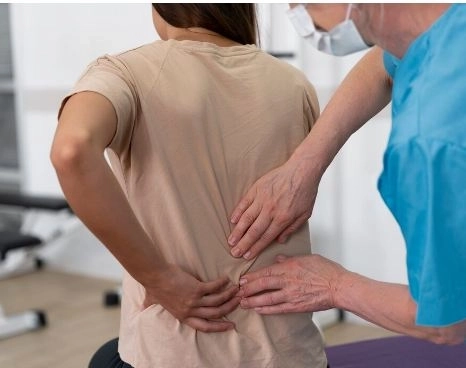
Lower back pain has become a common issue affecting our daily lives, whether due to prolonged sitting, lifting heavy objects, or spinal problems such as herniated discs. The air lumbar traction belt has emerged as an effective solution to relieve this pain. It helps reduce pressure on the vertebrae, relax the muscles, and improve spinal alignment in a safe and easy way.In this Dalili Medical article, we will explore how the lumbar traction belt works, its types, benefits, and safe usage tips to achieve the best results.
What is an Air Lumbar Traction Belt?
The air lumbar traction belt is a device worn around the waist that uses air pressure to provide spinal traction. Its main goal is to reduce pressure on the vertebrae, improve spinal alignment, and effectively relieve lower back pain.
How does the air lumbar traction belt work?
The belt works by inflating air chambers, which slightly separates the vertebrae and reduces pressure on nerves and spinal discs. The result is pain relief, muscle relaxation, and noticeable improvement in posture.
Is the air lumbar traction belt suitable for me?
It is suitable for individuals experiencing lower back pain, whether due to herniated discs or muscle strain.
It is recommended to consult a doctor or physical therapist before use, especially if you have chronic or complex health conditions.
Benefits of the Air Lumbar Traction Belt
Reduces pressure on the vertebrae, especially in herniated disc cases.
Improves blood circulation in the lower back area.
Relaxes muscles and reduces spasms.
Improves posture and reduces chronic pain.
Can the belt be used while sitting or lying down?
It is recommended to use the belt while sitting or lying in a comfortable position.
Avoid using it while sleeping to prevent excessive pressure on the back.
Daily usage duration
The belt is typically used for 10–30 minutes per day, depending on pain severity and medical advice.
Do not exceed the recommended duration to avoid muscle fatigue or increased vertebral pressure.
Can it be used during pregnancy?
It is not recommended during pregnancy, especially in the first trimester.
If you experience lower back pain during pregnancy, consult your doctor before using the belt.
Can I wear the belt all day?
No, the belt should not be worn all day. It is best used for short periods of 15–30 minutes daily to avoid excessive spinal pressure and ensure back muscle comfort.
Risks or side effects of using the air lumbar traction belt
Muscle spasms or temporary back pain if overused.
Numbness or tingling in the limbs if pressure is too high.
Skin irritation or excessive sweating if worn over unsuitable clothing.
Can the belt be used with physical therapy exercises?
Yes, it can support physical therapy by:
Reducing pressure on the vertebrae.
Enhancing exercise effectiveness and muscle strengthening.
Always consult your therapist for a complete treatment plan.
Does it cause dependency?
No, the belt does not cause dependency.
However, it should not be relied on as a sole long-term solution. Combining it with muscle-strengthening exercises and posture improvement is recommended.
Can it be used with stomach or intestinal issues?
If you have conditions like ulcers or acid reflux, consult your doctor first, as excessive pressure may worsen these problems.
Can children use the air lumbar traction belt?
No, the belt is designed for adults only.
Consult a doctor if a child has back problems before considering any traction device.
How to choose the right air lumbar traction belt?
Factors include:
Severity of pain and need for treatment.
Type of belt: manual, electric, or portable.
Medical guidance and comfort during use.
Quality of materials for safe and effective use.
Reduces vertebral pressure
Gently stretches the spine to relieve pressure on spinal discs and reduce friction between vertebrae, alleviating lower back pain from herniated discs or spinal degeneration.
Improves posture
Helps straighten the spine, reduces slouching caused by prolonged sitting or weak muscles, and distributes weight evenly across vertebrae.
Increases intervertebral space
Slightly separates vertebrae, reducing nerve pressure, beneficial for mild to moderate herniated discs.
Relieves muscle spasms
Air traction relaxes back muscles, reduces tension, and enhances natural spinal movement.
Improves blood circulation
Increases oxygen and blood flow to muscles and vertebrae, accelerating recovery and reducing inflammation.
Reduces chronic pain
Regular use, as advised by a doctor, helps relieve chronic lower back pain caused by prolonged sitting or lifting heavy objects.
Relatively safe
Compared to some devices or surgical methods, the belt is safe if used correctly, following the recommended duration and pressure.
Manual Air Traction Belt
Inflated using a hand pump.
Pros: Easy to use at home, affordable, suitable for mild to moderate pain.
Cons: Requires manual effort, less precise pressure control.
Electric Air Traction Belt
Inflates automatically using electricity.
Pros: Consistent and precise pressure, more comfortable, programs for pressure and duration.
Cons: More expensive, requires a power source.
Portable Air Traction Belt
Small, lightweight, battery-operated or manual mini pump.
Pros: Suitable for travel, easy to carry and store.
Cons: Less powerful than large electric belts, may need frequent recharging.
Medical / Professional Air Traction Belt
Used by physical therapists or hospitals.
Pros: Precise pressure control, adjustable to patient’s body, ideal for severe herniated discs or spinal stenosis.
Cons: Very expensive, usually not available for home use.
This type combines spinal traction with additional lumbar or muscular support.
Features:
Reduces back pain during exercise or prolonged sitting.
Provides extra support for ligaments and muscles.
Drawbacks:
Larger in size compared to simple belts.
Less flexibility during movement.
Steps:
Wear the belt: Place it around the waist, covering the lower back (lumbar area), ensuring it is comfortable and moderately secured.
Connect the hand pump: Most manual belts come with a small rubber pump connected by a tube; check for air leaks.
Inflate gradually: Start pumping gradually while monitoring comfort; traction should be gentle, not painful.
Relax during traction: Sit or lie in a comfortable position for 10–20 minutes, depending on medical advice.
Release air and remove the belt: Gradually deflate before removing to avoid sudden muscle strain or pressure.
Steps:
Wear the belt comfortably around the lower back.
Power the device: Connect to electricity or battery and select the suitable program via the control panel.
Start traction: The device inflates automatically to stretch the spine. Pressure can be adjusted for comfort.
Duration: Usually 15–30 minutes per session.
End session: The device gradually decreases pressure; relax for 5 minutes before standing.
Steps:
Wear the belt comfortably and ensure it is secure.
Activate small pump or battery: Some models are manual, others are small electric.
Increase pressure gradually: Monitor comfort while inflating.
Duration: 10–20 minutes, ideal for mild cases or travel.
Remove the belt: Deflate air before taking off to prevent sudden pressure.
Back pain or irritation: Excessive pressure or prolonged use may cause temporary muscle strain or stiffness.
Muscle tension: Muscles may resist traction, causing spasms.
Nerve issues: Overpressure may cause tingling or numbness in legs, especially with severe herniated discs.
Impact on internal organs: Excessive abdominal pressure may cause discomfort, heartburn, or gas if the belt isn’t properly positioned.
Uneven pressure: Hand inflation may concentrate pressure in one area.
User fatigue: Pumping for long periods may tire hands or arms.
Electrical issues: Malfunctioning wires may stop traction suddenly.
Excessive pressure: High program settings can cause severe spasms or pain.
Less precise pressure: Traction may be uneven along the spine.
Short sessions or weak battery: Effectiveness may be limited if battery runs out or session is too brief.
Consult a doctor first: Especially if you have chronic back issues like herniated discs or spinal stenosis. The doctor can advise on:
Suitable belt type
Session duration
Ideal pressure level
Choose the right type:
Manual: For mild to moderate pain, easy at home.
Electric: Precise pressure, more comfortable for chronic pain.
Portable: Lightweight, great for travel, but lower traction power.
Wear the belt correctly:
Center it on the lower back.
Secure comfortably (not too tight or loose).
Wear over light clothing to avoid skin irritation.
Adjust pressure gradually:
Start with low pressure and increase slowly.
Aim for mild traction, not sharp pain.
Reduce pressure immediately if severe pain or tingling occurs.
Session duration:
Beginners: 10–15 minutes.
After adjustment: Up to 20–30 minutes per medical advice.
Body position:
Sit or lie in a stable, comfortable position.
Avoid sudden movements during the session.
Deep breathing can enhance traction effect.
After session:
Deflate gradually before removing the belt.
Relax for 5 minutes.
Perform light exercises for lower back if recommended by a doctor.
Frequency:
Typically 1–2 sessions per day or as advised.
Belt should be part of a comprehensive program including:
Strengthening back and abdominal muscles
Posture improvement
Physical therapy exercises
Monitor symptoms:
Stop immediately if severe pain, tingling, dizziness, or abdominal pressure occurs.
Consult a doctor if symptoms persist.
Additional tips:
Stay hydrated before and after sessions.
Avoid use during pregnancy or immediately after childbirth without medical advice.
Clean belt regularly per manufacturer instructions to prevent bacteria or odor.
InnoTech
Pros: Comfortable design, even air pressure, manual or electric pump, additional lumbar support.
Cons: Higher price than some alternatives.
Teeter
Pros: Comfortable, multi-use, auto-pressure regulation, gradual relaxation. Suitable for home or medical supervision.
Cons: Some models are large and not ideal for travel.
Back2Life
Pros: Electronic air traction, effective for lower back pain, compact for home use.
Cons: May be expensive for some users.
NueMedics
Pros: Electric control for effective traction, daily use, supports natural posture, multiple pressure/time settings.
Cons: Pump may inflate slower than other brands.
Flex Belt
Pros: Lightweight air traction, relieves muscle tension, suitable for mild to moderate pain.
Cons: Not suitable for severe conditions.
KneeTension
Pros: Supports physical therapy, adjustable air pressure, compatible with relaxation exercises.
Cons: Pumping may take longer than other brands.
AirBack
Pros: Comfortable design, daily use, automatic air pump with graduated pressure for various needs.
Cons: Pump activation may take some time.
Tips when choosing a brand:
Material quality: Hypoallergenic and non-irritating.
Product warranty: Especially important for high-priced models.
User reviews: Learn about effectiveness from other users.
Pressure adjustment: Allows personalized therapy and comfort.