

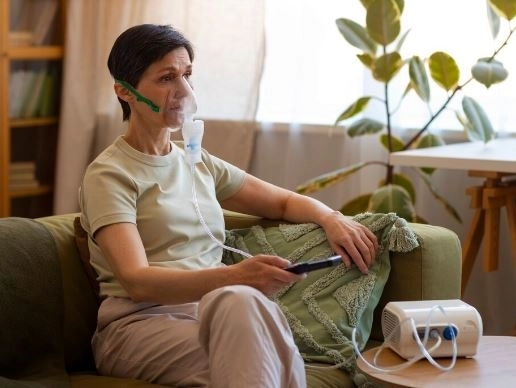
At a time when breathing problems, asthma, and chest allergies have become among the most common health issues, taking care of lung health is no longer a luxury—it’s a necessity. This is where a home respiratory monitoring device comes in: a simple tool with a big impact. It helps you track your health from home and detect any decline in your breathing before it turns into a serious problem.This device isn’t just for asthma patients—it’s useful for anyone experiencing chest issues or anyone who wants to regularly check the efficiency of their breathing. In this Daleeli Medical article, we will discuss home respiratory monitoring devices in detail, including their types, benefits, correct usage, and key tips for obtaining accurate and safe readings.
A home respiratory monitoring device (Pulse Oximeter) is a small medical tool used to measure the oxygen saturation level in the blood—that is, how well oxygen is bound to hemoglobin, the protein found in red blood cells.
This measurement is an important indicator of how efficiently oxygen is being delivered from the lungs to various organs in the body. The body relies on the blood to transport the oxygen needed for the normal function of the heart, brain, and other vital organs.
Normal blood oxygen saturation typically ranges from 95% to 100%, which indicates healthy breathing and stable lung function.
If the saturation drops below this range, it may signal a health problem with the respiratory system or heart. In such cases, it is recommended to seek emergency care immediately, especially if the drop is accompanied by shortness of breath or severe fatigue.
Yes. A home respiratory monitoring device is particularly important for COVID-19 patients, as they may experience:
Severe general fatigue
Difficulty or rapid breathing
Low blood oxygen levels due to pneumonia
In some cases, oxygen levels may drop without obvious symptoms, a condition known as silent hypoxia. Using the device helps to:
Accurately track health status
Detect dangerous drops in oxygen early
Determine when emergency care is needed
Yes, both can affect readings:
Nail Polish: Studies show that dark or thick nail polish can block the light emitted by the device, leading to inaccurate oxygen readings.
Long Nails: Very long nails can prevent the device from fitting properly on the finger, negatively affecting the measurement.
✅ It is recommended to remove nail polish and trim nails before measuring to ensure accurate results.
Yes, readings may vary slightly depending on the finger. Research suggests:
The middle finger of the dominant hand gives the most accurate results
The thumb of the same hand is the next most accurate
The index finger is commonly used, but the difference in accuracy is minimal
✅ Example: If you use your right hand, the middle finger of the right hand is preferred, and vice versa.
No, it’s not necessary for everyone, but it is highly recommended for:
Asthma patients
Individuals with chronic chest conditions
Children with breathing episodes
Elderly individuals
After pneumonia or COVID-19 infection
Healthy individuals can use it occasionally for reassurance.
❌ No. A home device is only for monitoring, not for diagnosis or treatment.
The doctor is responsible for:
Making a diagnosis
Prescribing the appropriate treatment
Accurately interpreting the results
Peak Flow:
✔ Easy and quick
✔ Suitable for daily monitoring
Spirometer:
✔ More accurate
✔ Provides detailed, clear numbers about lung function
✅ Both tools complement each other and one cannot replace the other.
Generally:
Once in the morning
Once at night
In some cases:
Before and after inhaler use
Or as advised by a doctor
Variations in readings may be caused by:
Breathing technique
Fatigue or stress
Measurement timing
Using an inhaler before measuring
✅ Recommendation: Repeat the measurement 3 times and take the highest reading.
No, not always. The risk increases if:
The reading is significantly lower than usual
It is accompanied by shortness of breath or wheezing
⚠️ Important: Always interpret the reading in the context of the patient’s overall symptoms.
✔ Yes, especially for children aged 5–6 years and above, with simple training and parental supervision.
✔ Absolutely safe:
Painless
No radiation
Suitable for daily use
Simple devices: Just clean the mouthpiece
Smart devices: Check settings regularly
⚠️ Tip: If you notice illogical readings, inspect the device.
❌ No, unless:
Each person has a separate mouthpiece
Proper disinfection is done after every use
???? If:
The reading enters the red zone
Severe shortness of breath occurs
Oxygen levels drop suddenly
No improvement after using an inhaler
✔ Yes, it helps to:
Monitor lung recovery
Detect delayed breathing weakness
Assess return to normal lung function
✔ Yes, stress can reduce breathing depth and give a lower reading.
✅ Tip: Take a deep breath and relax before measuring.
✔ Yes, standing usually gives a slightly more accurate reading, but the most important thing is consistency in position.
❌ No significant risks, but:
Very forceful exhalation may cause mild dizziness
Solution: Take a short rest between attempts
Through stable measurements on good days
According to age and height
A doctor can help determine your precise normal range
✔ Yes, recording readings is very important because:
It shows changes over time
Helps the doctor evaluate your condition
Prevents reliance on memory only
Monitoring lung health has become essential for anyone with breathing issues or after a chest infection, especially with the rise of asthma and chronic lung diseases. A home respiratory monitoring device is a simple but effective tool to:
Track lung function at home
Detect early changes
Maintain respiratory health
1️⃣ Daily Lung Function Monitoring
Breathing can deteriorate gradually without obvious symptoms.
The device helps to:
Measure lung efficiency regularly
Detect small changes before they become serious
Compare readings between morning and night
2️⃣ Early Detection of Health Deterioration
In conditions like:
Asthma
Chest allergies
Chronic obstructive pulmonary disease (COPD)
???? The device detects drops in readings before symptoms appear, such as:
Shortness of breath
Severe coughing
Wheezing
This allows early intervention to prevent complications.
3️⃣ Prevent Severe Asthma Attacks
Shows if the airways are narrowing
Helps use preventive inhalers on time
Reduces hospital admissions
4️⃣ Evaluate Treatment Effectiveness Accurately
Measures drug effects instead of relying on sensation alone
Determines dose suitability
Identifies the need to change treatment
5️⃣ Make Timely Medical Decisions
Readings help to:
Know when the condition is safe
Determine when to see a doctor
Decide when to go to the emergency room
6️⃣ Monitor Children Accurately
Children may not express shortness of breath clearly
Device provides clear numbers and alerts parents early
Reduces sudden nighttime attacks
7️⃣ Useful for Elderly People
Shortness of breath may be less noticeable
Symptoms can be hidden
Home monitoring detects silent deterioration
8️⃣ Follow-up After Respiratory Infections
Pneumonia, flu, or COVID-19
Tracks lung recovery
Detects late weakness or fibrosis
9️⃣ Post-Surgical Monitoring
Chest or major abdominal surgeries
Shows respiratory efficiency
Reduces risk of chest infections
Encourages deep breathing
???? Also useful for smokers:
Detects early effects of smoking even without symptoms
Encourages quitting
Shows lung improvement after quitting
1️⃣1️⃣ Monitor Pollution Effects
In busy cities or polluted workplaces
Shows air impact on breathing
Helps take preventive measures
1️⃣2️⃣ Improve Treatment Compliance
Seeing real numbers motivates patients
Encourages regular monitoring
1️⃣3️⃣ Reduce Anxiety
Regular monitoring reassures patients
Differentiates between worry and real problems
1️⃣4️⃣ Educational Tool
Helps understand the body and link symptoms to numbers
Empowers patients to manage their condition
1️⃣5️⃣ Simple, Safe, and Affordable
Easy to use, painless
Reasonable cost
Safe for daily use
1️⃣ Peak Flow Meter
Function: Measures maximum speed of exhaled air
Use: Monitor asthma, detect early deterioration, suitable for children and elderly
Pros: Small, easy, affordable
Cons: Does not measure full lung volume, results depend on blowing technique
2️⃣ Portable Spirometer
Function: Measures air volume, speed, and detailed lung functions (FEV1, FVC)
Use: Comprehensive lung function assessment, monitor chronic diseases, compare with normal values
Pros: Detailed readings, suitable for full evaluation
Cons: More expensive, requires basic training, occasional maintenance
3️⃣ Smart/Connected Devices (Bluetooth/Apps)
Function: Modern peak flow or spirometer connected to phone
Use: Track daily status, analyze data, share results with doctor
Pros: Organized data, automatic reminders, long-term monitoring
Cons: Expensive, requires smartphone, may be complex for some users
4️⃣ Vital Capacity Meter
Function: Measures maximum air in/out of the lungs
Use: Post-surgery rehab, asthma improvement exercises
Pros: Simple, useful as exercise and motivation
Cons: Less accurate than professional spirometer
1️⃣ Peak Flow Meter
Stand or sit upright, relax shoulders, take deep breath
Seal lips on mouthpiece
Exhale fast and strong
Record highest reading after 3 attempts
Tips: Don’t touch device with lips, rest 30 sec between attempts, keep blowing method consistent
2️⃣ Portable Spirometer
Prepare device, attach filter if any
Sit or stand straight, breathe normally
Take deep breath, exhale fully into device
Read FEV1/FVC, repeat 3 times, take best result
Avoid: slow exhale, air leaks, body movement
3️⃣ Smart/Bluetooth Device
Download compatible app
Connect device via Bluetooth
Choose measurement type
Blow as instructed
Results saved automatically with graphs and reminders
4️⃣ Vital Capacity Meter
Clean device, attach indicator
Take deep breath, exhale slowly
Record reading, repeat 3 times for best result
Before Measurement:
Choose consistent time (e.g., morning before inhaler)
Avoid heavy meals, exercise, smoking, stress 30–60 min prior
Maintain upright posture
During Measurement:
Seal lips tightly, no air leaks
Correct breathing: fast strong for peak flow, deep breath + long exhale for spirometer
Repeat 3 times, rest 30 sec between attempts
After Measurement:
Record results with date, time, and symptoms
Compare with your usual normal, not others’ readings
Follow-Up Tips:
Peak flow zones: 80–100% stable, 50–80% warning, <50% danger
Don’t rely solely on numbers; symptoms matter
Cleaning & Maintenance:
Wash mouthpiece with mild soap, air dry
Store away from sunlight and humidity
Don’t share device
Common Mistakes to Avoid:
Slow exhale, single measurement, inconsistent timing, ignoring drops, measuring while exhausted
See a Doctor Immediately if:
Sudden drop from normal
Red zone reading
Severe shortness of breath, dizziness, blue lips
No improvement after medication
Some medications can temporarily or gradually change readings.
1️⃣ Medications That Raise Readings Quickly:
Short-acting bronchodilators: Salbutamol (Ventolin), Terbutaline
Effect: Quickly increase reading
Tip: Measure before dose for true baseline, or after dose to assess response
Long-acting bronchodilators: Formoterol, Salmeterol
Effect: Improve readings long-term
Tip: Keep measurement time consistent, record drug use
2️⃣ Medications That Gradually Improve Readings:
Inhaled corticosteroids: Budesonide, Fluticasone
Effect: Gradual improvement over days/weeks
Tip: Daily measurement shows gradual trend
Oral/IV corticosteroids: Prednisone, Dexamethasone
Effect: Rapid improvement, noticeable increase
Tip: Record usage, don’t compare to non-medicated days
3️⃣ Medications That Reduce Readings:
Beta-blockers: Propranolol, Atenolol (may narrow airways, reduce reading)
Tip: Contact doctor if sudden drop, don’t stop medication yourself
Sedatives or strong sleep medications:
Reduce depth and rate of breathing, lowering readings
Avoid measuring while tired or drowsy
4️⃣ Medications With Indirect Effects:
Antihistamines: Loratadine, Cetirizine
Minor effect, can improve breathing indirectly
Cold/cough combo medicines: May temporarily raise or stabilize reading
Record drug name and measurement time
Rescue inhalers: Frequent use before measurement gives artificially high readings
Indicates poor disease control even if readings look normal
Never stop medication solely because of device readings
Purpose of monitoring: tracking, not treatment cancellation
Always record: drug name, time, and dose