

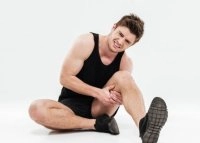
The knee joint consists of several components, as the lower part of the thigh bone revolves around the upper end of the shin bone (tibia). The joint contains a special fluid known as synovial fluid or lubricating fluid, which helps facilitate movement by reducing friction between the moving parts of the joint. An excess accumulation of synovial fluid may occur in the area behind the knee known as the popliteal bursa as a result of an injury or a medical condition, leading to the formation of a cyst behind the knee known as a Baker’s cyst. In this article, Dalili Medical, we will review its meaning, causes, complications, and methods of treatment.
**What is a cyst behind the knee or Baker’s cyst?**
A Baker’s cyst is a fluid-filled sac that forms behind the knee, also known as a synovial cyst. It often causes swelling and a feeling of discomfort.
**What are the symptoms of a Baker’s cyst?**
Common symptoms include swelling behind the knee, in addition to pain and stiffness, especially during movement.
**What Causes a Baker's Cyst?**
A Baker's cyst usually occurs as a result of conditions that cause excess joint fluid, such as arthritis or a torn meniscus.
**How is a Baker's cyst diagnosed?**
Diagnosis usually involves a physical examination, as well as using an ultrasound to confirm the presence of the cyst.
**What is the treatment for a Baker's cyst?**
Treatment options include monitoring, draining the fluid, and treating the underlying problem in the joint.
What are the possible complications of a Baker's cyst?
Complications can include a rupture of the cyst, which can cause swelling and pain in the leg area.
Is a cyst behind the knee a serious condition?
It is usually not considered serious, but it can become so due to associated symptoms such as restricted knee movement and stiffness, or as a result of its complications and the possibility of it bursting.
Can a Baker's cyst be prevented?
Yes, it can be prevented by maintaining knee health and avoiding injuries, by wearing appropriate athletic shoes and doing warm-up exercises before starting sports activities.
What Causes a Baker's Cyst?
Baker's cysts are caused by a buildup of excess synovial fluid, which lubricates the knee joint, causing swelling. This condition can be caused by several things:
**Arthritis**Conditions such as arthritis, especially osteoarthritis and rheumatoid arthritis, contribute to increased production of synovial fluid. This can lead to the formation of a Baker's cyst as the fluid presses on the joint capsule.
**Knee injuries**Injuries, such as a torn meniscus or damaged ligaments, can disrupt the normal flow of synovial fluid, causing it to build up and a cyst to develop.
**Other contributing factors**Sometimes, conditions such as gout or lupus can lead to Baker's cysts, as they affect joint health and fluid production.
When does a Baker's cyst go away?
A Baker's cyst is a cyst that forms behind the knees, and it can be caused by a knee injury or by arthritis or gout. A person may not experience any symptoms associated with a Baker's cyst, but in some cases, symptoms such as a fluid-filled lump, pain, and stiffness in the knee can appear. In many cases, the cyst can go away on its own without the need for treatment, as the fluid is absorbed by the body within a few weeks, especially if the person follows some simple instructions such as resting, elevating the legs, or exercising. In severe cases, surgery may be required to remove the Baker's cyst.
What is a Baker's cyst?
A Baker's cyst is a collection of synovial fluid, a fluid that lubricates the joints, in the synovial bursa located behind the knee. When this cyst becomes swollen, it can cause discomfort and limit the movement of the affected knee. Understanding the possible causes behind this condition can help in managing and treating it effectively.
**Diagnosis of Baker's cyst**
Diagnosis of a Baker's cyst usually involves the following steps:
**Physical examination** The health care provider will examine the knee for signs of swelling, pain, and range of motion. He or she may also talk to the patient about any recent injuries or symptoms.
**Imaging Tests**
- **Ultrasound**: This non-invasive test is an effective way to visualize the cyst and distinguish it from other potential problems.
- **MRI**: This type of imaging provides detailed images of the knee joint, which can help detect any underlying joint conditions that may be contributing to the cyst.
**Additional Tests** In some cases, your doctor may order blood tests to rule out conditions such as rheumatoid arthritis or gout, which can cause arthritis.
**Diagnosing a Cyst Behind the Knee** It is important to have a cyst behind the knee, also known as a Baker’s cyst, diagnosed by a specialist to rule out more serious health problems such as a blood clot.
A cyst behind the knee is usually diagnosed through a physical exam, where your doctor will ask you to stand with your knee fully extended, which makes the cyst more visible in this position. If your Baker’s cyst is located on the side of your knee or has not changed, further evaluation may be needed.
**Is Baker's cyst treatment dangerous?**
A Baker's cyst is not a cause for concern, as anyone can get it, but it is more common among children between the ages of 4 and 7, as well as among adults between the ages of 35 and 70.
There are some risk factors that may increase the likelihood of developing a Baker's cyst, including:
- **Overuse and injuries:** Injury can occur as a result of overuse or tearing of the knee ligaments.
- **Inflammatory joint diseases:** Inflammatory diseases that lead to damage to the knee make a person more susceptible to developing a Baker's cyst, including rheumatoid arthritis.
A Baker's cyst can be asymptomatic and heal on its own, or through rest andSome exercises, in addition to some medications prescribed by the doctor. However, in some cases, Baker's cyst may be a sign of a greater risk, as the symptoms may be similar to Baker's cyst while the person is suffering from a more serious condition such as deep vein thrombosis. Therefore, the patient should not ignore his condition if he experiences the following symptoms
Constant increase in the size of the cyst
Feeling increasing pain in the cyst
Difficulty walking or moving the cyst
Ineffectiveness of treatment for Baker's cyst
Worsening of symptoms
Feeling numbness in the leg and knee
**Complications of Baker's cyst**
A Baker's cyst may rupture, although this condition is very rare. If it ruptures, synovial fluid leaks into the calf area, leading to:
- Blockage of the petrous artery (the artery behind the knee), causing pain and reduced blood flow to the leg.
- Pressure on the tibial nerve, leading to severe pain in the calf or a feeling of numbness in the back of the leg.
- Compartment syndrome, a medical emergency that requires immediate surgical intervention, as it causes severe pain and difficulty moving the foot and toes.
The patient may sometimes feel fluid leaking from the calf or notice redness in it. The danger of these symptoms lies in their similarity to the symptoms of a blood clot in the leg vein. Therefore, if you notice redness or swelling in the calf, you should visit a doctor immediately to confirm the causes of these symptoms.
**Complications of Baker's cyst**
A Baker's cyst may rupture, although this condition is very rare. If it ruptures, synovial fluid leaks into the calf area (calf), leading to:
- Blockage of the petrous artery (the artery behind the knee), causing pain and decreased blood flow to the leg.
- Pressure on the tibial nerve, leading to severe pain in the calf or a feeling of numbness in the back of the leg.
- Compartment syndrome, a medical emergency that requires immediate surgical intervention, as it causes severe pain and difficulty moving the foot and toes.
The patient may sometimes feel fluid leaking from the calf or notice redness in it. The seriousness of these symptoms lies in their similarity to the symptoms of a blood clot in the leg vein. Therefore, if you notice redness or swelling in the calf, you should see a doctor immediately to confirm the causes of these symptoms.
**Surgical treatment** Surgery is an appropriate option in cases of severe pain or difficulty moving the knee.
**Baker's cyst treatment**
**Conservative treatment** Traditional medications from the class of non-steroidal anti-inflammatory drugs (NSAIDs) are available to treat pain associated with Baker's cyst, among these drugs we find diclofenac and ibuprofen. In addition to relieving pain, these drugs work to combat inflammation. There are also Cox-2 inhibitors, which perform a similar function to traditional NSAIDs but with fewer side effects on the digestive system. Doctors usually prescribe these painkillers in tablet form.
Cortisone** is a hormone that occurs naturally in the human body and is considered a powerful anti-inflammatory. However, due to its significant side effects when taken in high doses or used for long periods, it should be used with caution. In the case of Baker's cyst, the doctor injects cortisone into the knee joint to temporarily stop the inflammatory processes. However, due to the side effects, this is not considered a permanent solution, so orthopedic doctors are careful to give cortisone doses intermittently and ensure that they are not overused.
Hyaluronic acid injections can be used in the knee joint, which may seem contradictory, as hyaluronic acid is the main component of the synovial fluid that is already abundant. However, this acid contributes to improving the quality of the cartilage tissue in the joint, the damage of which is often the cause of the appearance of Baker's cyst. In this context, long-term positive effects can be achieved by using this substance.
**Treatment of the underlying causes** Since Baker's cyst is often caused by wear or damage to the structures of the knee joint, it is necessary to treat the root cause. In many cases, the cyst does not require treatment, as it can disappear on its own. However, surgical treatment of the cruciate ligament, cartilage or meniscus damage in the knee is beneficial if there are problems that increase the occurrence of the cyst. When the function of the joint is fully restored, the risk of recurrence of the Baker's cyst is also reduced.
**Baker's cyst puncture**A puncture can be made into the Baker's cyst and a syringe can be used to withdraw its fluid contents. In the short term, this procedure may provide temporary relief for those affected. However, it is very likely that the cyst will refill with synovial fluid.
**Homeopathy**Homeopathic methods are used as part of the treatment of Baker's cyst, in addition to other available treatments. For example, homeopathy can contribute to promoting the healing process after surgery. One popular treatment in this field is the use of Arnica C30, which is also used to treat Baker's cysts. However, the concept of homeopathy and its effectiveness remains a controversial topic in the medical field, as studies have not yet conclusively proven its success in treating Baker's cyst.
** - Medical treatment:** Anti-inflammatory medications are used to reduce inflammation and relieve pain, which helps control pain and prevent the cyst from getting bigger.
**- Physical therapy:** Exercise programs include individual exercises that aim to strengthen the muscles surrounding the knee and increase their flexibility. Special techniques are also taught to improve balance and walking, which contributes to facilitating movement and providing comfort during daily activities.
- Use of compression bandages and ice therapy:
Compression bandages and ice therapy help reduce swelling and pain in the knee area.
- Drainage of fluids (suction):
Ultrasound-guided drainage helps remove fluid from the cyst, which leads to relief ofSwelling and pain quickly.
- Manual therapy: Specialized manual techniques are used to relax the muscles and connective tissues surrounding the knee.
**Frankincense Oil Therapy** For this home remedy, you will need 2 to 3 drops of frankincense oil and 1 to 2 teaspoons of any carrier oil. Add 2 to 3 drops of frankincense oil to 1 to 2 teaspoons of carrier oil, such as coconut oil or olive oil. Mix the ingredients well and then apply to the affected area. Allow the mixture to dry, or you can also leave it on the affected area overnight to relieve symptoms of Baker’s cyst. It is recommended to repeat this process once or twice daily, as frankincense oil has anti-inflammatory properties that can help reduce the swelling and inflammation associated with Baker’s cyst.
*- Massage Therapy** Massage, especially deep tissue massage, is an effective way to treat muscle stiffness and pain often associated with Baker’s cyst. It can also help reduce inflammation and pain.
**Castor Oil Treatment**For this treatment, you will need 1-2 teaspoons of cold-pressed castor oil and a warm compress. All you need to do is take a teaspoon or two of castor oil and apply it to the affected area. After that, apply the warm compress to the area for 15-20 minutes, then remove the compress and rinse the oil off your skin. You can repeat this process once daily, as castor oil contains ricinoleic acid which has anti-inflammatory properties, which helps in relieving the symptoms of Baker’s cyst.
**- Epsom salt bath treatment**For this treatment, you will need one cup of Epsom salt and warm water. All you need to do is add the cup of salt to a tub filled with water. Once the salt has completely dissolved, you can relax in the tub for 20 minutes. You can repeat this treatment once daily or every other day. Epsom salt is also known as magnesium sulfate, and it contains magnesium which is very useful in reducing inflammation and swelling due to its anti-inflammatory properties.
**- Vitamin B1 Therapy**In this treatment, you will need 1 mg of vitamin B1 (thiamine). It is recommended to take about 1 mg of thiamine daily. Foods rich in this vitamin include nuts, oats, oranges, eggs, legumes, peas, and yeast. You can also take additional supplements of this vitamin, but it is preferable to consult your doctor before doing so. You can add small amounts of foods rich in vitamin B1 to your daily diet, as a deficiency of this vitamin, also known as thiamine, may contribute to the appearance of Baker's cyst. According to a study published in Oncology Reports, thiamine therapy has been shown to be effective in treating Baker's cysts in 13 out of 15 cases. In addition to following these treatments, modifying your diet is also important when seeking to get rid of a popliteal cyst or Baker's cyst permanently.
** Surgical Treatments**
Surgery, which requires a recovery period, is often the last option for treating a cyst behind the knee, as it is only used in the most severe cases.
Surgical options for Baker's cyst include:
- **Arthroscopic knee surgery**: This is used to diagnose and repair knee damage. The surgeon makes a small incision in the knee and inserts a device known as an arthroscope.
- **Knee osteotomy**: The surgeon removes a portion of the bone to correct the damage to the joint. This surgery is a suitable option for those suffering from arthritis pain.
It is necessary to treat the underlying joint disorder, if any, in all patients with symptomatic Baker's cysts. This will help reduce the accumulation of synovial fluid and enlargement of the cyst.
**Exercises to treat Baker's cyst**
**Standing knee stretching exercise**To do this exercise, the person needs a chair about 50 cm high. The person starts by placing one foot on the floor while the other foot is slightly bent on the chair, so that the angle between the leg and the body is about 15 degrees.
The step to follow is to lean slightly forward and down while keeping the back straight. After leaning, the person will feel a pull in the middle of the thigh, and he should maintain this position for 30 seconds.
**Repeat the exercise:** It is recommended to repeat this exercise 3 times, twice daily, before and after doing other exercises.
**Knee stretch exercise while lying down** You should lie on your back, holding a towel around your leg and pulling it to create pressure on the knee and Baker's cyst.
**How to do it:** Use both hands to pull the leg with the towel until the knee is bent at a 20-degree angle, causing the person to feel a strong pull in the thigh (especially in the back of the thigh). This position should be held for 30 seconds.
**Repeat the exercise:** It is preferable to repeat this exercise 3 times, twice daily, before and after doing other exercises.
**Knee stretch exercise while sitting** The person suffering from Baker's cyst should sit on the edge of the chair, with his healthy leg bent, while he should extend the affected leg in front of him.
**How to do the exercise:** You should bend forward while keeping your back and head straight, which will cause a stretch in the back of the thigh, as in the previous exercises. You should stay in this position for 30 seconds.
**Repeat the exercise:** It is preferable to repeat this exercise three times, twice a day.
**Leg Lift Exercise** This exercise is very easy. The person has to lie on his back and raise the leg that is not affected by the Baker's cyst, while the affected leg remains straight on the ground. However, the person may find it difficult to fully extend his knee due to the cyst.
In the second step of the exercise, you should try to raise the affected leg so that it is parallel to the healthy leg, while raising it upwards. It is important to keep the leg raised to achieve the desired stretch. It is recommended to repeat this process 15 times a dayFor the affected leg.
**Knee massage exercise** You can reduce Baker's cyst by massaging the knee using a mini roller. To do this, sit down and start massaging the knee while pressing the leg firmly. The massage should be done slowly and towards the knee. When you reach the bottom of the knee, you should continue the process with extreme caution, taking care not to exceed the pressure on your knee beyond your tolerance or pain threshold. The pain intensity should be less than 10 on the pain intensity scale, and preferably above 8 to get the desired benefit.
You can use a special massage ball for this purpose, choosing the size of the ball appropriate to the level of pain you feel. The pain level after the massage should be between 8 and 9, and continue massaging for only two minutes to avoid aggravating the pain. Try to adhere to these exercises for 6 days a week to speed up the process of getting rid of Baker's cyst.
**Benefits of Baker's treatment**
- **Pain relief**: The treatment helps reduce pain behind the knee quickly.
- **Increased movement**: Physical therapy and exercise contribute to improving knee movement.
- **Swelling control**: Treatment helps reduce swelling caused by the cyst, providing greater comfort for the knee.
- **Prevention of chronic problems**: Treatment reduces the risk of recurrence of cysts and provides sustainable solutions.
- **Personalized approach**: The best results are achieved by customizing treatment to suit each individual’s needs.

