

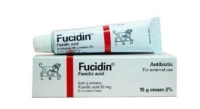
Fucidin cream and ointment are widely used topical antibiotics for treating acne-related inflammation and various bacterial skin infections. Many people rely on Fucidin to manage common dermatological problems caused by bacteria. In this Dalili Medical article, we will explore its full composition, uses, contraindications, and other essential information you need to know.
The appropriate dose varies from one person to another depending on their weight, medical condition, and the type of skin problem. Always follow your doctor’s instructions and avoid adjusting the dose on your own.
Apply a small amount of the cream to the affected area 3–4 times daily.
In some cases, the doctor may recommend using it only once or twice daily.
Continue using the medication until the inflammation or infection completely disappears.
Avoid applying the cream around the eyes.
Read the patient leaflet carefully before use.
Apply a thin layer of cream to the affected area and massage gently.
Wash your hands well after applying it (unless your hands are the treated area).
Treatment usually lasts 7–10 days, and should not be extended unless advised by a doctor.
You should notice improvement within a few days.
If there is no improvement, consult a doctor because some infections may be resistant to antibiotics.
To prevent spreading the infection:
Avoid touching the affected area unless applying the cream.
Use a personal towel.
Avoid contact with the eyes. If the cream enters the eyes, wash immediately with lukewarm water.
Only if the ulcer is infected with bacteria.
Yes, it helps kill the bacteria causing the abscess, but large abscesses must be drained.
It may help in mild acne associated with inflammation because it's an antibacterial.
Only if the cyst or abscess is accompanied by a bacterial infection.
It is better to avoid it unless prescribed by a doctor.
Not a treatment for hemorrhoids, but may help prevent infection around the area.
Yes, it can be used for minor burns to prevent infection.
No. It is strictly an antibiotic and does not lighten the skin.
No, it should not be used near the eyes.
It may reduce the risk of bacterial infection but is not a main treatment.
Anyone allergic to fusidic acid
Anyone allergic to lanolin
No. Topical creams—including Fucidin—cannot treat a fistula.
The only effective treatment is surgical intervention.
The shelf life is the period between the manufacturing and expiration date, both clearly printed on the package.
Do not use the product after expiration.
Yes, but avoid getting it inside the mouth.
It is meant for external skin use only.
Do not use it inside the nose unless prescribed by a doctor.
A light, fast-absorbing antibiotic cream effective against gram-positive bacteria like Staphylococcus aureus.
Impetigo
Boils
Acne
Wounds after surgery
Abscesses
Burns (to prevent infection)
Post-hair-removal inflammation
Scalp pimples
Pimples after chemical peels
Light texture
Absorbs easily
Does not cause shine on the face
Mild itching, burning, or tingling.
Same active ingredient but in a thicker, greasy, ointment form.
Dry skin areas
The face
Treating facial acne (because it leaves shine)
Contains Fusidic acid + Hydrocortisone (mild steroid).
Eczema
Intertrigo
Psoriasis
Lupus
Lichen planus
Post hair-removal inflammation
Fine hair growth
Red vessels
Stretch marks
Irritation around the mouth
Sensitivity to sunlight
Contains Fusidic acid + Betamethasone (strong steroid).
Infected eczema
Discoid eczema
Scalp dermatitis
Chronic lichen
Lupus
Insect bites
Sunburn
Avoid on:
Face
Sensitive areas
Children (prolonged use)
Wash your face well.
Apply a small amount directly on the pimples.
Avoid the eyes and mouth.
Use 2–3 times daily.
Do not wash your face immediately after application.
Fusidic Acid: an antibacterial agent.
Red cream: light and fast-absorbing
Orange ointment: thick and greasy for dry areas
Fucidin H: antibiotic + steroid
Acne caused by bacterial infection
Boils
Skin infections
Preventing infection in wounds
Can be used to treat pimples and bacterial infections in intimate areas for men, women, and children.
Avoid types containing steroids (Fucidin H and Fucicort).
Yes, when used correctly for bacterial skin infections.
Helpful only if the itching is caused by a bacterial infection.
Fucidin does not treat:
Acne scars
Hyperpigmentation
Dark spots
It treats active infected pimples only.
Doctors may prescribe it when there are signs of infection:
Redness
Heat
Pain
Swelling
Pus
Fucidin H (contains steroid): avoid unless necessary
Regular Fucidin (no steroid): generally safe, but consult your doctor
It works well against Staph bacteria, but it is not the best option for the main bacteria causing acne (C. acnes).
Misuse may lead to bacterial resistance.
Benzoyl peroxide
Salicylic acid
Retinoids
Clindamycin
Tetracycline